
Museums Are Urgently Collecting Homemade Masks and Other Ephemera From the Coronavirus Pandemic to Document History as It Unfolds
As the coronavirus pandemic sweeps the globe, non-essential
businesses have shuttered and most people are forced to
self-isolate at home. But as many of our minds are focused on how
to fight the spread of disease, museums are thinking about how to
best document this unique period in history and to preserve
elements of the crisis as it unfolds.
“The coronavirus pandemic is a transformational moment for the
world,” Mark Lubell, the executive director of New York’s International Center of Photography, told
Artnet News. “We have a responsibility to document it and share the
truth of what’s happening.”
The Smithsonian’s National Museum of American History has formed
a Rapid Response Collecting Task Force that will “allow the museum
to react quickly to assess and document the scientific and medical
events, as well as the effects and responses in the areas of
business, work, politics, and culture,” read a statement from the
museum.
“Archivists always feel the urgency of collecting materials
related to specific events before they disappear, and making sure
they are preserved and accessible for generations to come,” said
Lindsay Turley, vice president of museum collections at Museum of the City of New York, in an
email to Artnet News. “As soon as our government and health
officials started issuing guidance and restrictions, the museum
recognized this was a historic event for the city that we would
need to document.”
Such responsive collecting has occurred in the wake of
previous disasters including September 11 and Superstorm Sandy, as
well as historic political events such as Occupy Wall Street and
the Women’s March. As a starting point for the current crisis, the
Museum of the City of New York and the International Center of
Photography are both utilizing Instagram. The two museums are
soliciting photos of life in New York during the coronavirus
lockdown under the respective hashtags #CovidStoriesNYC, launched April 1, and
#ICPConcerned, which
kicked off March 20.
"background:#FFF; border:0; border-radius:3px; box-shadow:0 0 1px 0 rgba(0,0,0,0.5),0 1px 10px 0 rgba(0,0,0,0.15); margin: 1px; max-width:500px; min-width:326px; padding:0; width:99.375%; width:-webkit-calc(100% - 2px); width:calc(100% - 2px);">
View this post on Instagram
For the ICP hashtag, which has already attracted more than 7,000
posts, “many of the first images were of masks and gloves, then
empty streets and familiar things like subway cars looking very
unfamiliar, with only one rider per car,” said Lubell. “Now, it is
more about isolation and how people are managing this ‘new normal’
of being holed up in their homes. Other images capture springtime
and nature that can be seen from a window or a short walk before
heading back inside.”
Other museums, like the Victoria & Albert Museum in
London, are thinking more about objects. Since 2014, the
institution’s Rapid Response program has made 35 acquisitions
related to current global and political events,
including adding the pink pussy hat
to its collection after the 2017 Women’s March.
“Rapid Response is about bringing objects into the museum that
through their design articulate the bigger questions of
contemporary society,” senior curator Corinna Gardner told
Artnet News in an email. “It’s not as much a social history
effort.”
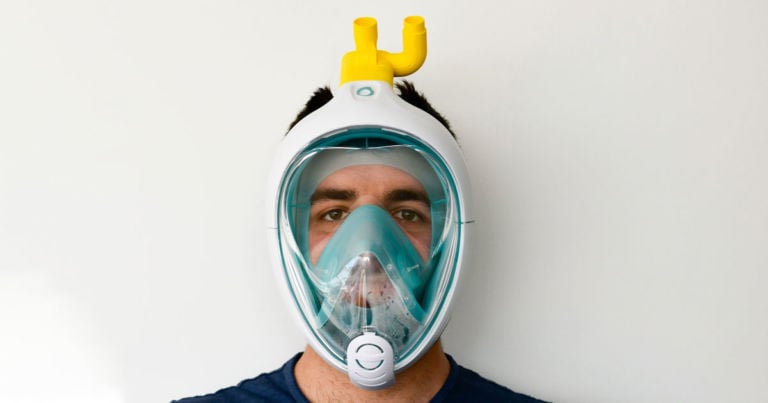
Italian 3-D printing company Isinnova
has a designed a 3-D printed adapter for converting snorkeling
masks into ventilator masks to help medical facilities with
equipment shortages treat coronavirus patients. Photo courtesy of
Isinnova.
The museum already has an eye on several medical products
developed in response to the crisis, including a method to convert
a snorkeling mask into a ventilator mask, designed by Isinnova, an Italian 3-D printing company,
in conjunction with doctors at a local hospital.
“Our curatorial team is looking to the objects that reach
beyond an idea and demonstrate an ability to generate impact and
change, that have real traction in the field,” Gardner said.
At Orlando’s Orange County Regional
History Center, which previously acquired objects related to
the 2016 Pulse nightclub shooting, curators have dubbed the term
“urgent response collecting,” recognizing that the collecting
objects tied to current events can take a long time, even if the
process begins quickly.
“Urgent response collecting encourages historians to immediately
begin considering the magnitude of the event at hand and to what
extent it may bear historical importance in the future,” chief
curator Pamela Schwartz told Artnet News in an email. “It allows
museum, archives, and like institutions to capture stories,
artifacts, and photographs before it is too late and important
moments have been missed.”

A grocery sign in Brooklyn announcing
special hours for senior citizens and those with compromised
immunity. Photo by Rhododendrites, via Wikimedia Commons.
In addition to collecting objects and photography, the museum is
putting together an oral history about the pandemic’s effects in
central Florida, for which it is conducting interviews by phone and
Zoom. It is hosting a history-at-home webinar
on April 17 for those who want to learn more about the project.
“Our staff is continuously on the watch as this pandemic grows
and its impact morphs,” Schwartz added. “We are considering
everything.”
But collecting in the time of coronavirus presents unique
challenges. There are the logistics—with staff working from home,
there is no one on site to physically accept submissions—as well as
the general shortage of necessary personal protective equipment and
other gear.
The Victoria and Albert Museum wants innovative medical
equipment, said Gardner, but “we have to be mindful of whether we
are taking something that is absolutely necessary out of
circulation.”
Perhaps of greatest concern is the risk of contracting the virus
from contaminated surfaces. “We have to make sure the health and
safety of our staff comes first,” said Turley. “At this point, we
don’t want anyone personally accepting anything that has been in
the possession of someone not in their immediate household without
more guidance from health officials.”
At the New-York Historical Society, “we are asking
people to keep these objects where they are, until it’s safe for us
to take them and preserve them,” president and CEO Louise Mirrer
told Artnet News in an email.
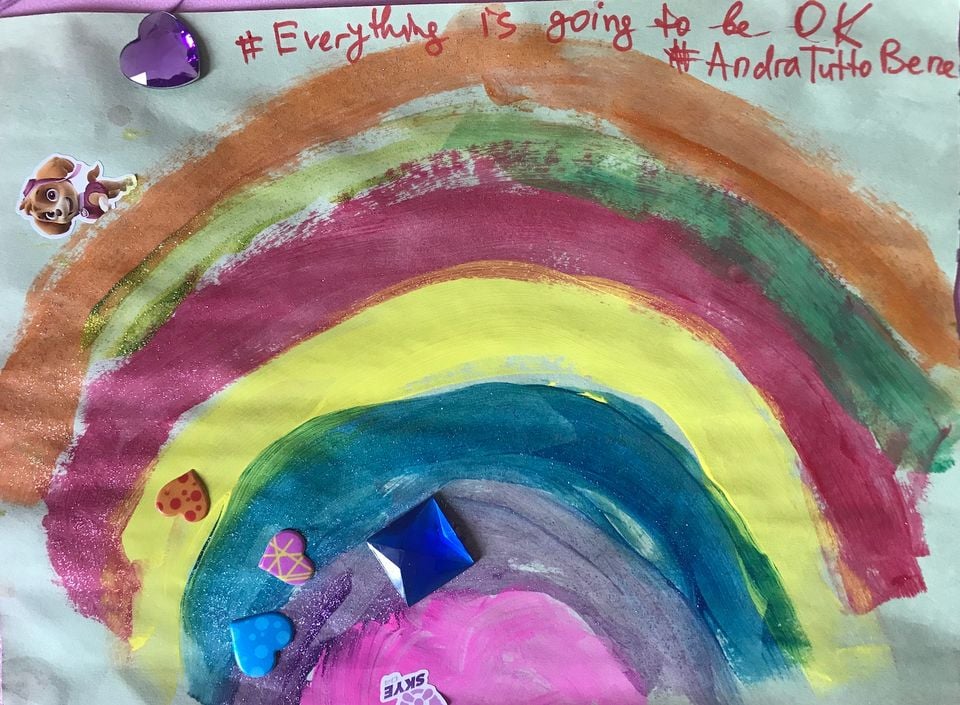
Everything is Going to be OK by
4-year-old Lizzy from Kew Gardens, Queens. Photo courtesy of the
New-York Historical Society.
The society just launched a new edition of its “History Responds” initiative, which
dates back to the September 11 attacks, when staff picked debris
off the street for the museum collection (a great deal of these
holdings ultimately made their way to the city’s National September 11 Memorial & Museum). Its efforts
aim to cover ever facet of the current crisis, from effects on
local businesses and the medical response, to tales of illness and
loss as well as creative projects that have grown out of
isolation.
“We’re in the process of acquiring rainbow artwork by children
and handmade masks once they’re no longer needed,” said Mirrer.
“We’re on the lookout for an empty bottle of Corcraft, the hand
sanitizer made by New York State prisoners. Other items on our wish
list include thermometers, PhoneSoap, Zoom
university t-shirts or stickers, pastime activities (puzzle,
Lego, knitting, coloring books), artworks posted in windows
and public spaces, remote learning school projects, emergency
food services signs and flyers…”
The museum’s curator of photography is also working with street
photographers to capture scenes of New York City life in this
strange time, while the library is looking to archive paper signs
announcing business closures and even those emailed notices
announcing each and every business’s COVID-19 response.
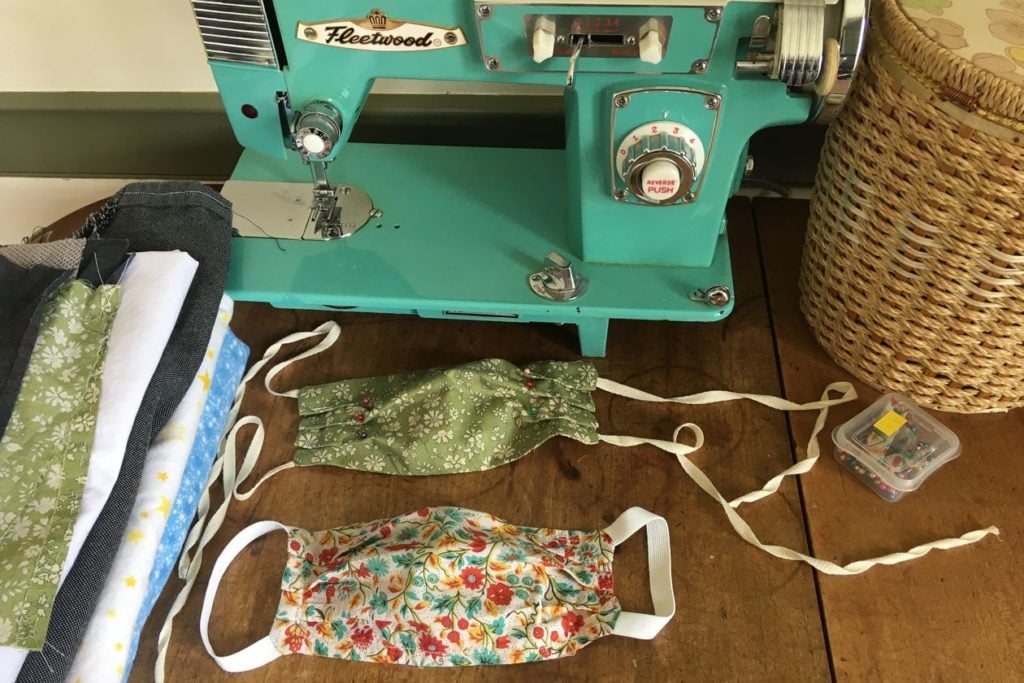
The New-York Historical Society will add
homemade masks by Heidi Nakashima to its new collection documenting
the coronavirus pandemic. Photo by Heidi Nakashima.
“We are looking for objects that can help tell the story of how
New Yorkers and people in the surrounding area are managing life
and coping under these extraordinary circumstances,” said
Mirrer.
The Museum of the City of New York is planning to print out a
representative sampling of coronavirus documents being issued via
email by the city on archival paper for its collection.
“We want materials that document the experiences of those on the
front lines: healthcare workers, first responders, our public
transit force, those working in our essential businesses to keep
the city functioning,” Turley said. “While it is difficult to
consider, we will also want to think about materials that document
the experiences of those who contract COVID.”
The post Museums Are Urgently Collecting Homemade Masks and
Other Ephemera From the Coronavirus Pandemic to Document History as
It Unfolds appeared first on artnet News.
Read more https://news.artnet.com/art-world/museums-starting-coronavirus-collections-1827606
Further reading


Leave a comment