Museums Have Stumbled When It Comes to Curating Indigenous American Art. These Native Students at Yale Are Modeling a New Way Forward
When Yale University in New Haven, Connecticut, decided to
reevaluate its North American indigenous art collection,
uniting objects from its Beinecke Rare Book & Manuscript Library,
Yale Peabody Museum of Natural History, and
Yale University Art Gallery for the first
time, it looked to the student body to lead the way.
It enlisted a trio of students, two of whom are Native
Americans, as the curators. Initially, the students thought that
the university “should be hiring someone who is a professional
curator and has more time and more knowledge than we do as
students,” co-curator Katherine Nova McCleary, who is Little Shell
Chippewa-Cree, told Artnet News. “But then we realized that if we
didn’t take this opportunity, the show was likely not going to
happen.”
In 2015, McCleary and Leah Tamar Shrestinian, who is Armenian
and Arab, was Yale’s first participants in a summer internship
program for Native American art, a response to student demands for
better Native representation on campus. As college juniors, at the
gallery’s urging, the two signed on with sophomore Joseph Zordan,
who is Bad River Ojibwe, for the ambitious task of putting together
an exhibition that presented the university’s holdings of North
American indigenous art in an ethical, respectful manner, fully
engaging with the Native community in order to best represent its
widely varied artistic practices and cultural traditions.
It’s a challenge that has proved a stumbling block for other,
larger institutions recently. New York’s Metropolitan Museum of Art received
plaudits for showing Native American art
in its American wing for the first time in “Art of Native America: The
Charles and Valerie Diker Collection” and announcing plans to
hire its first curator
in the field, but the 2018 exhibition was also criticized for
its display of funerary objects, and for not consulting more
closely with tribal leaders during the planning process. At
the Art Institute of Chicago, a planned
traveling exhibition, “Worlds Within: Mimbres
Pottery of the Ancient Southwest,” was postponed in April over
the very same issues.
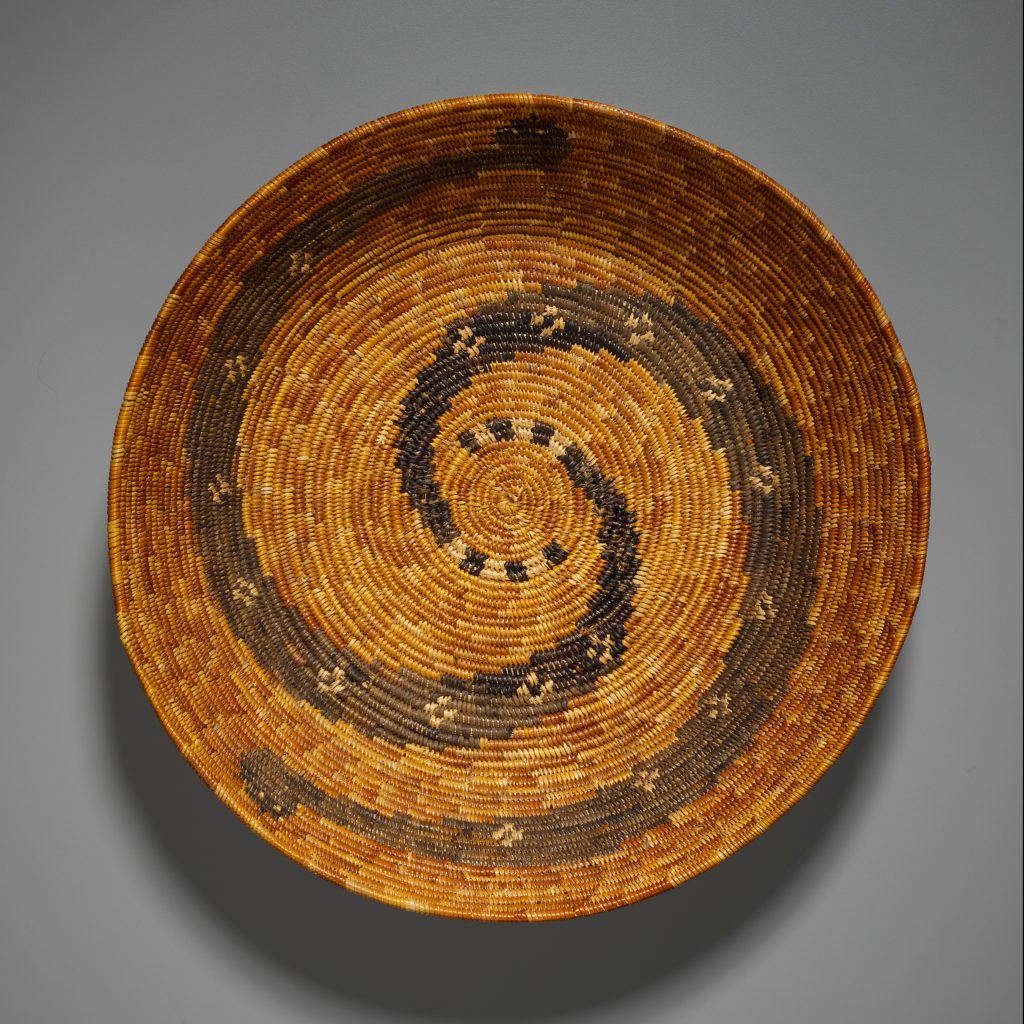
Attributed to Pablino Lubo Cahuilla),
Coiled Basket Tray (1932). Photo courtesy of the Yale Peabody
Museum of Natural History.
But museums shouldn’t let such incidents discourage them, the
curators say. If institutions spend too much time “trying to avoid
missteps,” said Shrestinian, “that makes museums afraid to
even engage with a lot of Indigenous art.” Nevertheless, there
remains a lot of work to be done.
US institutions have a troubled historical track record when it
comes to indigenous art, colored by centuries of colonialism and
violence against Native peoples, forcing them from their lands.
Indigenous artifacts were collected with an eye toward preserving a
“vanishing” race and put on display, with few distinctions between
individual tribes, at anthropological and natural history museums
like the Peabody. (In recognition that such an approach was
outdated, the Peabody took down its Native American display in
2017.)
“I think museums are having a reckoning over what do with these
institutions in the 21st century,” said Zordan. “How do we
modernize them? Times are changing, and how do you adapt an
institution that hasn’t changed much since its development in the
late 19th, early 20th century?”
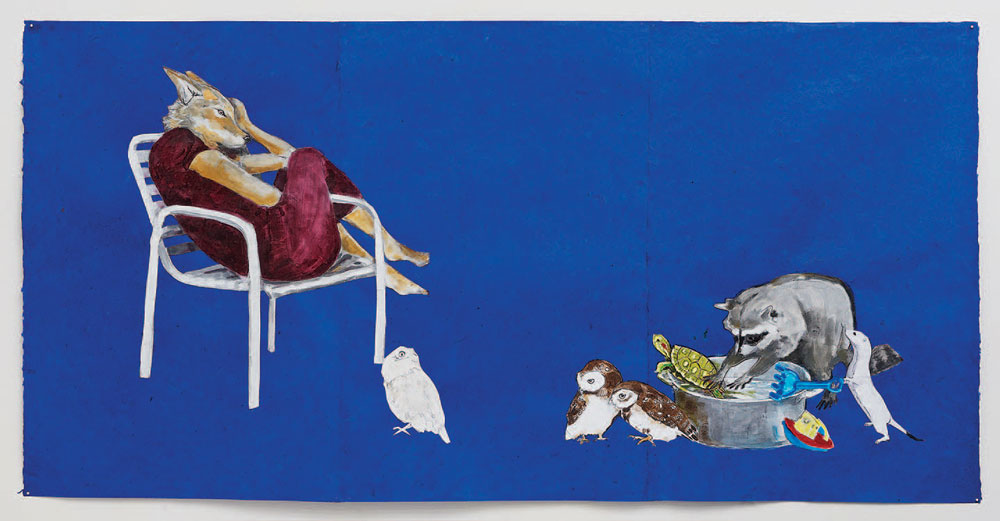
Julie Buffalohead,
Indifferent (2017). Photo courtesy of the Yale
University Art Gallery.
In organizing “Place, Nations,
Generations, Beings: 200 Years of Indigenous North American
Art,” the young curators were careful to look to the Native
community for guidance.
“It’s important to remember that, yes, we are young people
engaging in this work in sometimes new ways, but we’re really
relying upon example of people us who have done this work before
us,” said McCleary. “There are community institutions and tribal
museums that have been thinking about these issues for a very long
time—it’s important to not focus just on major institutions that
are often settler institutions that have historically been for
white people.”
“What we were trying to do was draw from all of this scholarship
that Indigenous curators and scholars and other non-Indigenous
folks have been writing about since the ’90s, about having advisory
councils and including indigenous voices in every step of the
process,” said Shrestinian. “The framework for respectfully
showing Native art and showing it in an exciting way that can
educate people and bring them to appreciate Native art, that’s been
set up by Indigenous scholars and curators, and we need to follow
that example and collaborate with Native people.”
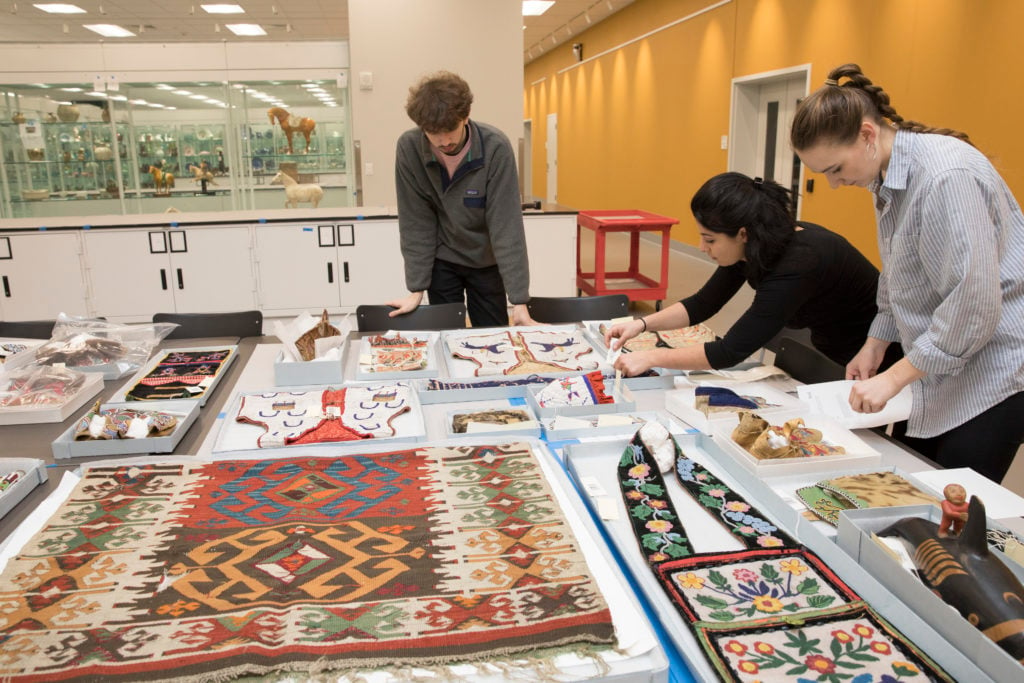
Yale student curators Joseph Zordan,
Leah Tamar Shrestinian, and Katherine Nova McCleary examine objects
for the exhibition. Photo by Smolinski, courtesy of Yale
University.
Sometimes, that meant deciding that an object in the
university’s collection was not suited for display. That might have
been due to the way it was obtained, or how the object would have
functioned for Native peoples—or based on feedback from Native
advisers.
“The first thing that you have to do is think about who does
this object belong to and is this object a being,” said
Shrestinian. “To have any of that knowledge and know whether it’s
appropriate to share that knowledge, you have to talk to people
from that nation, or talk to the artist.”
“There’s no such thing as a hard and fast rule for every object,
even sacred objects,” Zordan added. “We had mentors who had
experience working on shows such as this one who were able to lead
us in the correct direction to approach these works from the
sensitive and empathetic position that working with Indigenous
art within museums requires.”
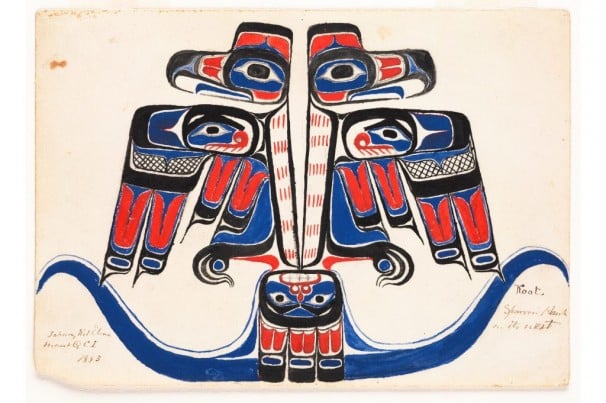
Johnny Kit Elswa,
Untitled (1883). Photo courtesy of the Yale
University Art Gallery.
Originally slated for the fall of 2018, the exhibition proved
such a massive undertaking that it was pushed back a year, after
all three curators had graduated—McCleary in May
2018, Shrestinian that December, and Zordan this past May.
Completing the show while entering the real world work force was no
easy task, and underscores the need for institutions like Yale to
create full-time positions for Native American art.
“Museums should be bringing in Indigenous people and scholars,
compensating them for their advice, hiring them at institutions,
and dedicating resources to the study and presentation of
Indigenous art,” said McCleary.
Still, the current show represents an important step forward.
“From working on this project,” said Zordan, “I’m hopeful about the
willingness of the old guard to accept these new practices and work
with us and open the doors of the space.”
See more works from the exhibition below.
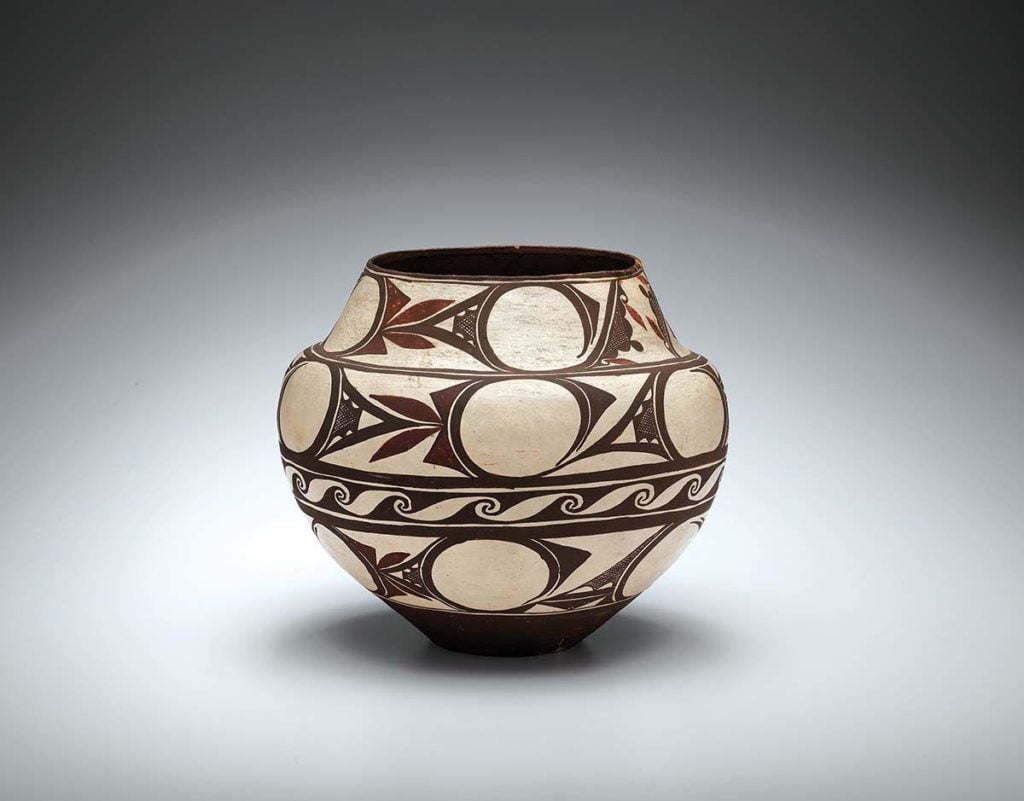
Arroh-a-och (Laguna Pueblo) pot (circa
early 20th century). Photo courtesy of the Yale Peabody Museum of
Natural History.
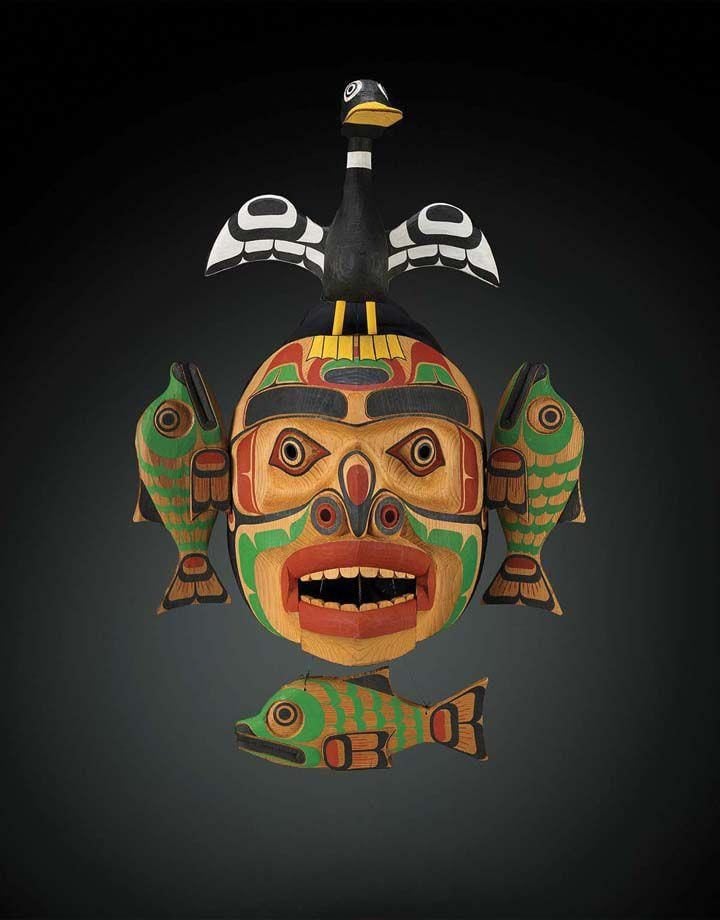
Richard Hunt, Sea Monster Mask
(1999). Photo courtesy of Yale’s Peabody Museum of Natural
History.
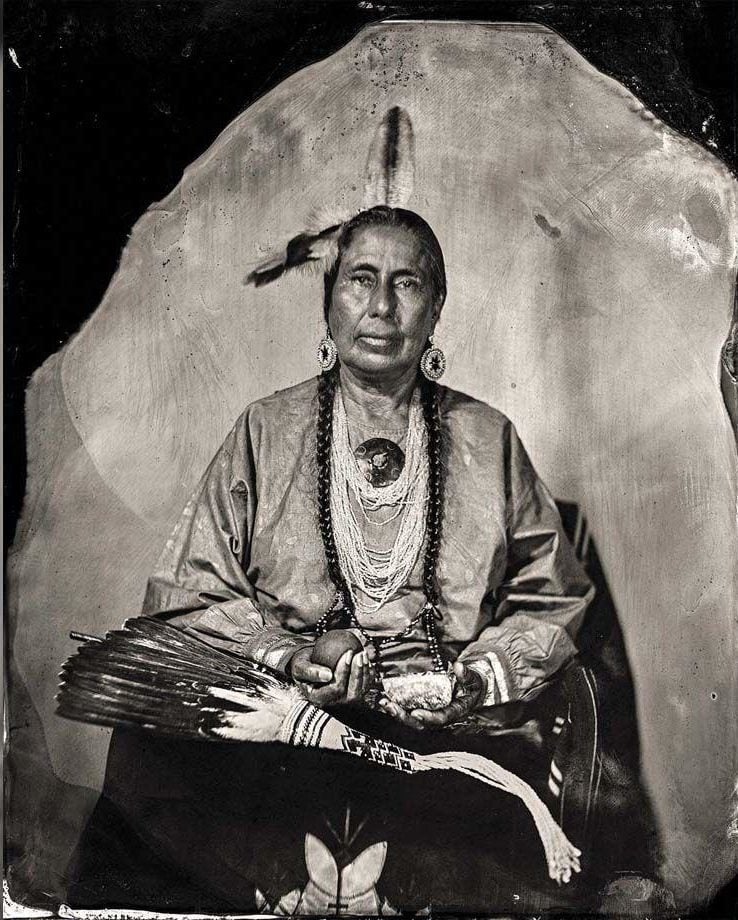
Will Wilson, “Casey Camp Horinek,
Citizen Ponca Tribe of Oklahoma, “Zhutni,” Tribal Councilwoman,
Leader of Scalp Dance Society, Sundancer, Delegate to UN Permanent
Forum on Indigenous Issues, Matriarch of Wonderful Family
(Grandmother, Companion, Mother, Sister), Defender of Mother
Earth (2016). Photo courtesy of Beinecke Rare Book and
Manuscript Library, ©Will Wilson Artist.
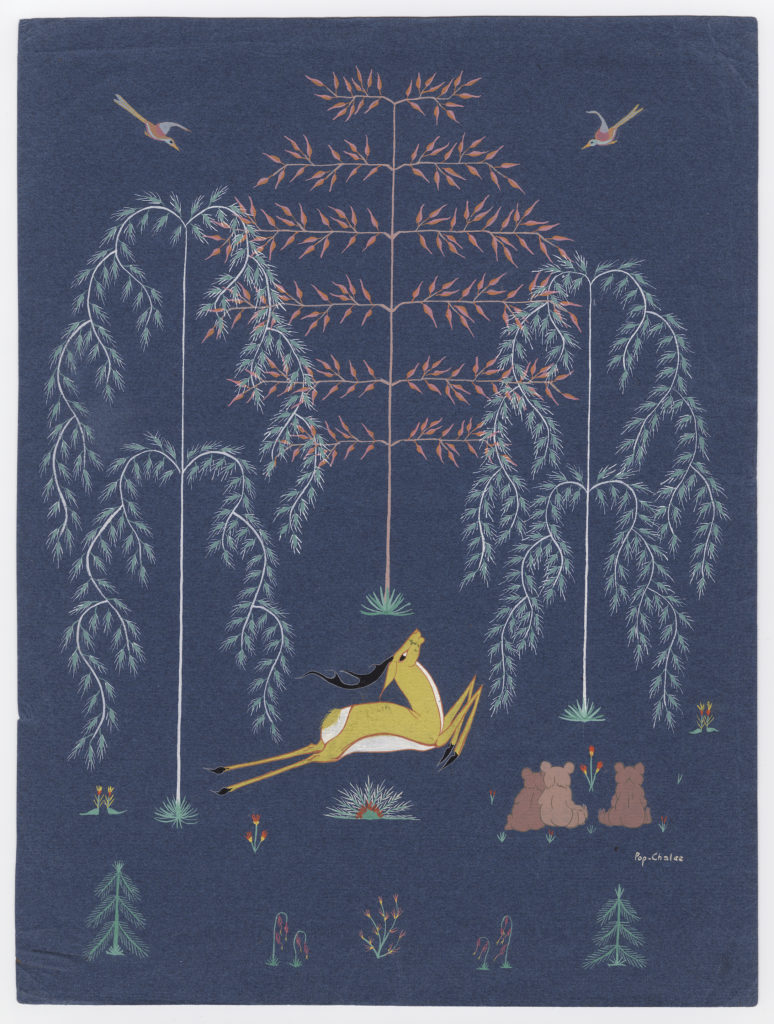
Pop Chalee (Merina Lujan; Taos Pueblo),
Deer in a Forest (circa 1930–40). Photo courtesy of the
Beinecke Rare Book and Manuscript Library.
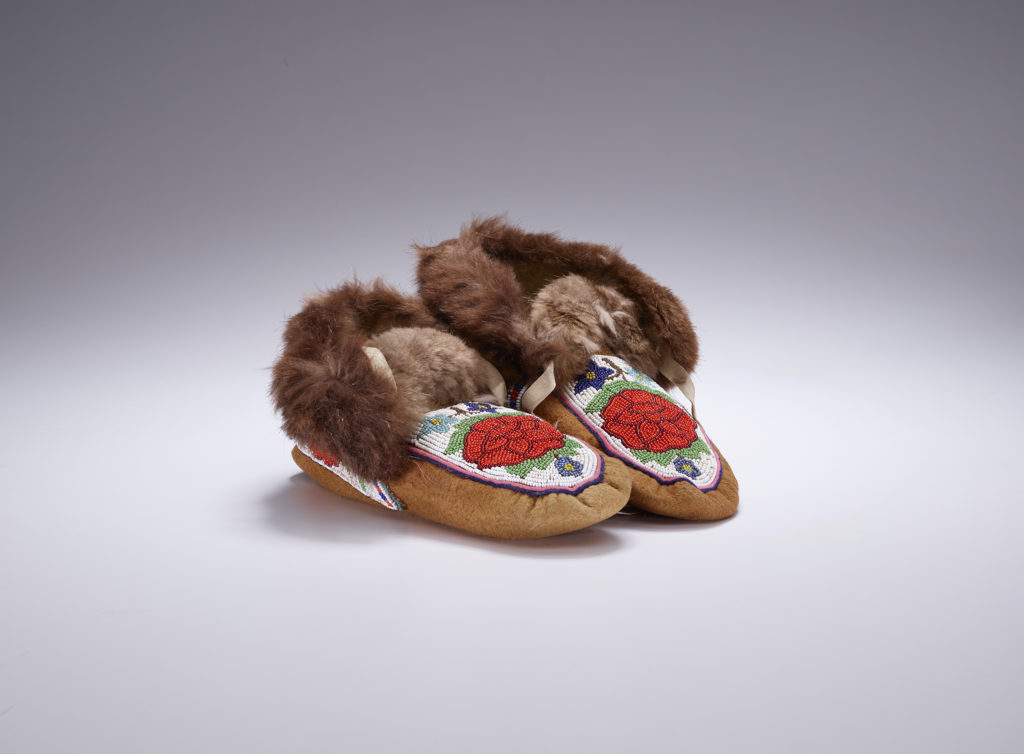
Indigenous moccasins (circa early-to-mid
20th century). Photo courtesy of the Yale Peabody Museum of Natural
History.
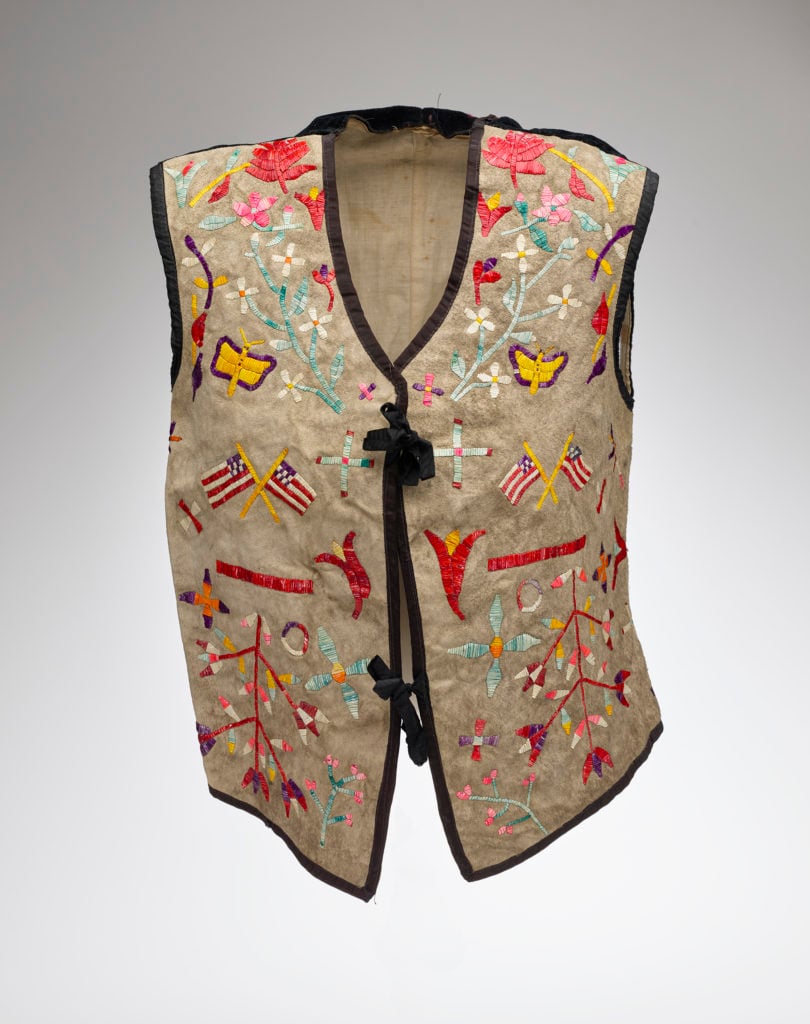
Indigenous Quilled Vest by a Dakota
artist (circa late 19th century). Photo courtesy of the Yale
Peabody Museum of Natural History.
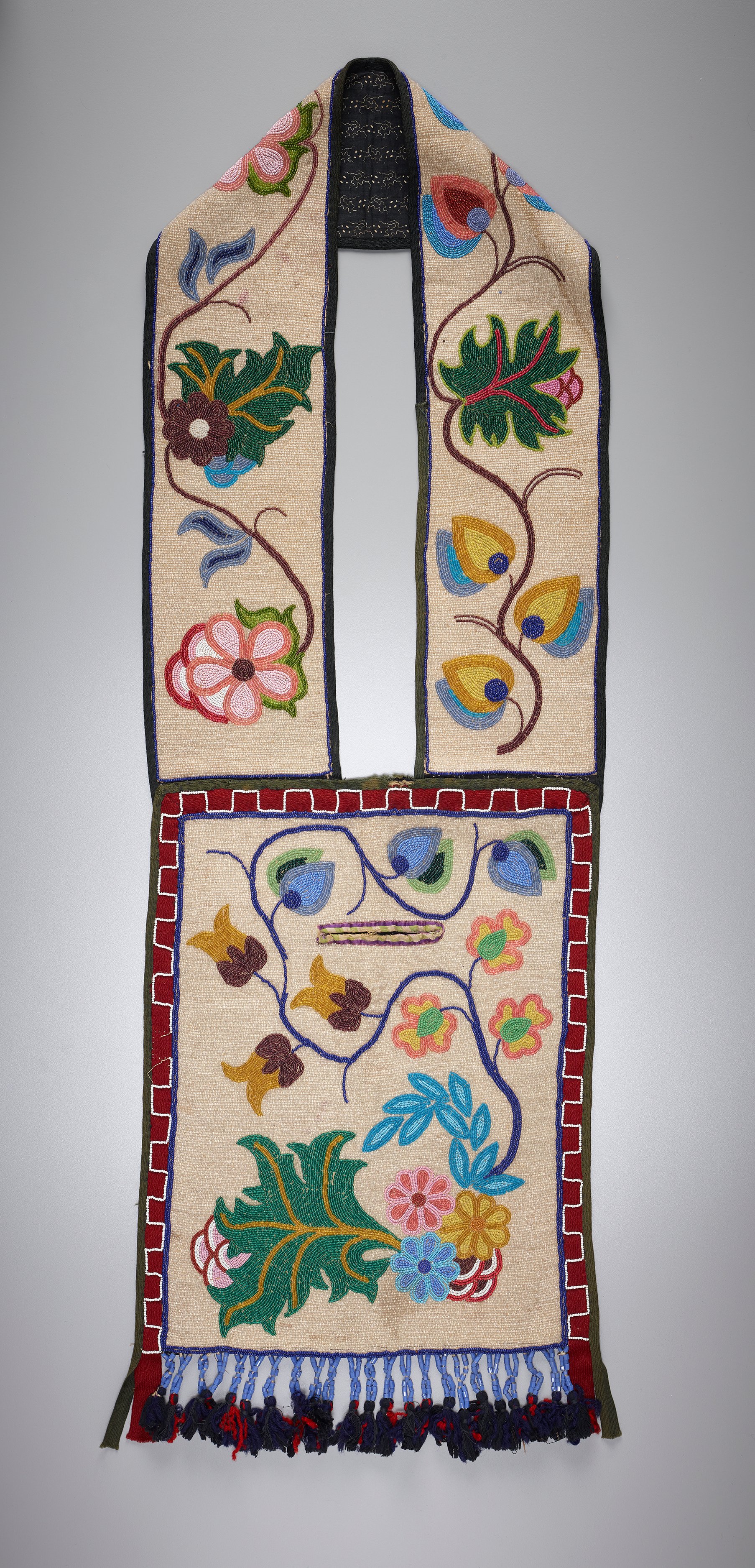
Azhooningwaon Bandolier Bag by an
Anishinaabe artist (circa early 20th century). Photo courtesy of
the Yale Peabody Museum of Natural History.
“Place, Nations,
Generations, Beings: 200 Years of Indigenous North American
Art” is on view at the Yale University Art Gallery, 1111 Chapel
Street at York Street, New Haven, Connecticut, November 1,
2019–June 21, 2020.
The post Museums Have Stumbled When It Comes to Curating
Indigenous American Art. These Native Students at Yale Are Modeling
a New Way Forward appeared first on artnet News.
Read more https://news.artnet.com/exhibitions/a-new-way-to-curate-indigenous-art-1754667
Further reading


Leave a comment