
Pack Your Bags! Here Are 12 Far-Flung Museums That Are Totally Worth Traveling For
Are you longing to activate your
out-of-office autoreply, but tired of hitting the same cities over
and over? For your next big trip, consider adding an extra leg to
visit a destination museum. From a tiny Japanese art island to a
sprawling cultural compound in the Brazilian countryside, art
institutions are springing up around the globe in far-flung locales
that you might not otherwise think to visit. But trust us, it’s
worth the trek.
If the dreaded drum roll to
Labor Day has your wanderlust in overdrive, check out our list of
12 unique museums you should travel the world to visit.
Naoshima, Japan
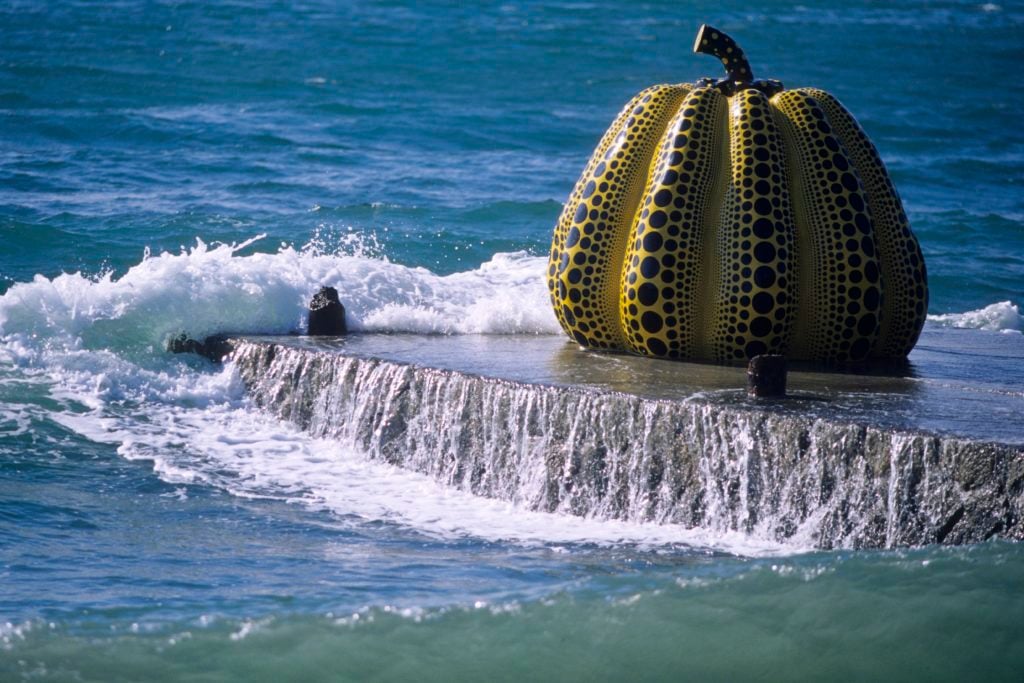
A Yayoi Kusama pumpkin on view
at the Benesse foundation in Naoshima, Japan. Courtesy of Veronique
Durruty /Gamma-Rapho via Getty Images.
A tiny island in Japan’s Seto Inland Sea, Naoshima is an art
junkie’s dream, with more museums per gorgeous square foot than
you’re likely to find anywhere else. During the 1990s, Japanese
businessman Soichiro Fukutake transformed the once-quiet isle into
an immersive art destination centered around a largely subterranean
museum designed by Pritzker Prize winner Tadao Ando. The Chichu Art
Museum houses a world-class collection of works by Modern masters
ranging from Claude Monet to James Turrell and Walter De Maria.
Other highlights of the island include the Lee Ufan Museum and the
Benesse House Museum. Not tired yet? The Teshima Art Museum and
Inujima Seirensho Art Museum are accessible by ferry on a nearby
island.
The
Museum of Old and New Art in Hobart,
Tasmania
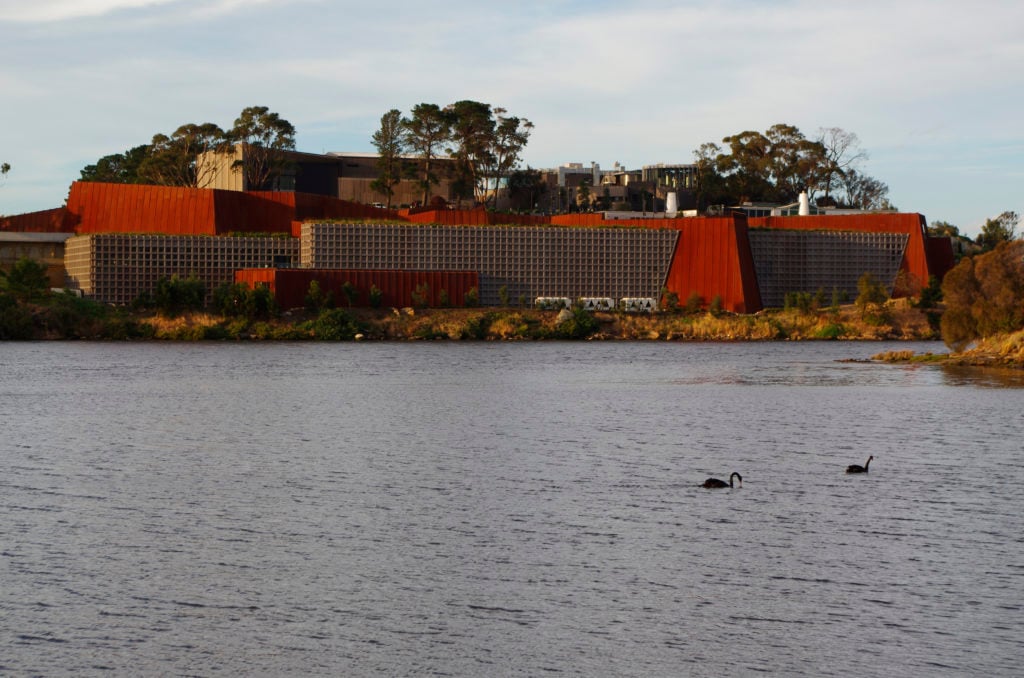
MONA, the Museum of Old and New Art, as
idiosyncratic inside as outside, has made Hobart a destination for
world travelers. Courtesy of Auscape/Universal Images Group
via Getty Images.
If Australia isn’t far enough away for you, head to the island
of Tasmania, off the country’s southeastern coast, where you’ll
find the Museum of Old and New Art. The oddball institution houses
(as its name would suggest) an eclectic mix of ancient,
contemporary, and outright bizarre art from the collection of David
Dominic Walsh, an eccentric Australian businessman, professional
gambler, and art collector. The remote museum is not for the faint
of heart (or stomach): one of its most infamous works is Belgian
artist Wim Delvoye’s cloaca machine, also known “the shit machine,”
which brings food through a series of tubes and chemical processes
that mirror the digestive system. Though such outlandishness has
fired up Walsh’s critics, the museum has been a much-needed boon
for Tasmania’s tourism economy—and offered visitors great cocktail
party fodder.
Amparo Museum in Puebla,
Mexico
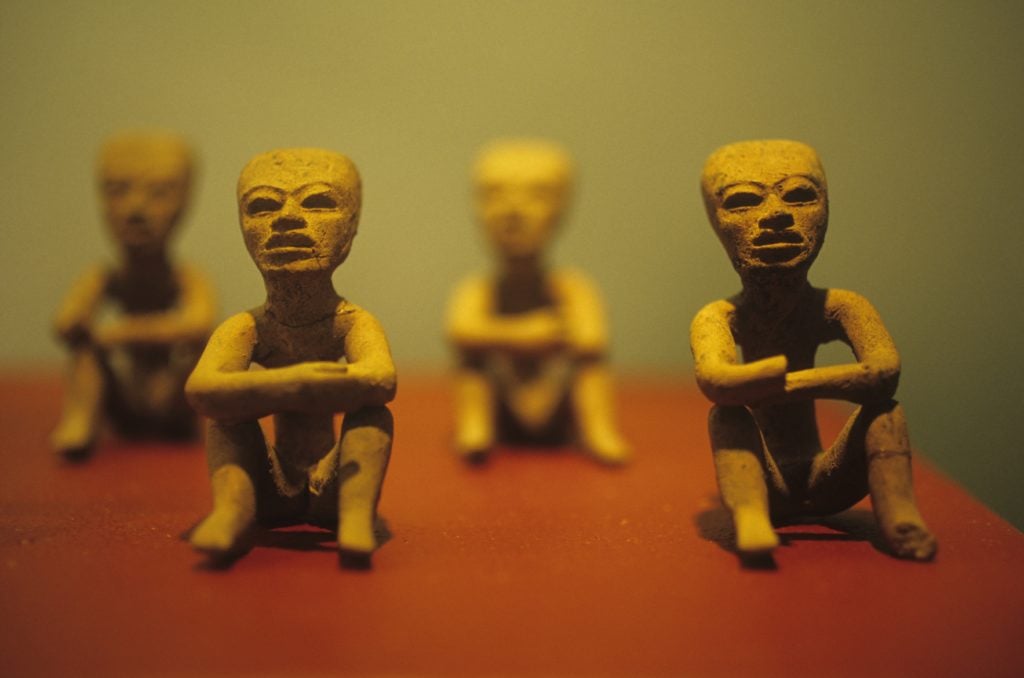
Pre-Columbian sculpture, Museo Amparo in
Puebla, Mexico. Courtesy of Veronique Durruty/Gamma-Rapho via Getty
Images.
Housed in two colonial-era
buildings, the Amparo Museum is set in the center of historic
Puebla, a city two hours southeast of Mexico City. The sleepy
museum remains shockingly under the radar considering it houses
arguably the most significant collection of Mexican Pre-Columbian
art and artifacts in the world. Here, visitors will find objects
and artworks from Mesoamerica’s indigenous civilizations,
especially the Maya, Aztecs, and Zapotecs, with highlights
including a Huasteca necklace of 17 skulls carved from bone, the
“Olmec Thinker” statue, a Mayan altar from Palenque, and a stele
depicting the creation of the universe. While you’re in the area, be sure to check out
the nearby International Museum of the Baroque, with its
surprisingly minimalist building designed by Toyo Ito.
Zeitz Museum of Contemporary Art Africa in
Cape Town, South Africa
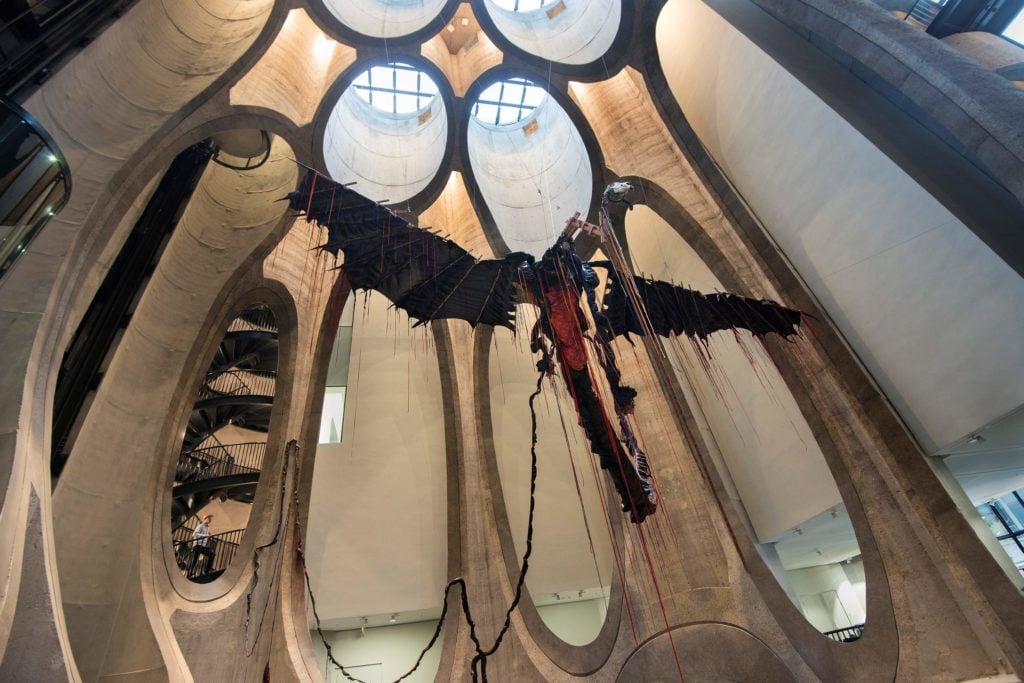
A sculpture by South African artist
Nicholas Hlobo dominates the main hall in The Zeitz Museum of
Contemporary African Art in Cape Town on September 15, 2017.
Photograph Courtesy of Rodger Bosch/AFP/Getty Images).
Zeitz MOCAA, which opened in 2017, is the
largest museum in the world dedicated to contemporary African art.
(Although it is located in a big city, we opted to stretch our
definition and include it on this list because South Africa is a
long flight away for most urban-dwellers.) Housed in former corn
silo dating from the 1920s, the space—replete with a captivating
honeycomb interior—was redesigned by architect Thomas Heatherwick
to such great effect that he might be forgiven for the much-maligned Vessel in
New York, completed a couple years later. The museum’s founding
collection comes from the German businessman Jochen Zeitz, the
former head of Puma, and includes work by Chris Ofili, El Anatsui,
Marlene Dumas, William Kentridge, and many others.
Messner Mountain Museum in South Tyrol,
Italy
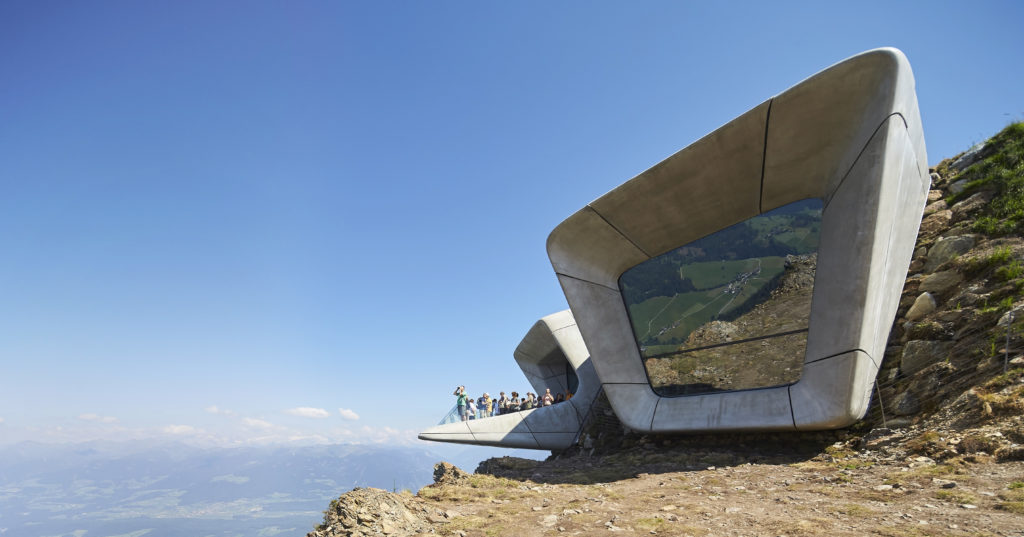
Elevation of picture window and viewing
balcony. Messner Mountain Museum Corones, Mount Kronplatz, Italy.
Architect: Zaha Hadid Architects, 2015. (Photo by: Hufton+Crow/View
Pictures/Universal Images Group via Getty Images)
If you like your culture with a side of hiking, the Messner
Mountain Museum in Italy is for you. Developed by the champion
mountaineer Reinhold Messner, the first man to climb Mount Everest
alone without bottled oxygen, it is a constellation of six
institutions devoted to the history and culture of mountain
climbing. The newest museum in the bunch, called Corones, is a
concrete vessel wedged into the side of a mountaintop by the late
architect Zaha Hadid. The collection includes early maps, old
hiking boots, and other tools of the trade. But as any climber will
tell you, it’s not the destination (i.e., the museum) that will
bring you joy as much as the journey to get there.
The Chinati Foundation in Marfa,
Texas
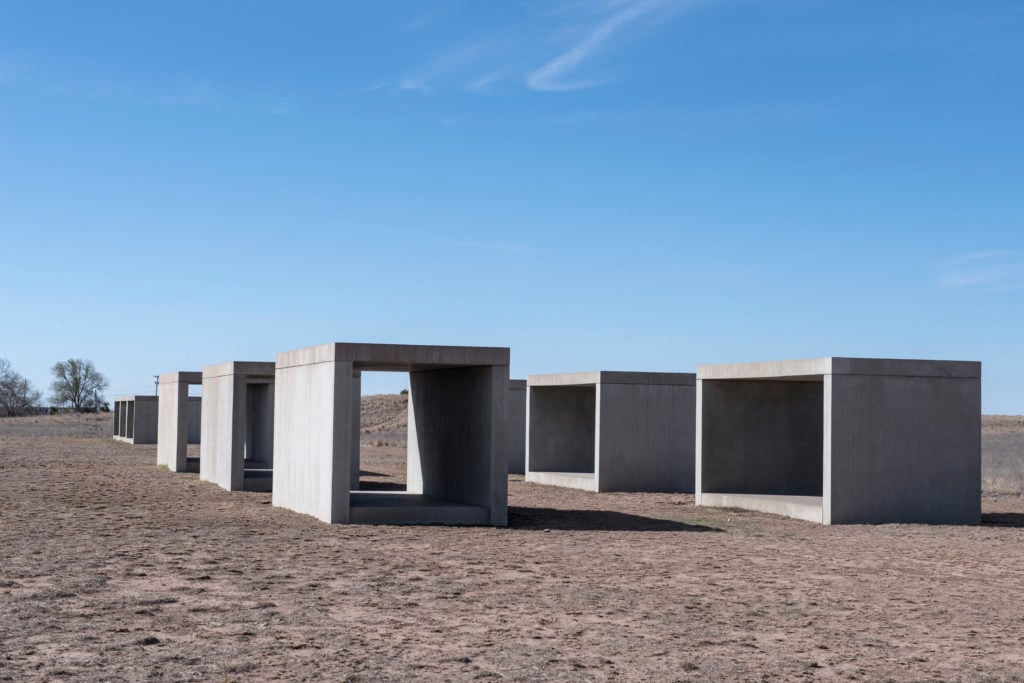
Donald Judd’s Minimalist concrete cubes
at the Chinati Foundation, Marfa, Texas. Courtesy of Carol M.
Highsmith/Buyenlarge/Getty Images.
No list of remote art
destinations would be complete without Chinati. Founded by Donald
Judd in 1986, the museum and monument to minimalism is set inside a
former military fort in West Texas. Conceived as a place to bring art,
architecture, and the environment into coherent balance, the museum
originally housed works by Judd, Dan Flavin, and John Chamberlain
alone, but has since expanded to include contemporary artists whose
work is in keeping with this vision.
Inhotim in Brumadinho, Brazil
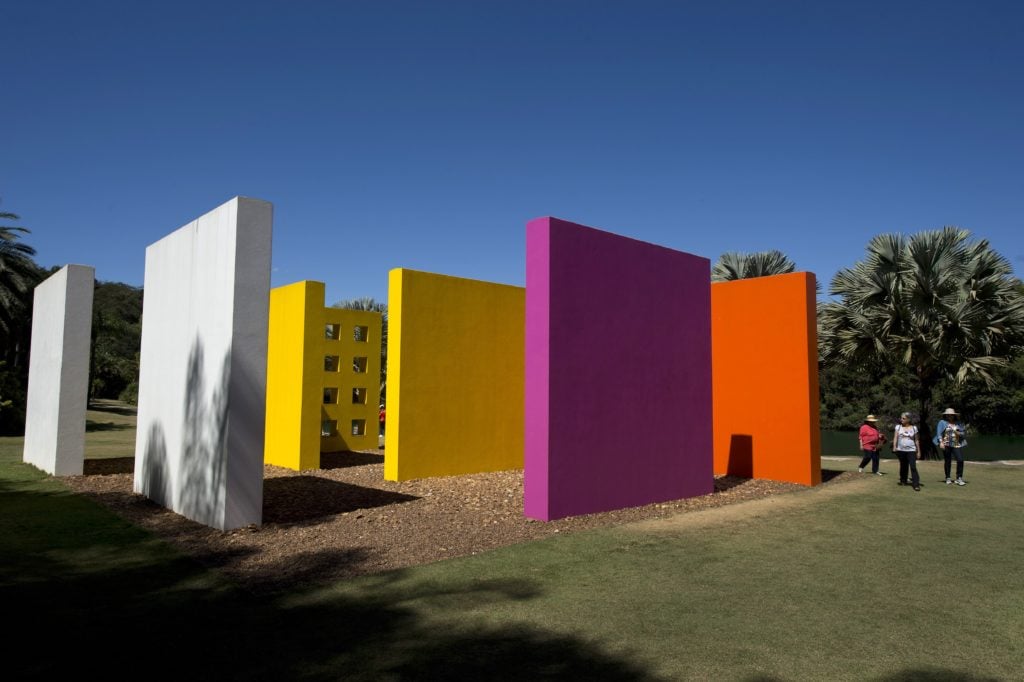
A work by Brazilian artist Helio
Oiticica on view at the Inhotim Centre for Contemporary Art in
Brumadinho, some 60 km from Belo Horizonte, southeastern Brazil, on
August 11, 2015. Courtesy of Nelson Almeida /AFP/Getty Images.
Inhotim is a sprawling
5,000-acre garden and contemporary
art institute that is home to both one of the largest contemporary
art collections in Latin America as well as one of the biggest
sculpture gardens in the world. Built in 2004 by (now
embattled) former
mining tycoon Bernardo Paz, Inhotim was—like many of its far-flung
peers—developed as a place where the environment, art, and
architecture come together. Artists including Hélio Oiticica, Yayoi
Kusama, Anish Kapoor, and Vik Muniz were invited to display work in
dedicated pavilions, offering them the space and budget to realize
their wildest dreams. (Doug Aitken, for example, dropped a
microphone into a 200-meter-deep well to allow visitors to hear the
inner workings of the earth. You can’t do that at MoMA.)
Another highlight: the majestic botanical garden designed by
the late landscape artist Roberto Burle Marx.
Jupiter Artland in Wilkieston,
Scotland
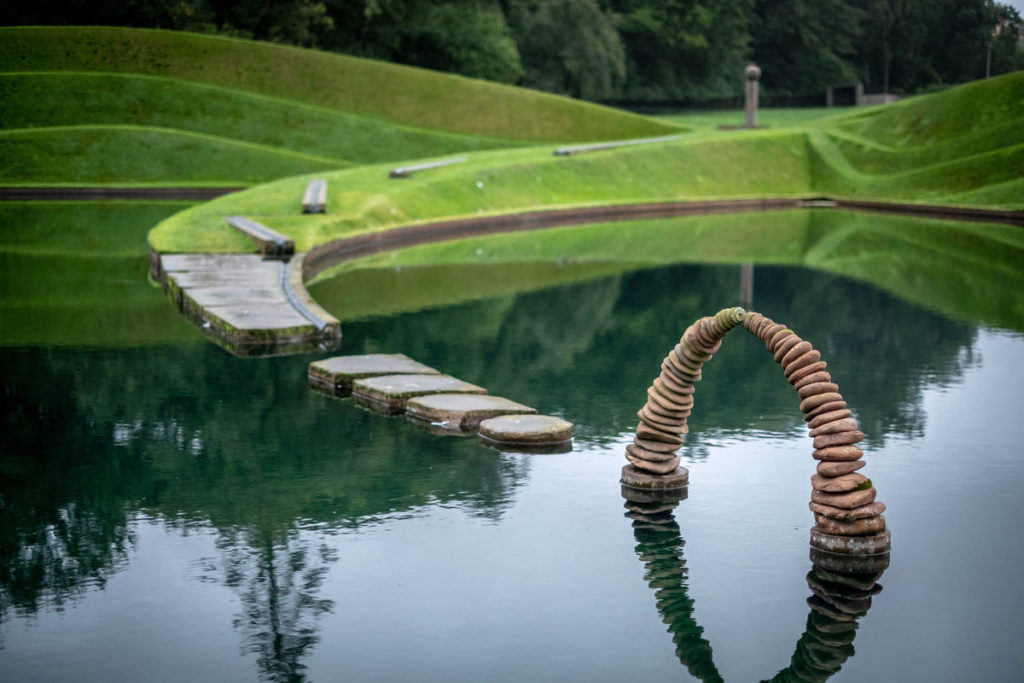
Charles Jencks’ Cells of Life
at Jupiter Artland. Courtesy of Steve Hodgeson/Flckr Creative
Commons.
Let your Alice in Wonderland
fantasies come to life in this Scottish sculpture garden, where the
green rolling hills are shaped into tiered ziggurat-like forms (the
handiwork of landscape architect Charles Jencks) and whimsical
outdoor sculptures pop up at every turn. The grounds are rumored to
be situated on a meeting ground of the Knights Templar, which seems
entirely possible: a ritualistic, though decidedly pagan, quality
suffuses this arts destination. Wandering the grounds, you’ll
discover works by Ian Hamilton Finlay, Cornelia Parker, Anish
Kapoor, and many others. In the warmer months, visitors can expect
outdoor performances by choreographers and other
artists.
Heide Museum of Modern Art in Bulleen,
Australia
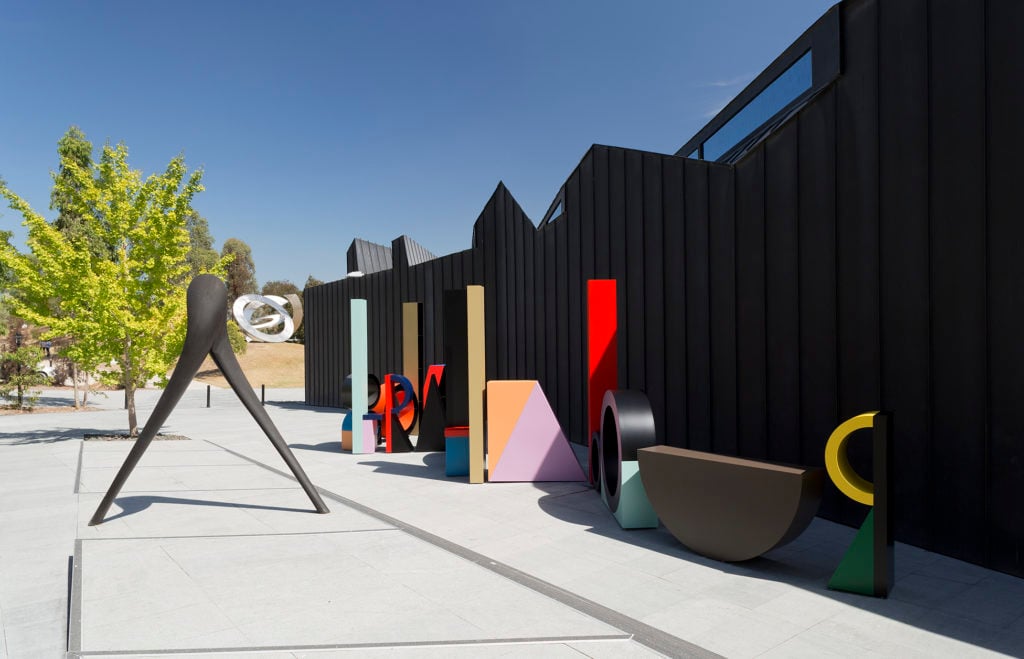
Courtesy of the Heide Museum.
Located about 20 miles north of
Melbourne, the Heide Museum is today regarded as one of Australia’s
most significant cultural institutions. But the museum started out
with more humble ambitions. It began as the home of John and Sunday
Reed, a couple who purchased the property in 1934 and decided to
open their doors to a circle of artists. Eventually, their growing
and dazzling collection of contemporary art outgrew the confines of
their home, so they added another building, Heide 2, to the
compound in 1964. (A third “Heide” opened in the 2000s.) Now a
full-fledged museum (and no longer a private home), Heide boasts a
singular collection of Australian modern art including works
by Mirka Mora, Charles
Blackman, Joy Hester, and Albert Tucker.
Louisiana Museum of Modern Art in Humlebæk,
Denmark
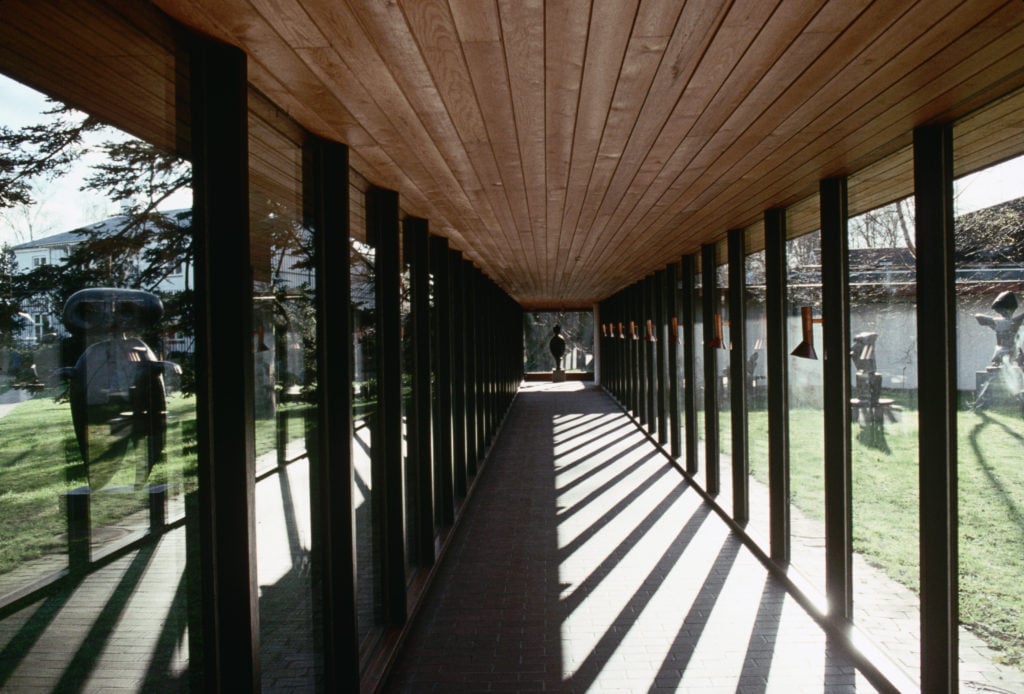
Covered Walkway in Louisiana Museum.
Courtesy of Robert van der Hilst/CORBIS/Corbis via Getty
Images.
The Louisiana Museum is not, as
one might expect, found in the Bayou state of the American
Southeast. Rather, it is located 25 miles north of Copenhagen. The
name was coined by the man who built the structure that eventually
became the museum; he had had three wives, each named Louise (yes,
really). Here, you’ll find a world-class collection of Modern and
contemporary art, with two floors of work by Giacometti and a Yayoi
Kusama infinity room to boot. Well-traveled art lovers often cite
the Louisiana as their favorite museum in the world—and with the
floor-to-ceiling windows overlooking the Øresund Sound and a solid program of
contemporary exhibitions, it’s not hard to see
why.
James Turrell Museum in Salta,
Argentina
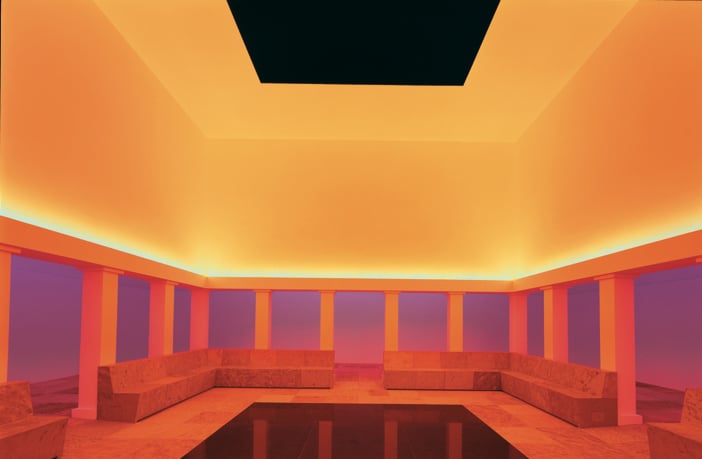
James Turrell, Unseen Blue
(2002). Florian Holzherr / Copyright James Turrell / Courtesy
of Grupo Colomé.
If James Turrell’s
decades-in-the-works, far-flung Roden Crater
tells us one thing, it’s that the Light and Space artist doesn’t
particularly care about accessibility—but he is a
perfectionist. The only museum devoted solely to Turrell is located
deep in the Argentinean interior on the Hess vineyard, owned by
Swiss entrepreneur Donald Hess. Designed by the artist himself, the
museum features nine of Turrell’s signature immersive light
installations and includes the largest of his skyspaces, Unseen
Blue (2002), the centerpiece of the collection. Until Roden
Crater opens to the public (and who knows when that will happen?),
it’s the best way to immerse yourself in the artist’s entrancing
work.
Fundação de Serralves in Porto,
Portugal
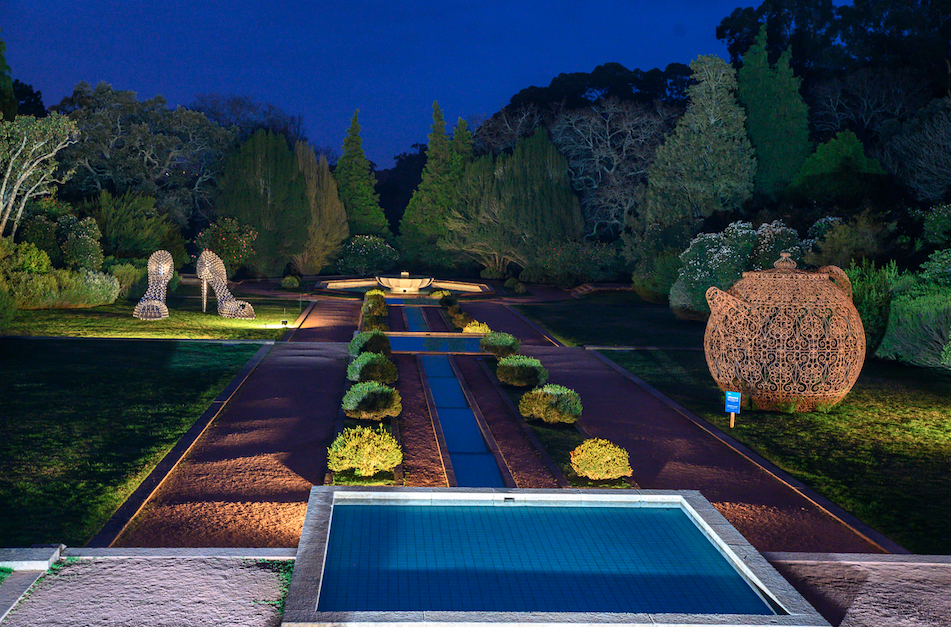
Fundação de Serralves. Courtesy of Getty
Images.
The Fundação de Serralves is well equipped to delight and
refresh any weary traveler. Encompassing a contemporary art museum,
an Art Deco villa, and an idyllic garden, the institution is home
to more than 4,000 works of contemporary art, with a strong
representation of Portuguese artists, and is also known for
orchestrating many a world-class temporary exhibition (a show by
Joan Jonas is on view now). Just remember to wear your walking
shoes: the expansive and biodiverse garden is interspersed with
sculptures by artists such as Dan Graham, Angelo de Sousa, and
Angela Bulloch. You’ll want to see it all.
The post Pack Your Bags! Here Are 12 Far-Flung Museums That
Are Totally Worth Traveling For appeared first on artnet
News.
Read more https://news.artnet.com/exhibitions/far-flung-museums-remote-destinations-1618174
Further reading


Leave a comment