
Sotheby’s Online Contemporary Sale Fetches $13.7 Million—More Than Doubling the Previous Record for a Virtual Art Sale, Set Three Weeks Ago
Sotheby’s reported a key milestone yesterday when its
year-to-date online sales ticked over $100 million, thanks to a
$13.7 million online contemporary day sale that opened May 4 and
closed May 14. The sale more than doubled the previous record
for any online sale—a high mark set three weeks ago by another Sotheby’s
contemporary auction, which fetched $6.4 million. (Christie’s
highest online total is $4.7 million.)
“We’ve held 44 auctions since March 1,” CEO Charles Stewart
reminded Artnet News in a recent phone call. The auction house,
which began building up digital infrastructure under its previous
CEO Tad Smith, put its foot on the gas pedal more forcefully amid
the global shutdown.
Stewart, who has an extensive background in finance, took the reins of
Sotheby’s in October, roughly four months after
the business was acquired for $3.8 billion by telecom magnate
Patrick Drahi, and four months before the world began to
shelter in place, throwing all markets into disarray. (Stewart
previously worked for Drahi at the cable-television company Altice,
where he served as CFO.)
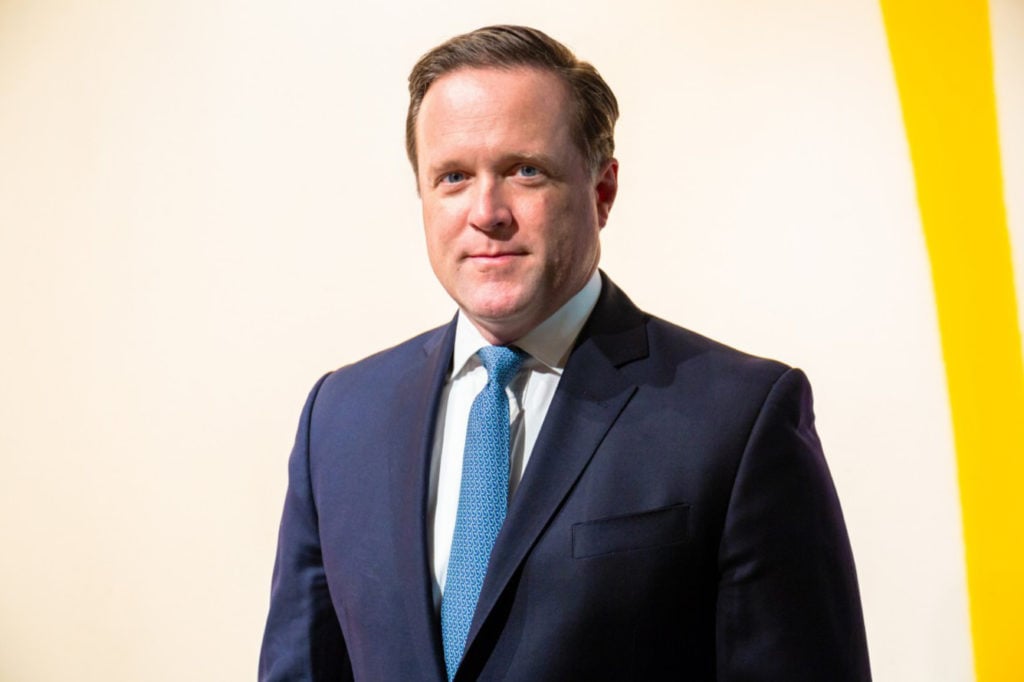
Charles F. Stewart, chief executive of
Sotheby’s. ©Sotheby’s.
“Of course, there is any number of things changing about how we
sell, but we’re adapting and clients are adapting, too,” Stewart
said. As part of that adaptation, Sotheby’s has added a “Buy Now”
button, eBay style, for certain lots and has focused on expanding
its luxury-goods offerings, including weekly watch auctions. Online
sales lend themselves, Stewart said, to “things
where there are multiple versions of them, such as watches, or
jewelry, or wine. You don’t need to see a bottle of wine in the
same way you need to see a an Alex Katz painting to fall in love
with it.”
But Sotheby’s is pursuing novel strategies on the art side as
well. Its record-setting contemporary sale boasted an unusual
breakdown: 112 lots sold, five lots unsold, and a hefty 27
lots (roughly 19 percent) withdrawn prior to the close of the
sale. Asked about withdrawal options available to consignors—a
number of whom were clearly unnerved by the lack of bidding
activity on their lots—a representative said, “In an unprecedented
period, we were flexible with consignors to best meet their needs
and ensure they felt confident bringing their works to
auction.”

Brice Marden, Window Study #4
(1985). Image courtesy Sotheby’s.
While the option to withdraw a work 10 days into a sale was
likely key in enabling Sotheby’s to secure property—and is a keen
way to keep the sell-through rate (and market confidence) high—it
also creates misleading top-line figures that suggest
the $13.7 million total exceeded the high estimate, when it
fact it likely would have fallen short if accounting for the many
withdrawn lots. (Sotheby’s declined to provide a pre-sale estimate
including withdrawn lots.)
Still, the overall result is the highest yet for an online
sale—and many of the prices seem to serve as a counterargument to
the notion that people are reluctant to spend money on younger,
less museum-tested artists during moments of economic
uncertainty.
Just two lots—works by Christopher Wool and Brice Marden—broke
the million-dollar mark. The Wool was an untitled 1988 abstract
painting with a third-party guarantee that squeaked by with one bid
to make $1.22 million, just over its low estimate of $1.2 million.
(Final prices include the buyer’s premium; pre-sale estimates do
not.) The Marden, a 1985 painting titled Window Study
#4, fared better, selling for $1.1 million after eight bids
and easily clearing the $700,000-to-$900,000 estimate.
Meanwhile, Yoshitomo Nara, whose auction record soared
to just under $25 million at a Hong Kong auction last fall, was
also in demand. Witching (1999), featuring one of his
signature childlike figures with shut eyes and an obstinate
expression, sold for $740,000, in the mid-range of the
$600,000-to-$900,000 estimate.
The sale kicked off with a lot that generated some controversy
in certain contemporary-art circles: a work by Matthew Wong,
the much-admired artist
who died by suicide in October at the age of 35. A flipper
consigned Untitled (2018), a small watercolor on
paper, two years after buying it at the artist’s first gallery show
in 2018—and just months after his tragic death. And since it is
nearly impossible to find work by Wong on the primary market (the
paintings in his final show at Karma last year were not for sale),
this one was bound to ignite fireworks. The final price
was $62,500, four times its $15,000 high estimate, thanks to
more than two-dozen bidders.
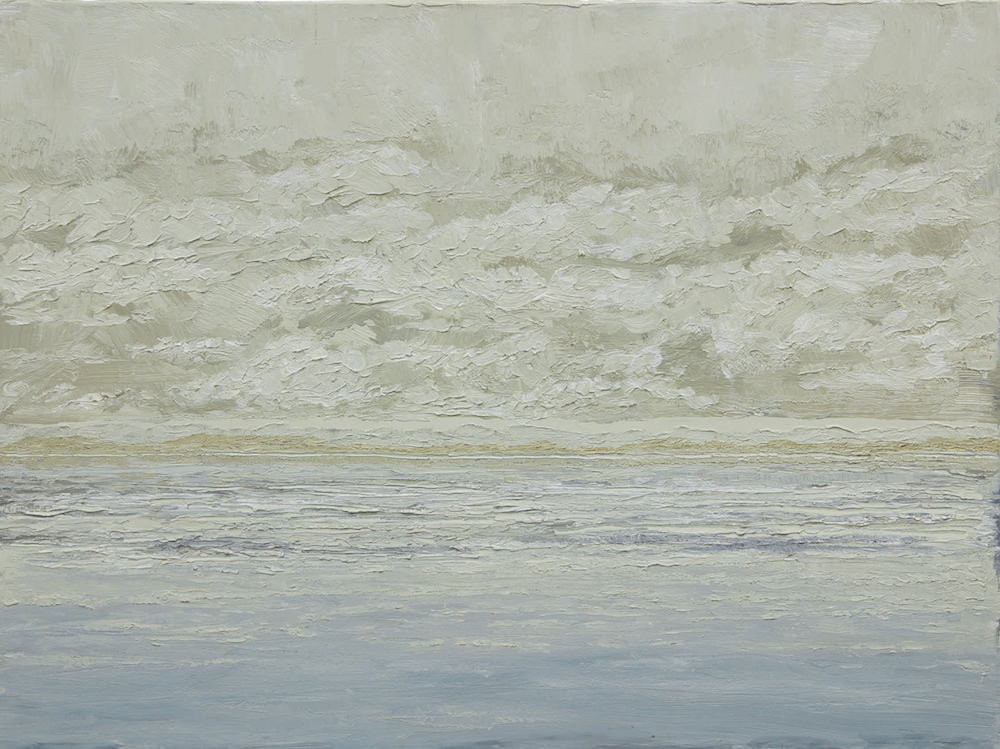
Lucas Arruda, Untitled (2012).
Image courtesy of Sotheby’s.
Other artist records were set for works by Claire Tabouret,
Katherine Bradford, and Kengo Takahashi. Nathan With a
Purple Hat (2019) by Tabouret, whose in-demand figurative
paintings often scrutinize identity, memory, and childhood,
leapt over its $35,000 high estimate to a final price of
$81,250.
The sale also included plenty of other buzzed-about names that
saw solid results, including Lucas Arruda ($350,000 for an
impasto-heavy seascape) and Julie Curtiss ($150,000 for a painting
of a woman with curlers in her hair). A Jeff Elrod painting once
owned by Leonardo DiCaprio, meanwhile, sold for $25,000, just below
its low estimate.
Among more established artists, a record was set for
hyperrealist painter Richard Estes, whose Broadway and
64th (1984) sold for $860,000 on an estimate of $300,000 to
$400,000.
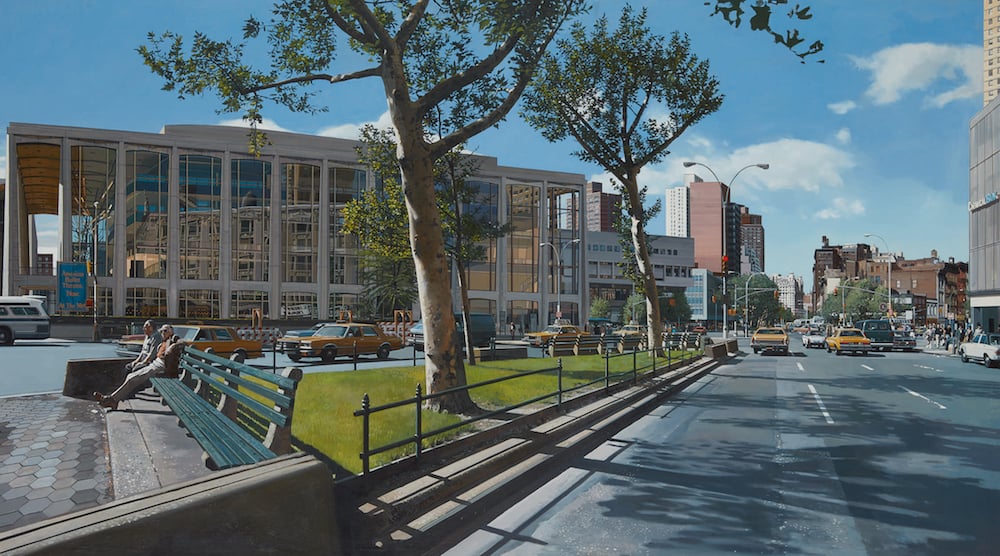
Richard Estes, Broadway and 64th
(1984). Image courtesy Sotheby’s.
Max Moore, co-head of the contemporary art day sale, said that
bidders came from 35 countries—and, perhaps even more
interestingly, 40 percent of bidding came via mobile device.
Asked about the challenges of managing the sale for the first
time with no live component, Moore said, “It’s worth noting that
this sale was not converted from the live version. It was created
as an independent online sale when it became clear that live sales
would not be an option at this time.” And because Sotheby’s had
experience with online sales in the past, it had proof to show
consignors that such a format can work.
Moore added that the results seem to prove online boosters’
contention that “the barrier to entry in online sales is much lower
and less intimidating than a live sale.” This time around, nearly
one-third of all buyers (29 percent) were new to Sotheby’s. And
while the current market is not exactly one where new stars are
getting made, it is demonstrating steady interest in the ones who
have already arrived. “I think it is a testament to the market’s
appetite for quality works at attractive prices,” Moore said.
The post Sotheby’s Online Contemporary Sale Fetches $13.7
Million—More Than Doubling the Previous Record for a Virtual Art
Sale, Set Three Weeks Ago appeared first on artnet
News.
Read more https://news.artnet.com/market/sothebys-online-contemporary-sale-record-1862865
Further reading


Leave a comment