
‘That’s Where the Energy Is’: Art Dealer Monica King on the Importance of Looking Beyond the Major Trends
Taking a walk around Tribeca on the way to the newly opened
Monica King Contemporary gallery on Lispenard Street, it’s easy to
see why this neighborhood is being hailed as the next big cultural
hub of the city. It has the charm of Old New York, is full of large
buildings with ample space inside, and is dotted with
galleries.
But King’s gallery—which is currently showing “Gregory
Coates: Actual and Implied,” the second exhibition since the space
opened in September—is tucked away from the bustling frenzy of
nearby Canal Street, which gives the space room to breathe.
After working for mega-galleries like Pace and major dealers
like Paul Kasmin for years, King returned to her home state of
North Carolina to take the helm of Charlotte’s SOCO Gallery for
two-and-a-half years before eventually returning to New York to
open her eponymous space.
On a freezing December day, posted up in King’s “art grotto”—a
room filled with low-slung sofas in the back of the gallery that
she uses for meetings in place of a traditional office—she sat down
with Artnet News to discuss her first months back in New York, the
major art-world trends of 2019, and what she feels is coming next
for the industry.
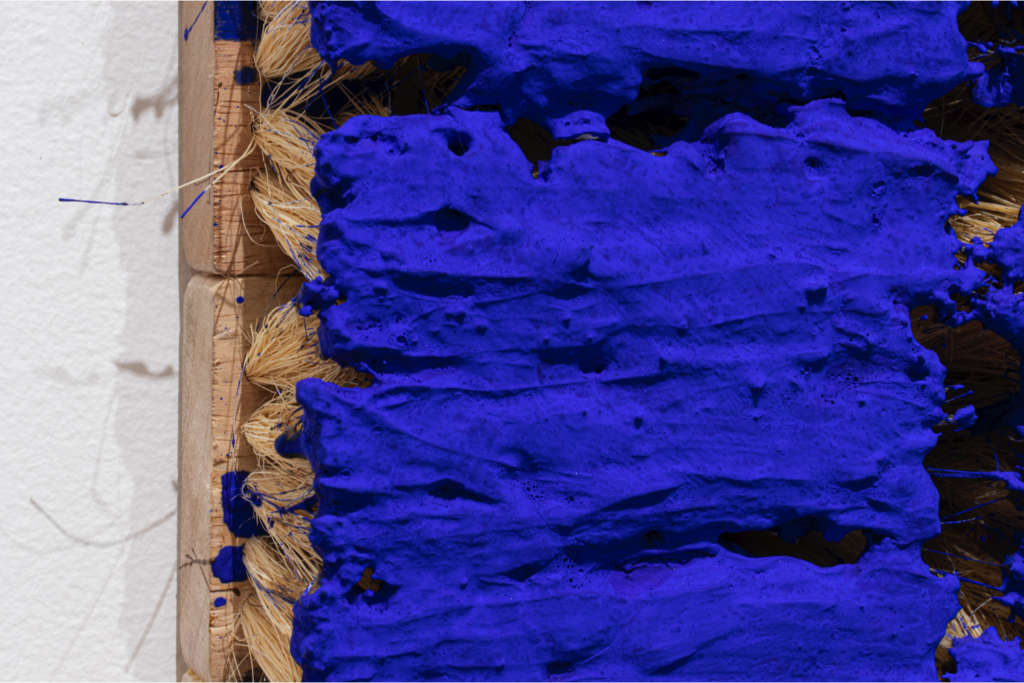
Gregory Coates, Brushes for
Christiane (2016). Courtesy of the artist and Monica King
Contemporary.
What would you say were the dominant art themes of
2019?
One of the things I am most cognizant of is that sometimes, in
the art world, we get bogged down with the idea that everything
needs to fit neatly into these big themes. Those themes then
dominate the conversation. I tend to look for things that are in
the folds, outside of those big themes, because that’s where more
of the energy is—maybe because people are not as beholden to the
trends of the day.
I think it’s a lot like fashion, where there are people who
follow the trends, who are reacting and asking, “What should I be
wearing? What shoes do I need this year?” Whereas I think people
who make the most important contributions to fashion are those who
have a singular sense of style and purpose, who are comfortable in
themselves.
I apply the same idea to the art world. I look for the authentic
voices who may also happen to fit into some broader theme, but I
don’t seek them out because of it.
A lot has been written about the art world’s quest to
re-evaluate those who have historically been sidelined. What do you
make of recent efforts by some museums and galleries to bring some
of those artists into the conversation?
I think it’s great, obviously, that we’re seeing things like the
reinstallation at MoMA, or the Baltimore Museum
proclaiming it’s going to focus more on
women.
I think these are wonderful things. At the same time, we really
shouldn’t have to be making these grand gestures. Sadly enough,
though, we still are, and maybe one day it will lead to a more
[authentically] free and diverse environment.
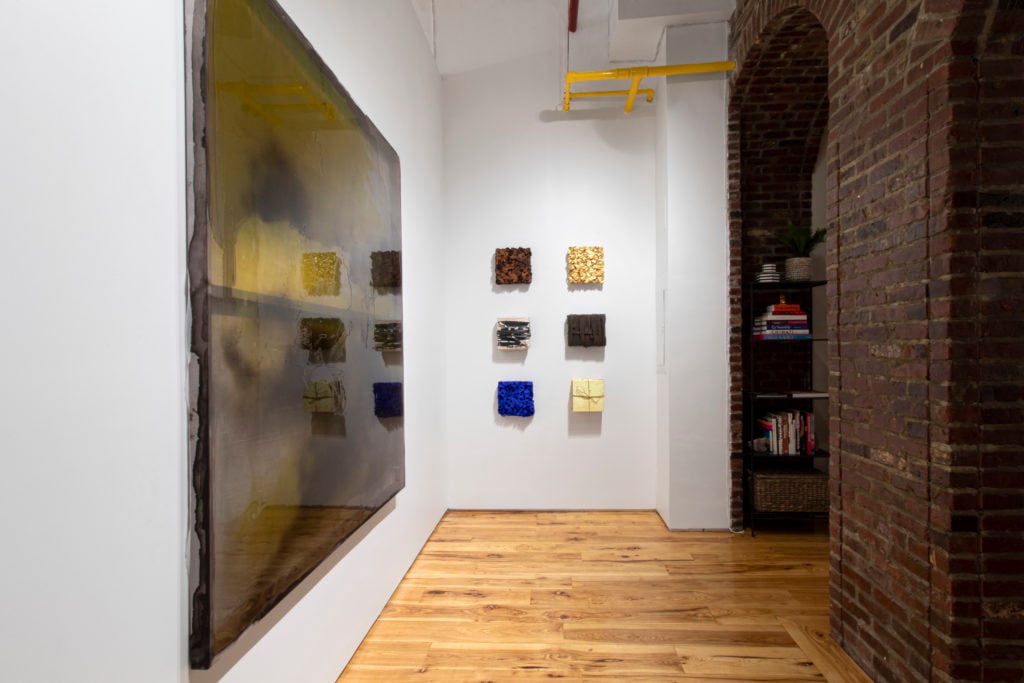
Installation view at Monica King
Contemporary. Courtesy of Monica King.
Your gallery program is very diverse in terms of where
your artists are living and working. I noticed a lot of artists who
are conspicuously outside the capital-a art world. Was that a
conscious decision?
Some of them are based in North Carolina, which is where I’m
originally from, and where I directed the SOCO Gallery. I
think it’s less reflective of me or my tastes—what I’m really
looking for in an artist is someone who makes the work because they
have to, and someone for whom the art is the most important
thing.
All of the artists I work with are looking to create something
that will leave a legacy. It’s not about being “right now” or
making for the moment, but making something that will last and
affect people not just today, but a hundred years from now.
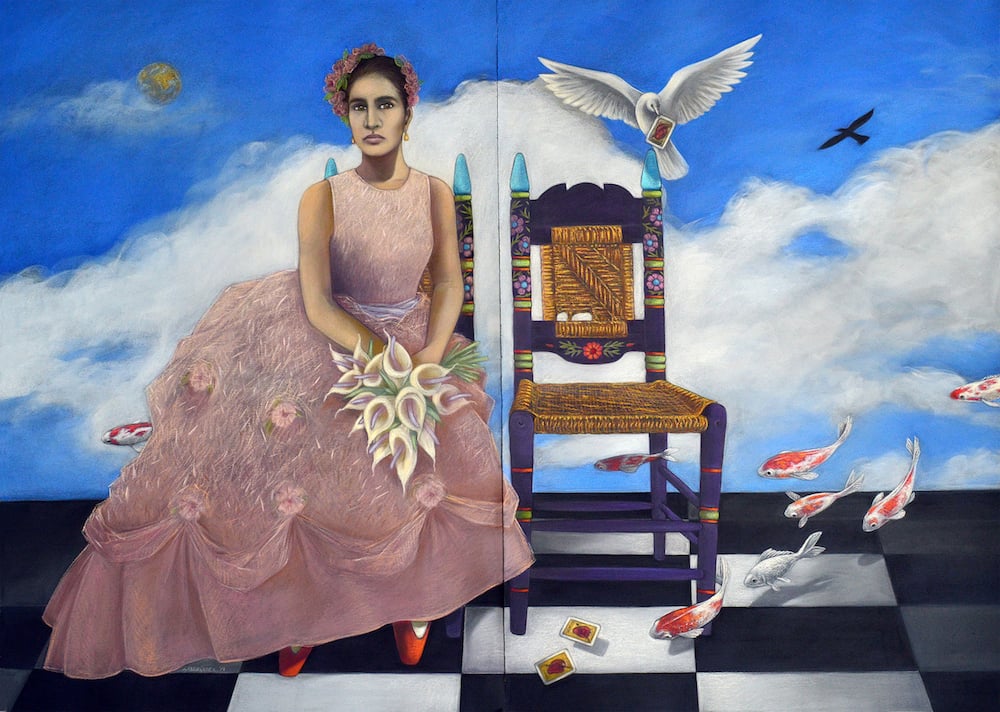
Judithe Hernández, En Mis Suenos Soy
Una Novia (2019). Courtesy of the artist and Monica King
Contemporary.
What can we look forward to in the gallery’s program
next year?
A lot of artists I work with are trailblazers in their
communities. I have a show coming up in September that focuses on
Judithe Hernández, who was the only female member of the Chicano
Art/Los Angeles mural movements in the 1970s, when there was a
second mural renaissance. Recently, the Whitney asked her to speak
about their upcoming exhibition on Mexican Muralism.
She’s been working in her own way for decades, and now [with the
Whitney show] so many people will be exposed to it. This will be
her first solo exhibition in New York City since 1983.
It sounds like art-world institutions are catching up
with her, at long last. But you’re not planning
the show in reaction to that exhibition. You actually plan far in
advance.
Yes. I plan all of my shows years in advance. I’ve already got
shows planned through 2021. I want to give my artists as much time
as possible to prepare for a show, to make the work how they want
to—for the space, and in their own time. And at the gallery level,
we have time to really do it right for them.
Another show I have coming up in March is a dual exhibition of
photographers Nelson Morales and Luis Arturo Aguirre. Both of
these artists are based in Mexico and work to document the shifting
landscapes of gender and identity. Both Morales and Aguirre were
featured in the recent McNay Art Museum show, “Transamerica/n: Gender, Identity, Appearance
Today,” which explores the concept of gender fluidity.
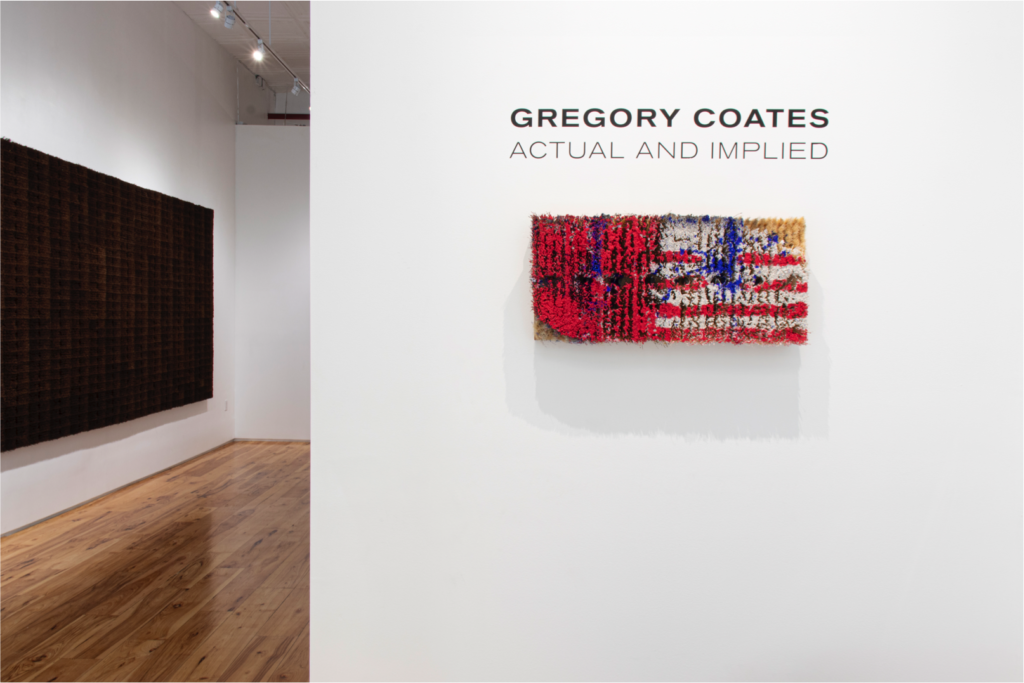
Installation view of “Gregory Coates:
Actual and Implied.” Courtesy of Monica King Contemporary.
Right now, it seems like so many galleries are closing.
Yet you recently took this big leap to open one. Did the current
climate affect your decision at all?
You know, when I finished graduate school, the art world was
dying. If we look back in history, there’s always been
galleries opening and closing, right? Sometimes I think if we
aren’t careful, we can get a little doomsday-ish about where things
are at.
The challenges may be different than they were five years ago,
but there were challenges five years ago, too, when the art world
was in trouble. The art world has collapsed many times over the
course of history, way before any of us were here.
I had a desire to work with certain artists, and there were
projects I felt were unrealized for some of these artists, and it
really started there. And it became clear that I wasn’t doing this
because I want to. I’m doing it because I have to.
If I did something else, yeah, maybe I’d get more sleep, but it
wouldn’t be authentic to who I am. People say, “You’re so brave,”
but it’s no more brave than getting up and being an artist
everyday. That’s real bravery, people!
The post ‘That’s Where the Energy Is’: Art Dealer Monica
King on the Importance of Looking Beyond the Major Trends
appeared first on artnet News.
Read more https://news.artnet.com/art-world/monica-king-interview-1722711
Further reading


Leave a comment