
The Cleveland Museum of Art Got Its Hands on a Group of Rare Michelangelo Drawings the Met Could Never Get—See Them Here
For the first time, a cache of 25 rare Michelangelo drawings,
nearly all of them double-sided, from the collection of Queen
Christina of Sweden, is headed to the US.
The delicate artworks, which include preparatory drawings for
the Sistine Chapel ceiling and for statues commissioned by Pope Leo
X for the Medici tombs in Florence’s San Lorenzo Church, touched
down this weekend at the Cleveland Museum of
Art. In February, they head to the J.
Paul Getty Museum in Los Angeles.
“It’s going to show you the whole arc of Michelangelo’s career,” Heather Lemonedes, the
Cleveland Museum’s deputy director and chief curator, told artnet
News. “The exhibition
will really show all the different ways that Michelangelo was
working, and his different types of projects.”
The show includes early drawings for Michelangelo’s unrealized
fresco Battle of Cascina, which would have graced
Florence’s Palazzo Vecchio; architectural studies for the dome of
St. Peter’s in Rome, which he worked on from 1547 until his death
in 1564; and figurative studies made throughout his career.
“From the 1490s onward, Michelangelo was drawing from corpses
and flayed human bodies so he could have a better understanding of
human anatomy,” Lemonedes said.
Co-organized by the Cleveland and Los Angeles museums, the show
came together thanks to a rare loan from the Teylers Museum in
Haarlem, the Netherlands, currently closed for renovations. The
Teylers Foundation purchased the works, a fraction of the
2,000-piece art collection amassed by Queen Christina, in 1790.
Since that time, the drawings have never left the museum—and not
because no one ever asked.
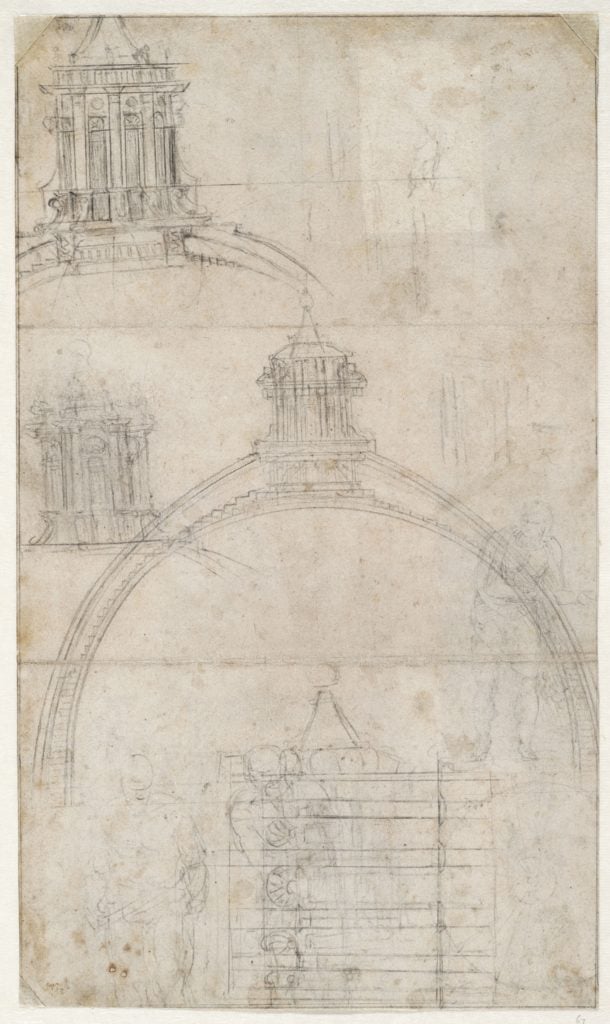
Michelangelo, Section through the
dome of Saint Peter’s with alternative designs for the lantern;
figure sketches (circa 1547–59). Courtesy of the Teylers
Museum, Haarlem.
The Metropolitan Museum of Art
originally wanted to include the Teylers works in their blockbuster
show, “Michelangelo: Divine Draftsman and
Designer.” The ambitious
exhibition included loans of Michelangelo drawings from 50
public and private collections in the US and Europe, including the
Louvre in Paris and the Vatican Library, but the Teylers Museum
nonetheless refused to lend their collection.
“The Met really wanted
them,” Lemonedes said. “But the Teylers Museum didn’t
want their Michelangelo collection to get lost in the
shuffle of the big Met show.”
By any yardstick, the show was a huge success for the Met,
bringing in 700,000
visitors and helping set an annual attendance
record for the institution. But for Michelangelo completists
left wanting more, it may be time to make a pilgrimage to Cleveland
or to the Getty.
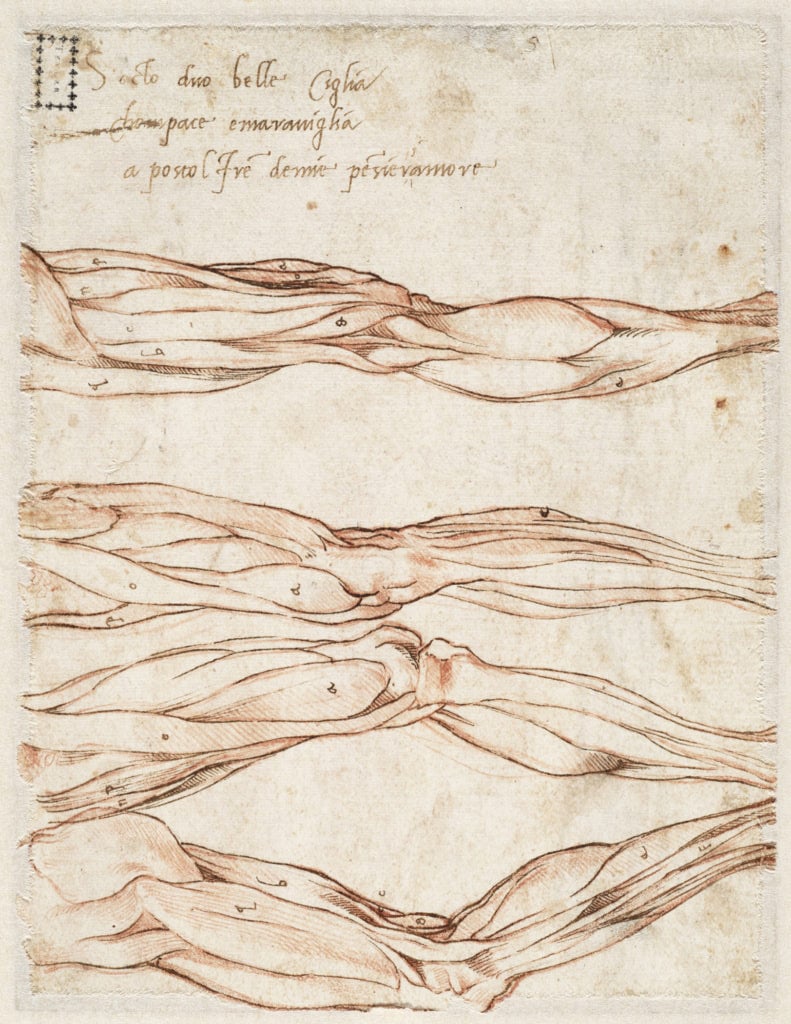
Michelangelo, Four studies of a
leg (circa 1515–20), verso. Courtesy of the Teylers Museum,
Haarlem.
The exhibition, titled “Mind of the Master,” will be rounded out
by two works by the artist from the Getty’s own holdings, and one
from the Cleveland Museum, for 28 Michelangelo sheets in total.
“Being able to show all of
these drawings at one time is really a coup,” Lemonedes said. “At
the Teylers they’re in storage because they’re light sensitive, so
it’s not like you can even go to the Netherlands and see all of
them.”
And though Michelangelo is estimated to have created as many as
20,000 drawings over the course of his long career, only about 600
are known to have survived.
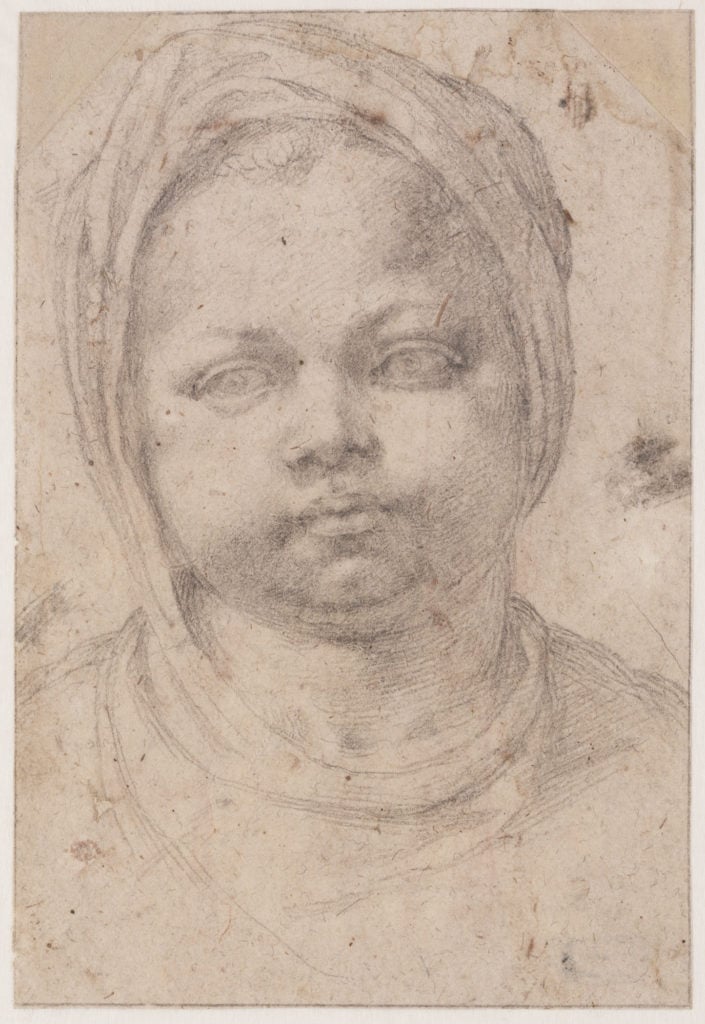
Michelangelo, Head of a child with a
cloth around its head (circa 1520s), recto. Courtesy of the
Teylers Museum, Haarlem.
“Michelangelo valued his
drawings tremendously, but he was also quite private about them,”
Lemonedes explained. “He didn’t want people stealing his ideas,
and he didn’t necessarily want people to know that he labored over
the creative process. He wanted to it to appear as if these
sculptures and frescos just popped out of his being fully formed,
without any blood, sweat, and tears.”
The exhibition also offers select glimpses of the artist’s
personality. “Michelangelo was a poet as well as a sculptor, a
painter, an architect, and he would write poetry on his drawings
and send them to friends,” Lemonedes said. “It shows how intimate
the drawings are. They are in some ways like a diary or a journal;
they show his thoughts, his creative process.”
See more works from the exhibition below.
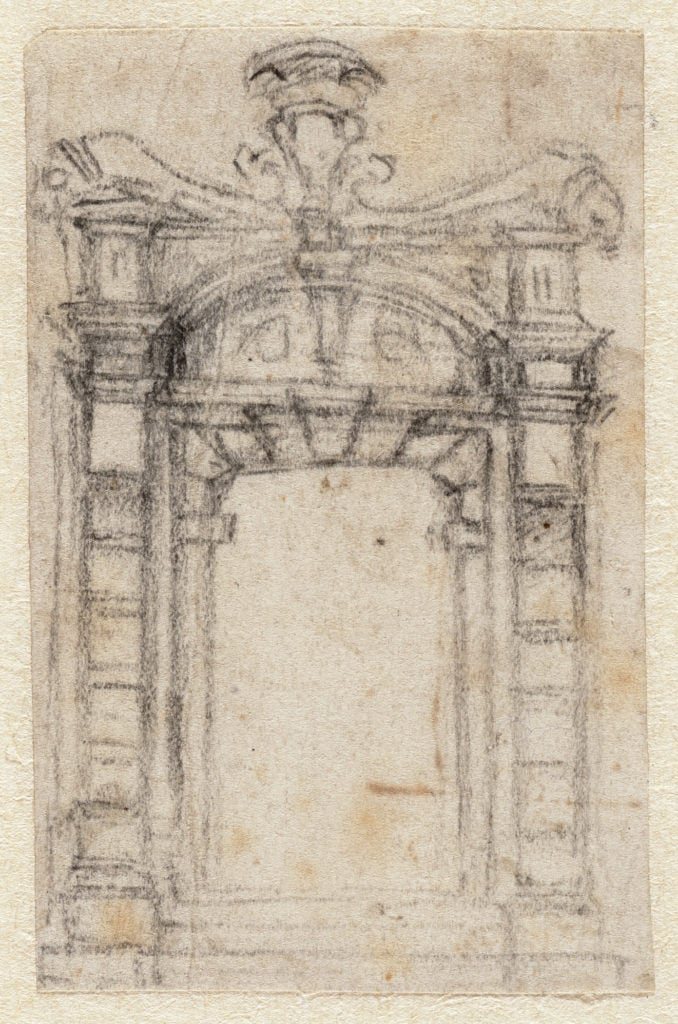
Michelangelo, Study for a
portal (1560–64), recto. Courtesy of the Teylers Museum,
Haarlem.
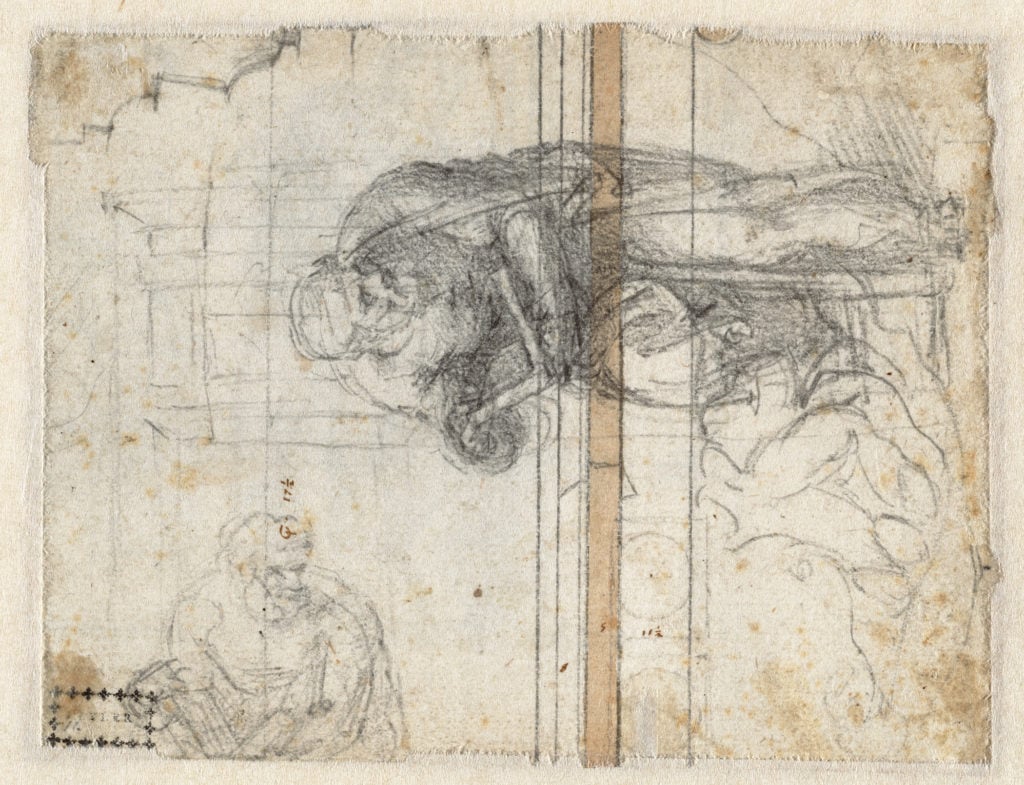
Michelangelo, Studies of a prophet
or evangelist; architectural studies; sketch of a male torso
(circa 1555–58), verso. Courtesy of the Teylers Museum,
Haarlem.
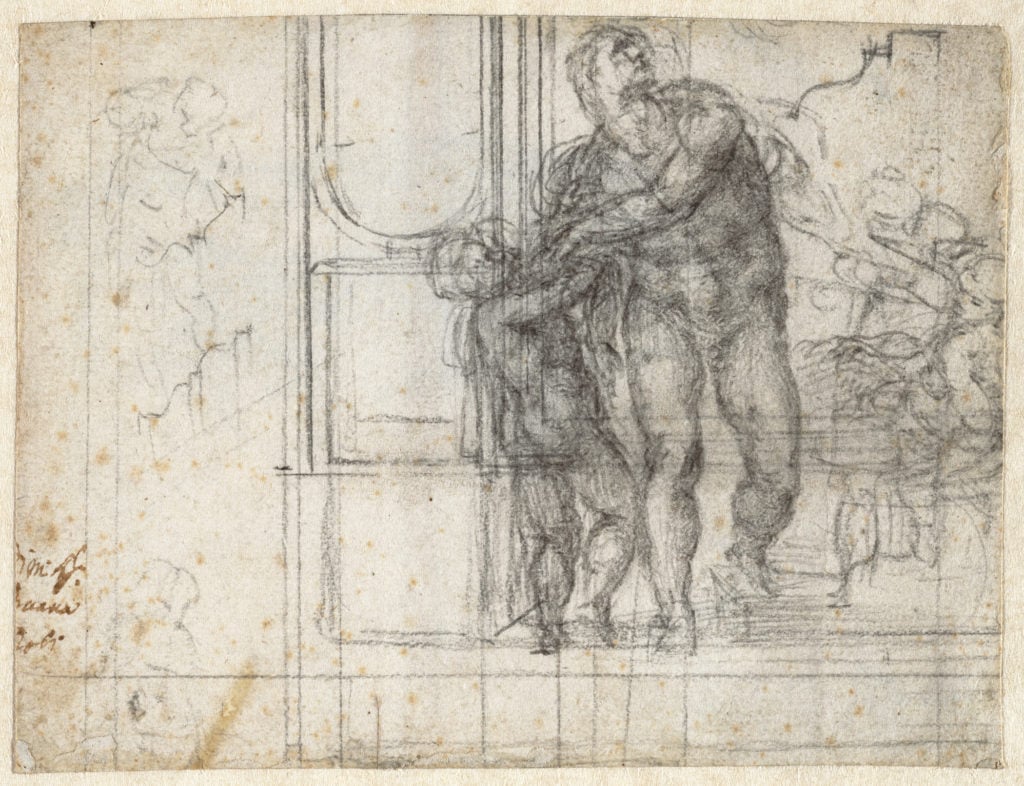
Michelangelo, Aeneas with Ascanius,
summoned to leave Dido; architectural studies (circa 1555),
recto. Courtesy of the Teylers Museum, Haarlem.
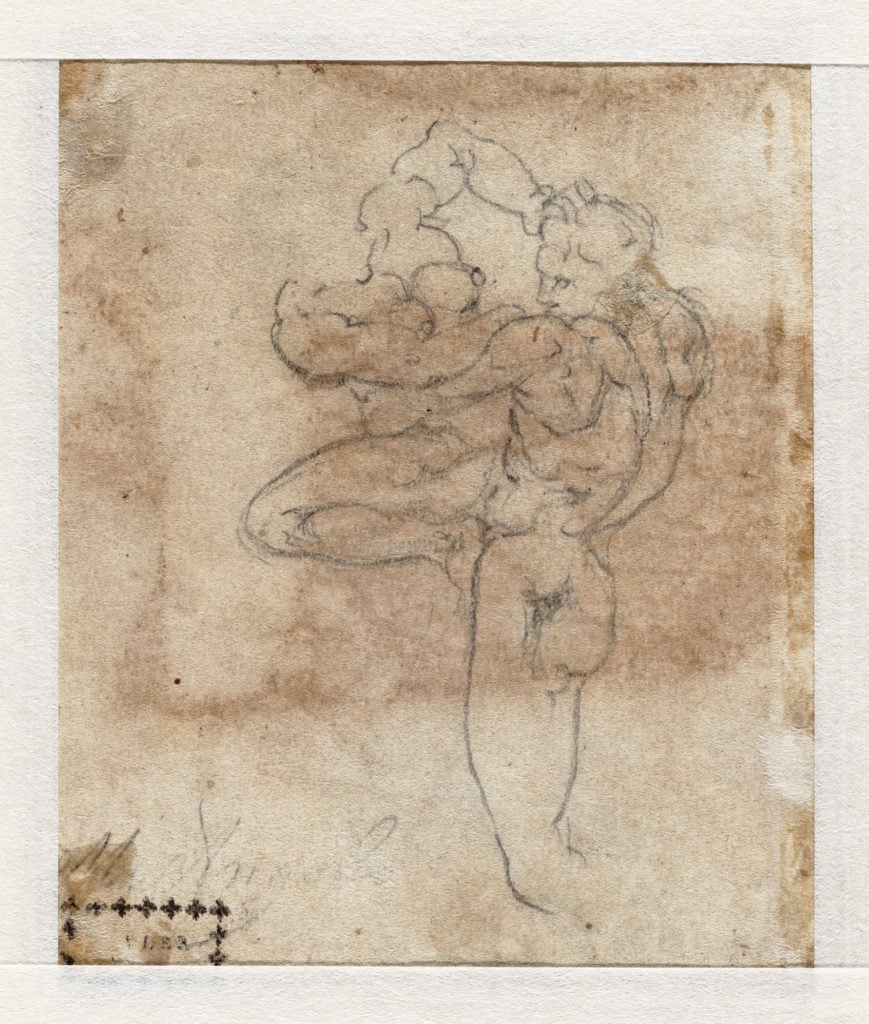
Michelangelo, A man abducting a
woman (tracing), (1530–34), verso. Courtesy of the Teylers
Museum, Haarlem.
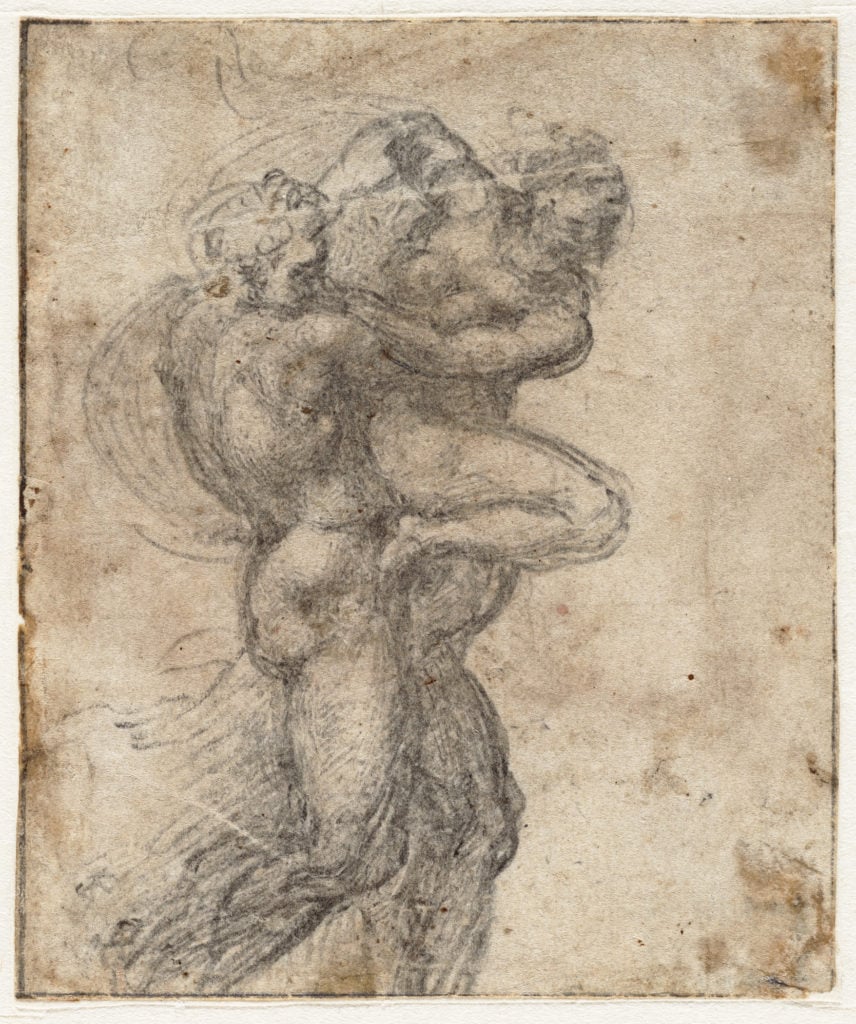
Michelangelo, A man abducting a
woman (1530–34), recto. Courtesy of the Teylers Museum,
Haarlem.
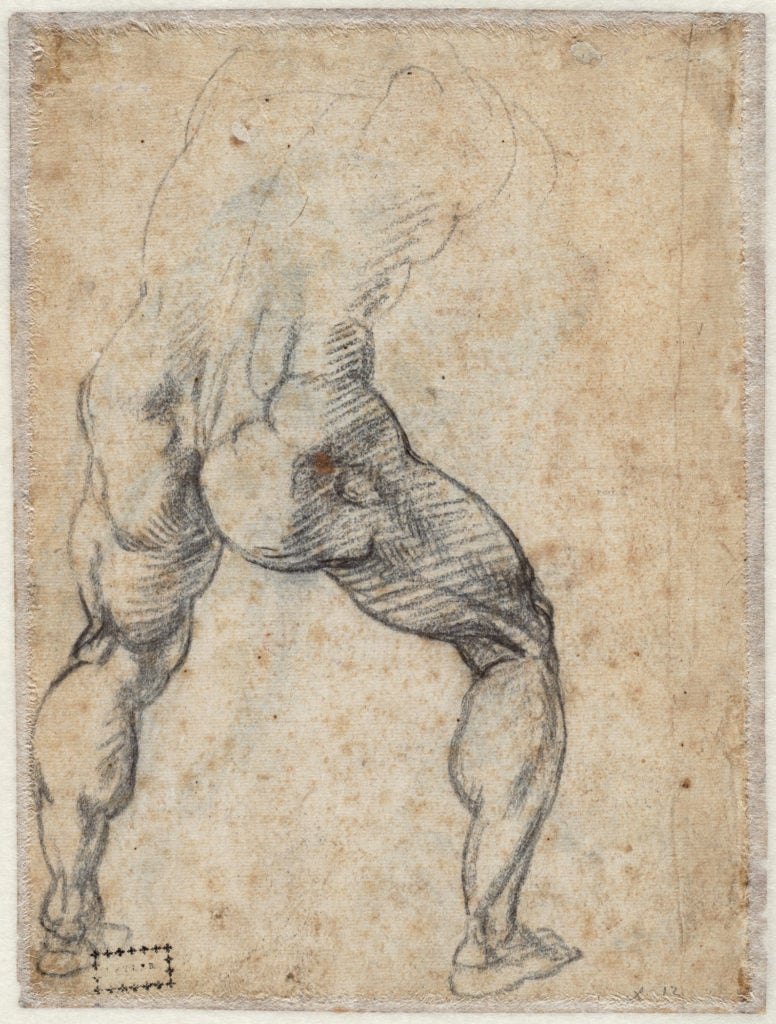
Michelangelo, Study of a male nude;
separate study of his head (circa 1537), recto. Courtesy of
the Teylers Museum, Haarlem.
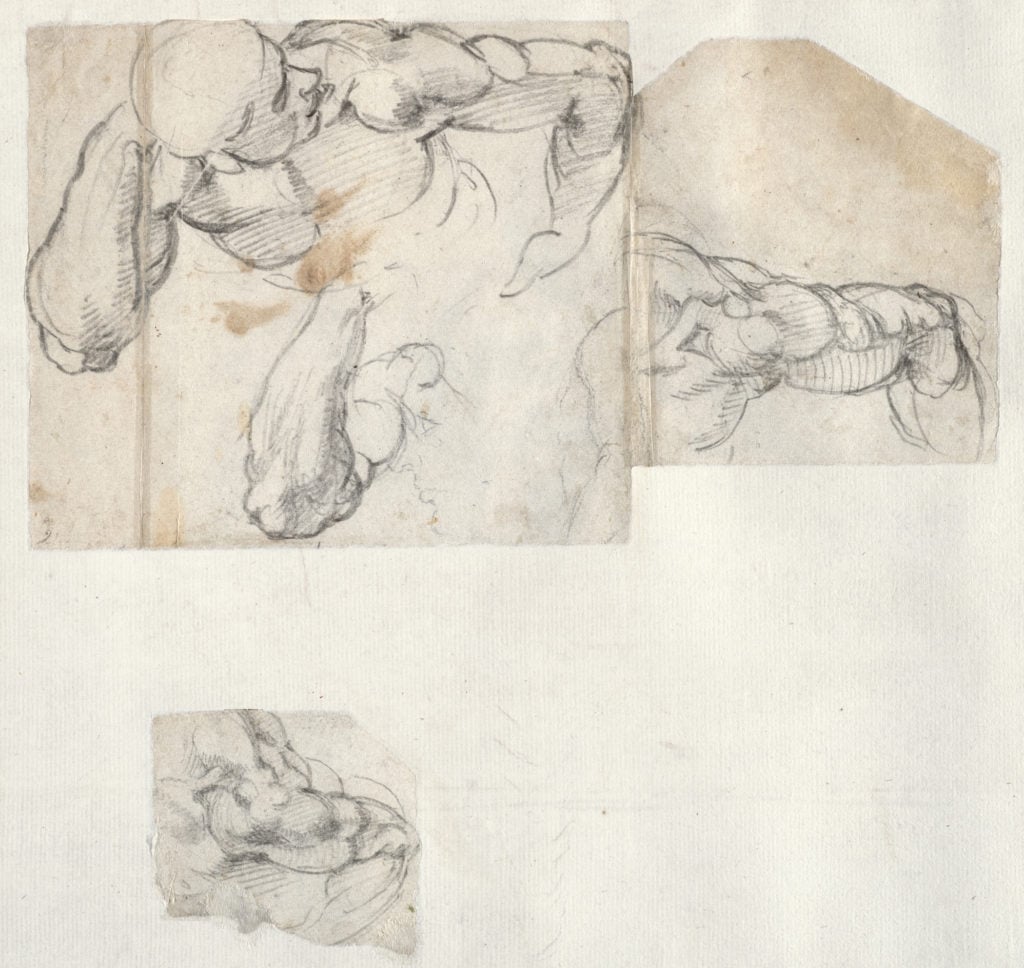
Michelangelo, Male nude (circa
1537), verso. Courtesy of the Teylers Museum, Haarlem.
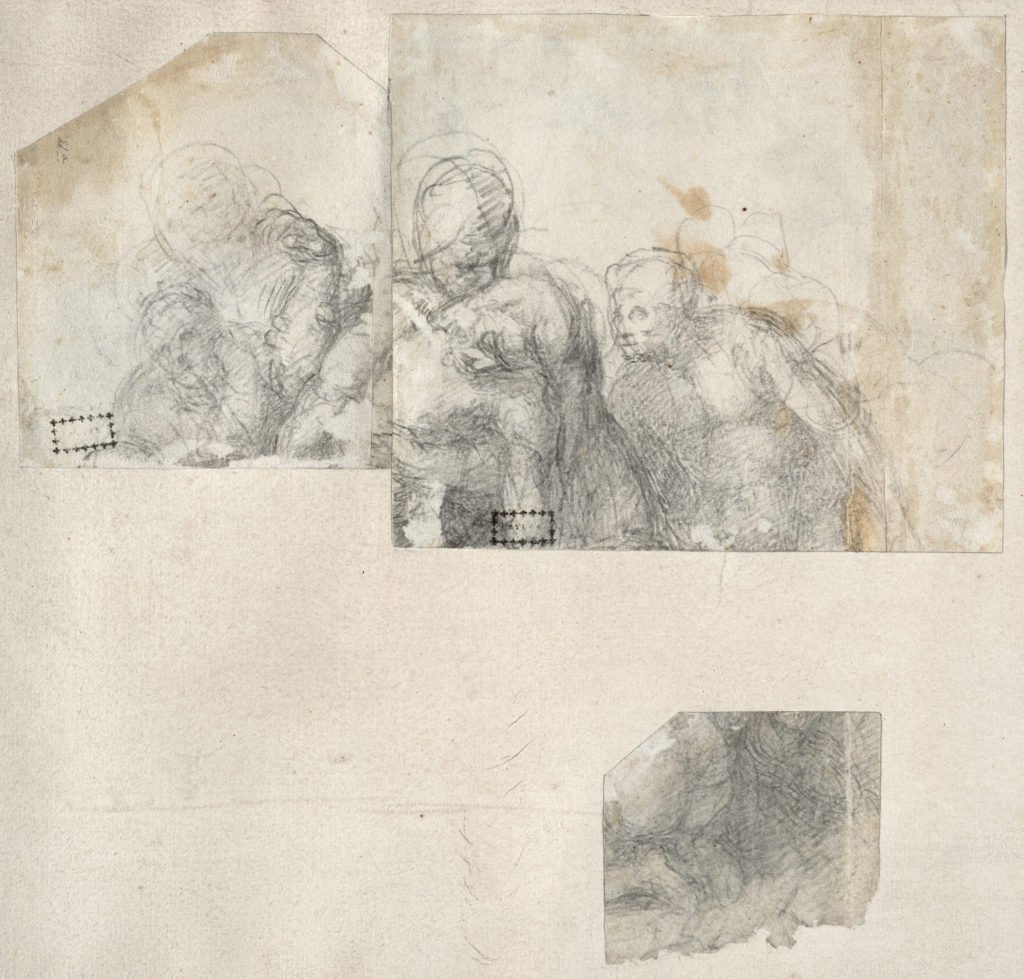
Michelangelo, Pietà
(fragmentary) (circa 1550–55) verso. Courtesy of the
Teylers Museum, Haarlem.
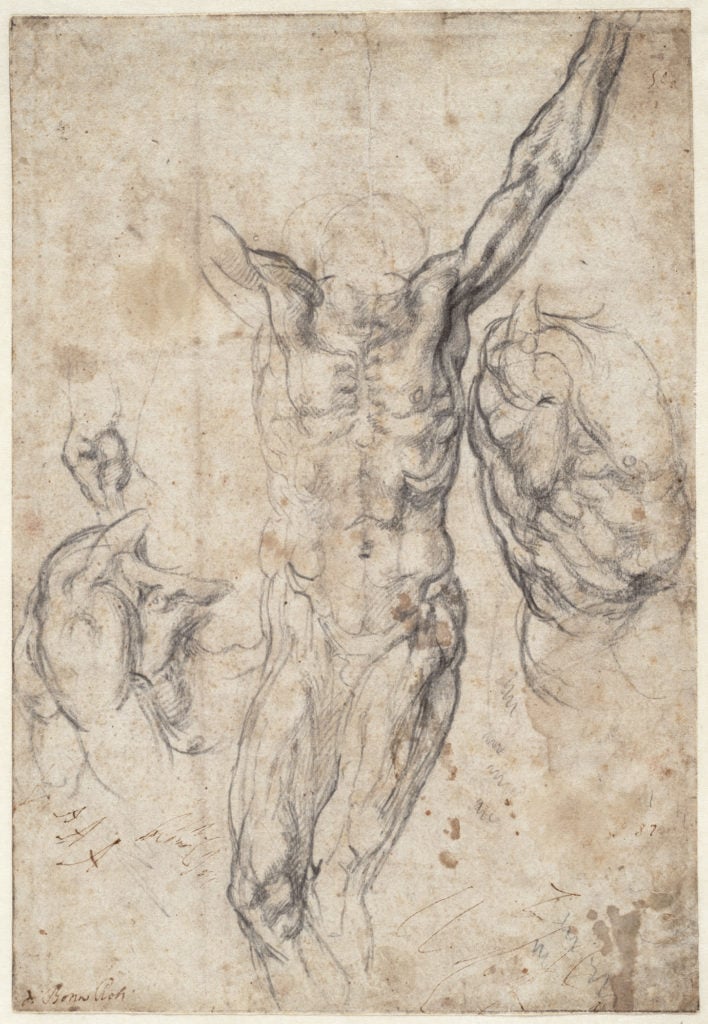
Michelangelo, Four studies,
including two for a crucified figure (1530–34), recto.
Courtesy of the Teylers Museum, Haarlem.
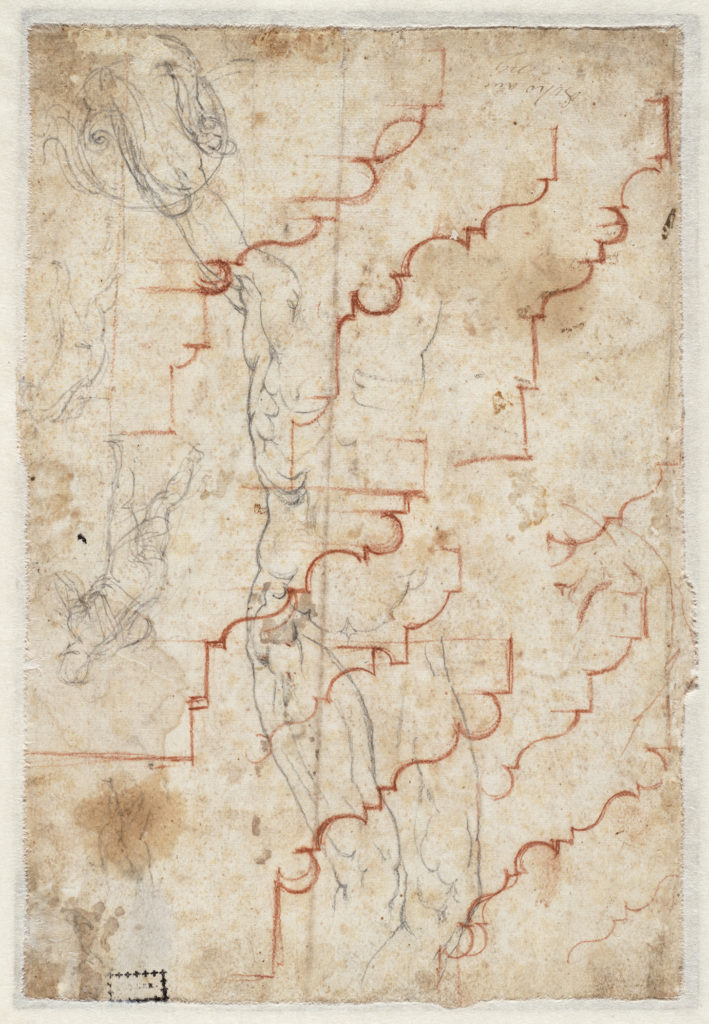
Michelangelo, Crucified figure
(tracing); architectural profiles; figure sketches (1530–34),
verso. Courtesy of the Teylers Museum, Haarlem.
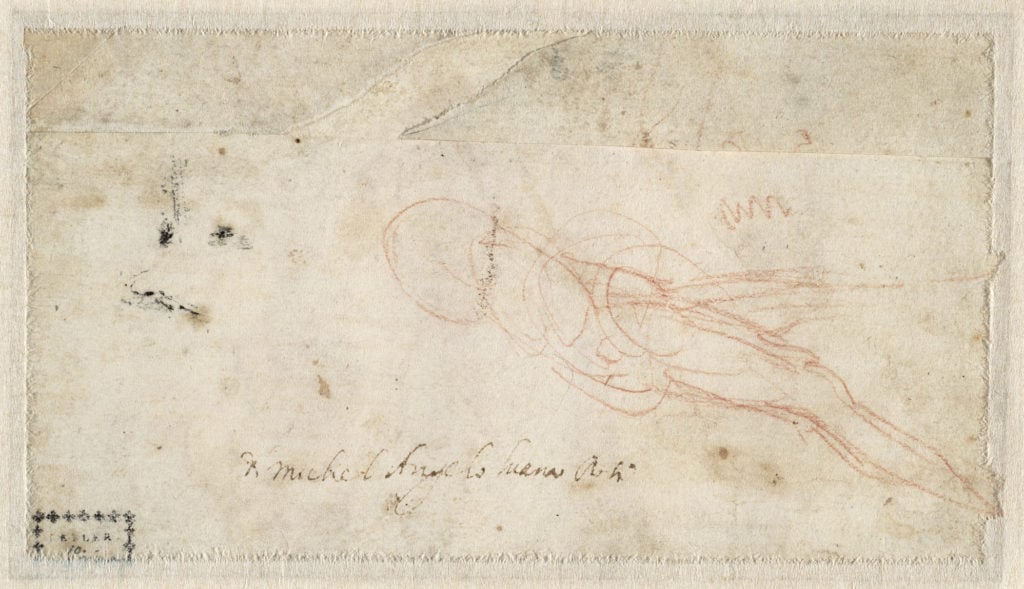
Michelangelo, Sketch of headless
figure, striding to the right (circa 1517), verso. Courtesy of
the Teylers Museum, Haarlem.
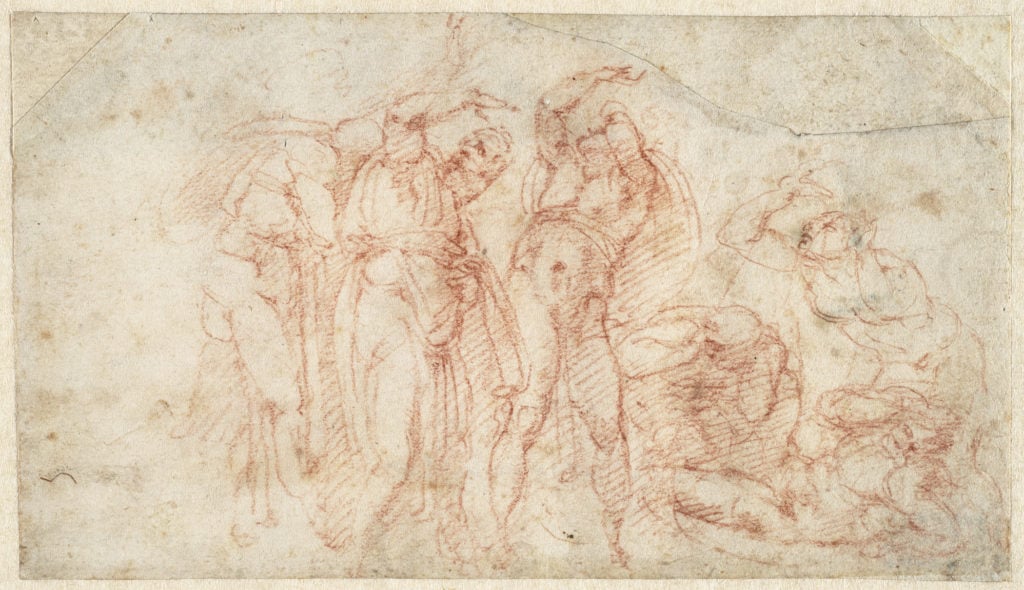
Michelangelo, Six figures in
attitudes of fear and terror (circa 1517), recto. Courtesy of
the Teylers Museum, Haarlem.
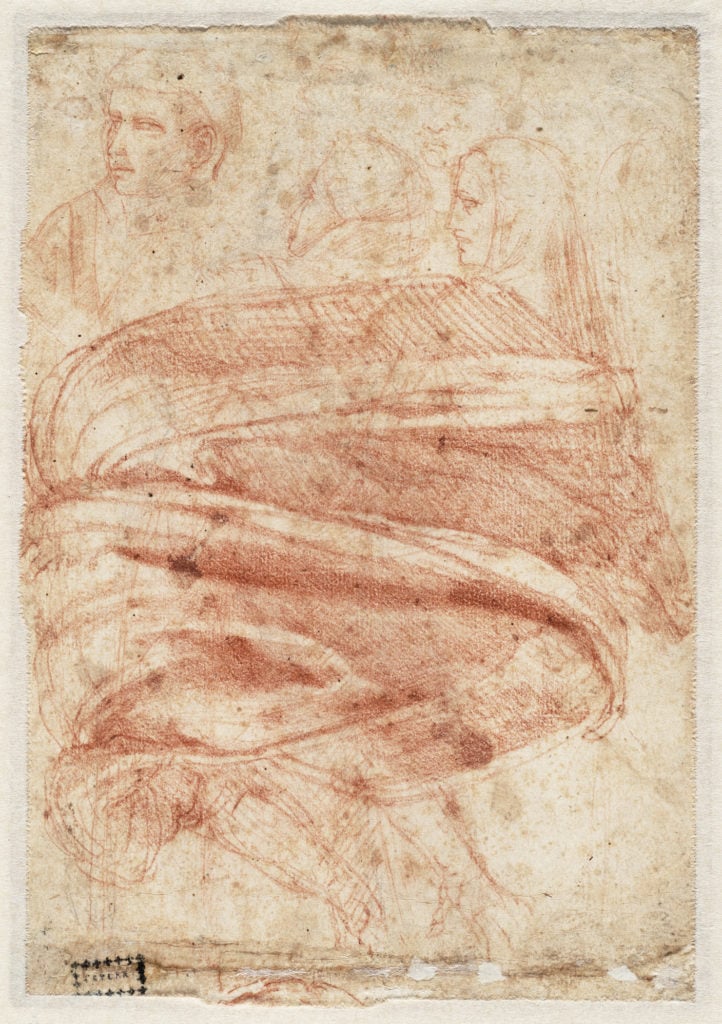
Michelangelo, Woman bending forward;
five heads (after Giotto), circa 1530–34, recto. Courtesy of
the Teylers Museum, Haarlem.
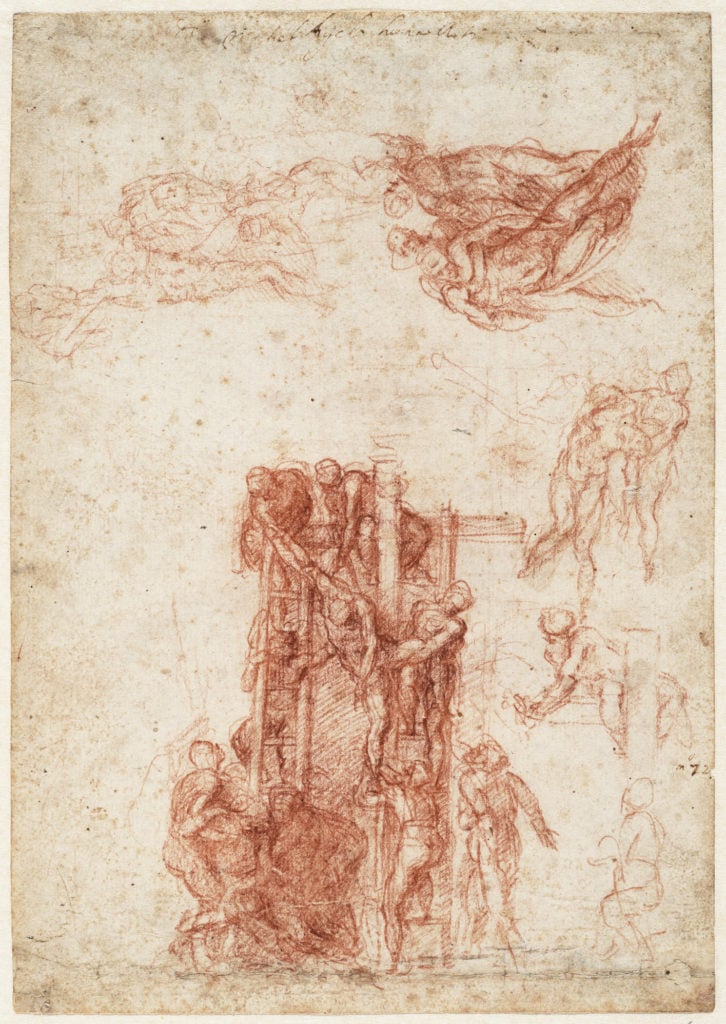
Michelangelo, Studies for a
deposition from the cross (circa 1530–34), recto. Courtesy of
the Teylers Museum, Haarlem.
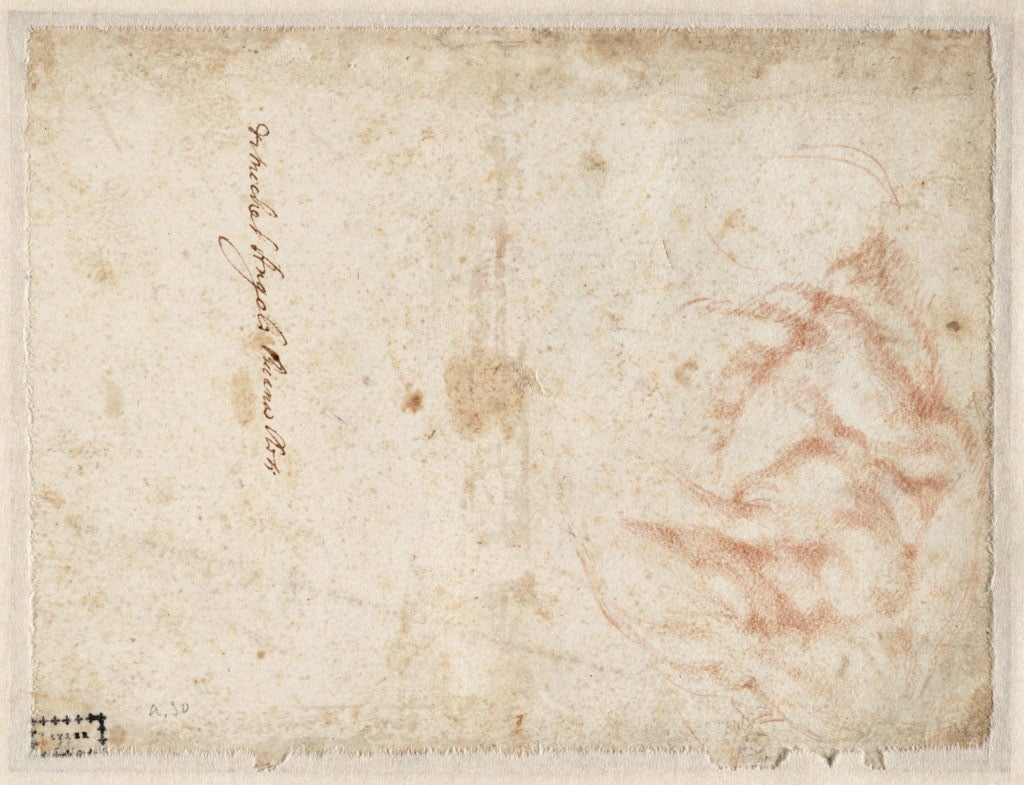
Michelangelo, Study of the right
shoulder (1523–24), verso. Courtesy of the Teylers Museum,
Haarlem.
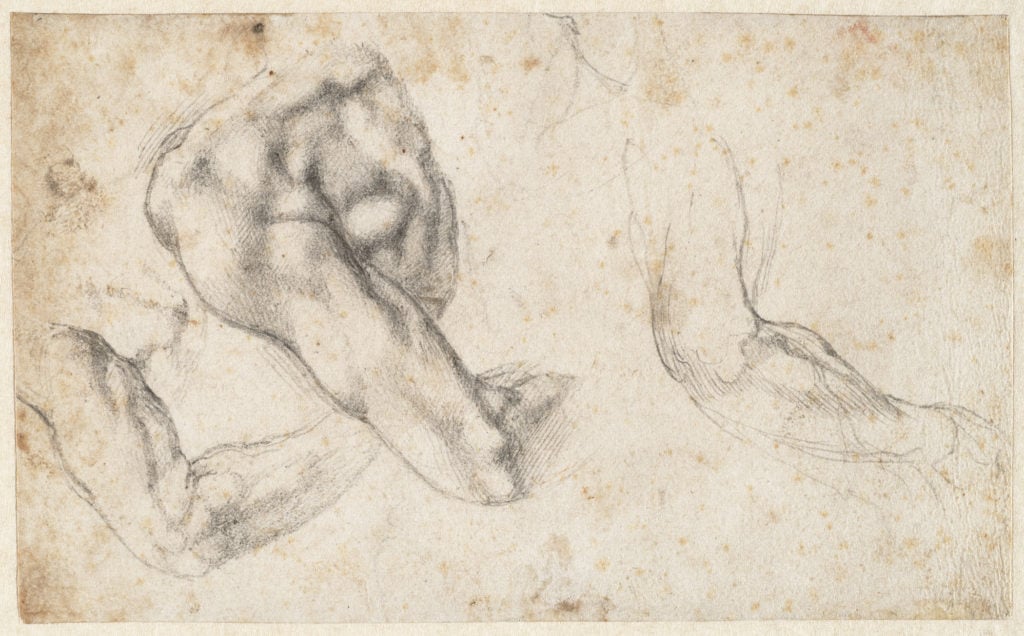
Michelangelo, Three studies of a
left arm and shoulder, seen from the back (1523–24), recto.
Courtesy of the Teylers Museum, Haarlem.
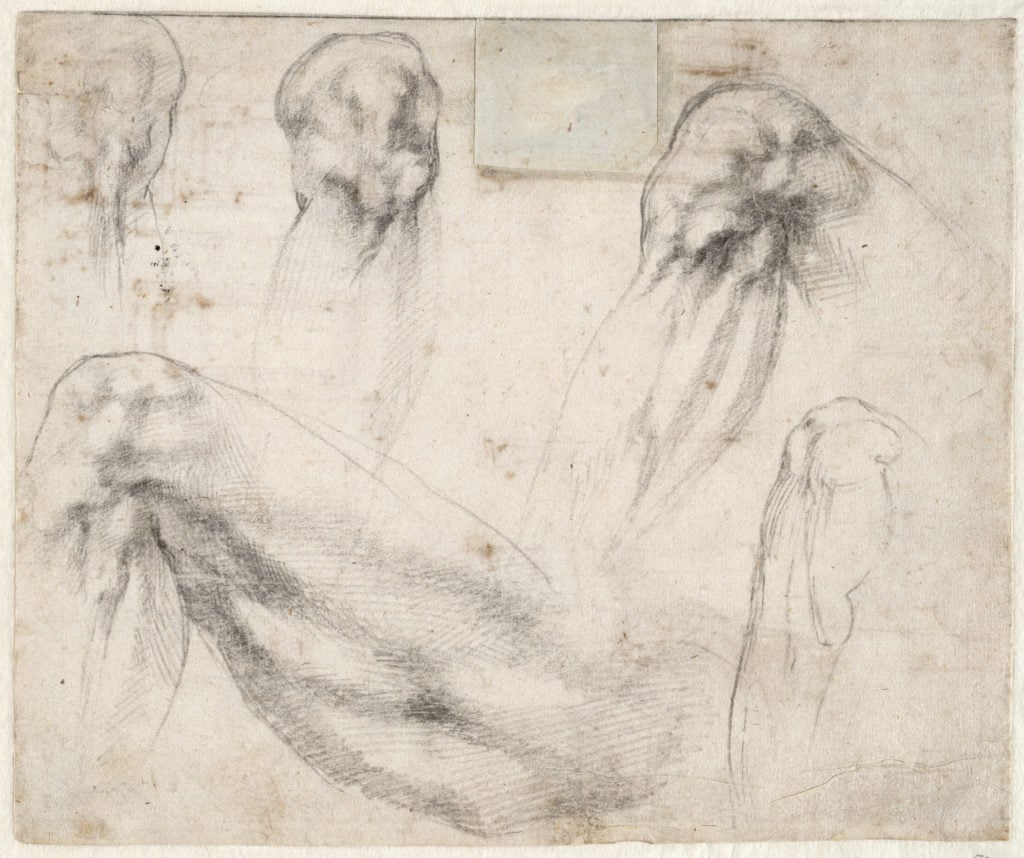
Michelangelo, Studies of a left leg
and four studies of a knee (1523–24), recto. Courtesy of the
Teylers Museum, Haarlem.
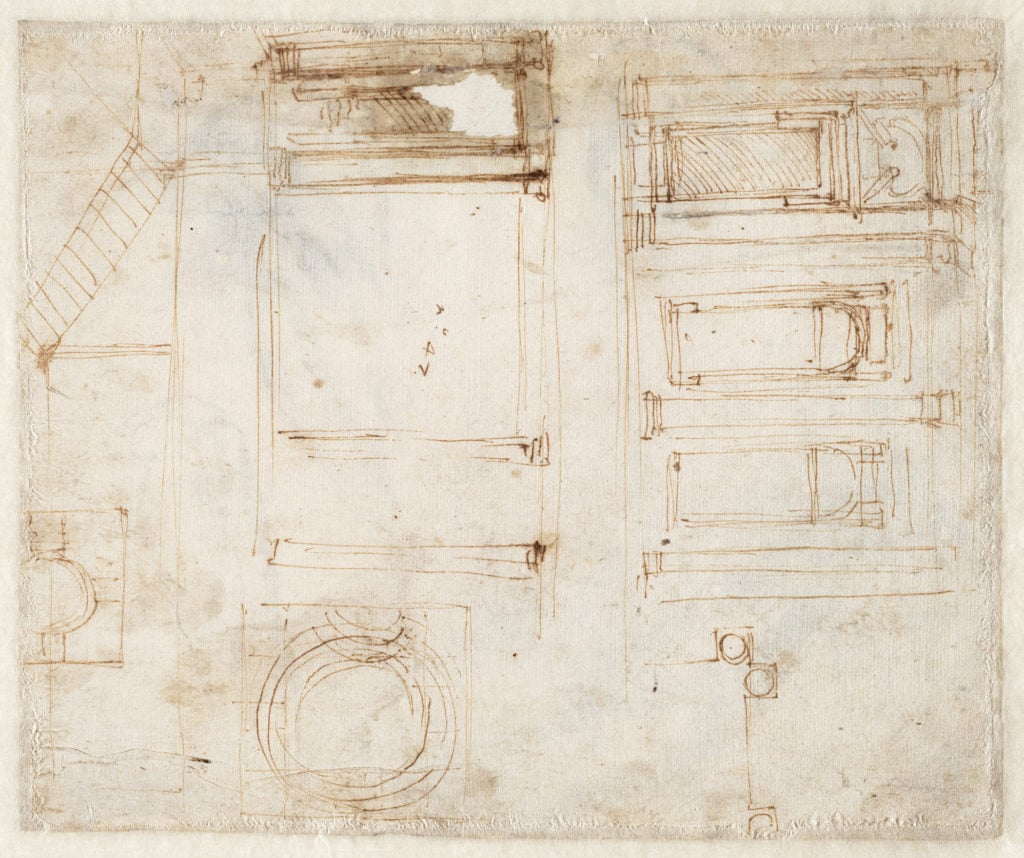
Michelangelo, Architectural
studies (1524), verso. Courtesy of the Teylers Museum,
Haarlem.
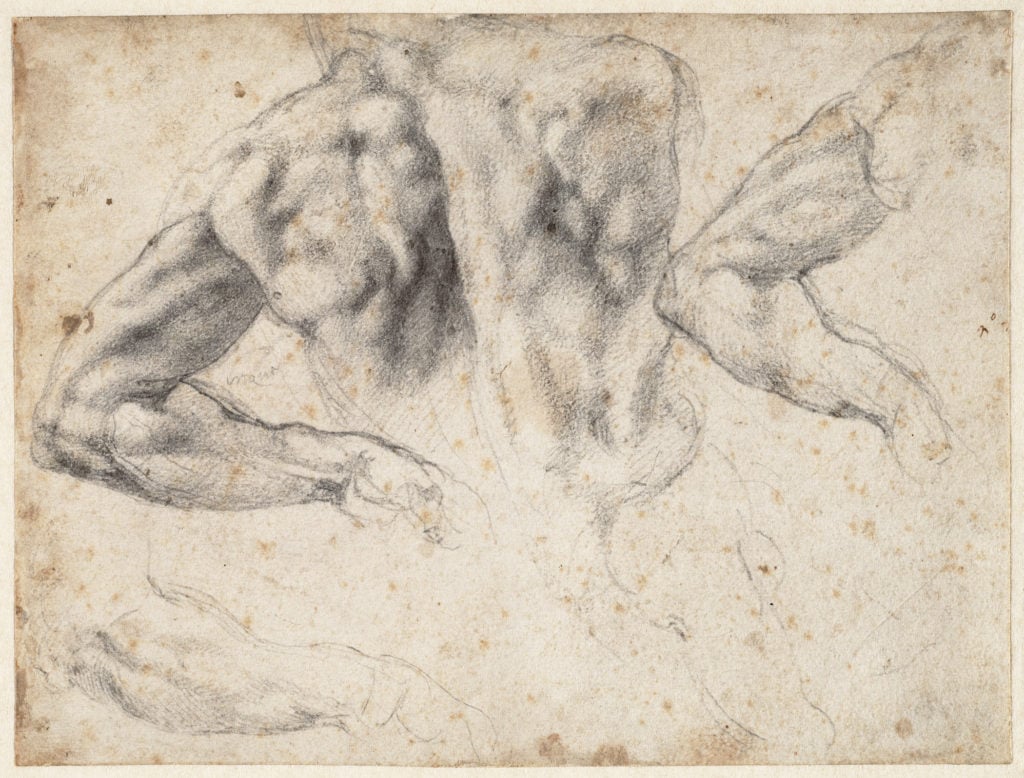
Michelangelo, Study of the back and
left arm of a male nude (1523–24), recto. Courtesy of the
Teylers Museum, Haarlem.
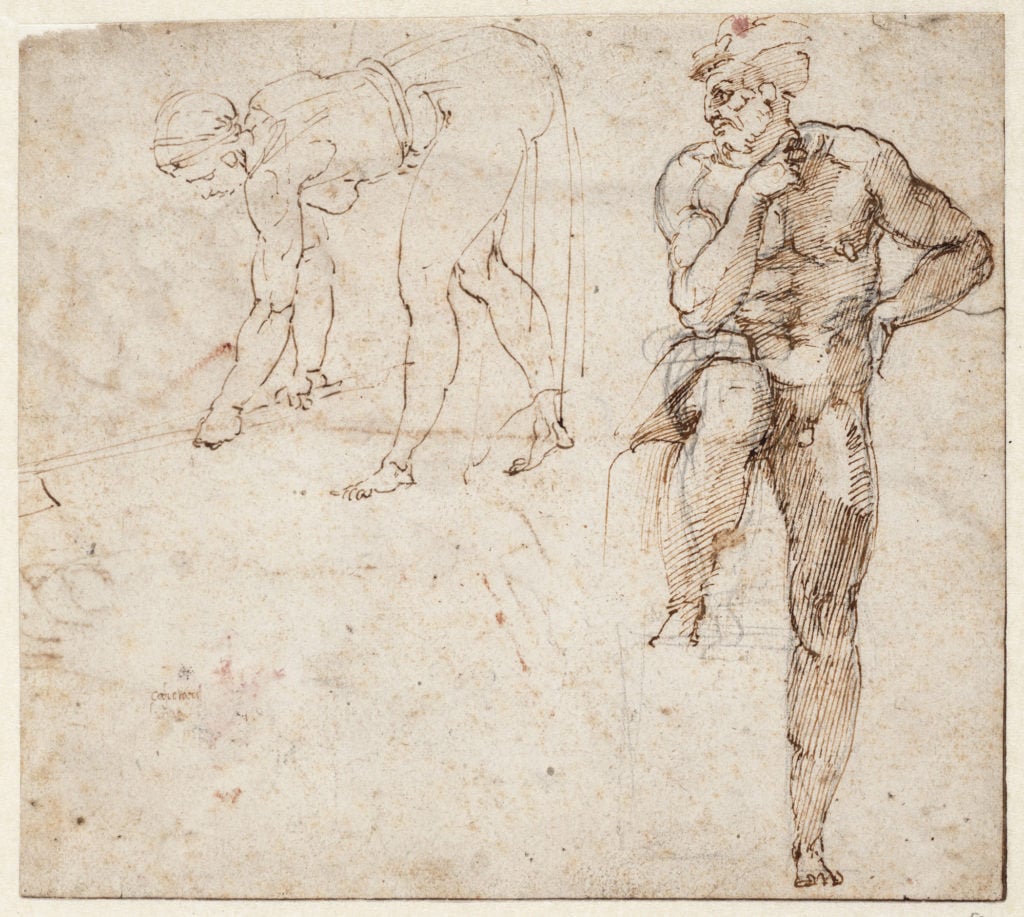
Michelangelo, Standing man, a woman
hoeing (1517–23), recto. Courtesy of the Teylers Museum,
Haarlem.
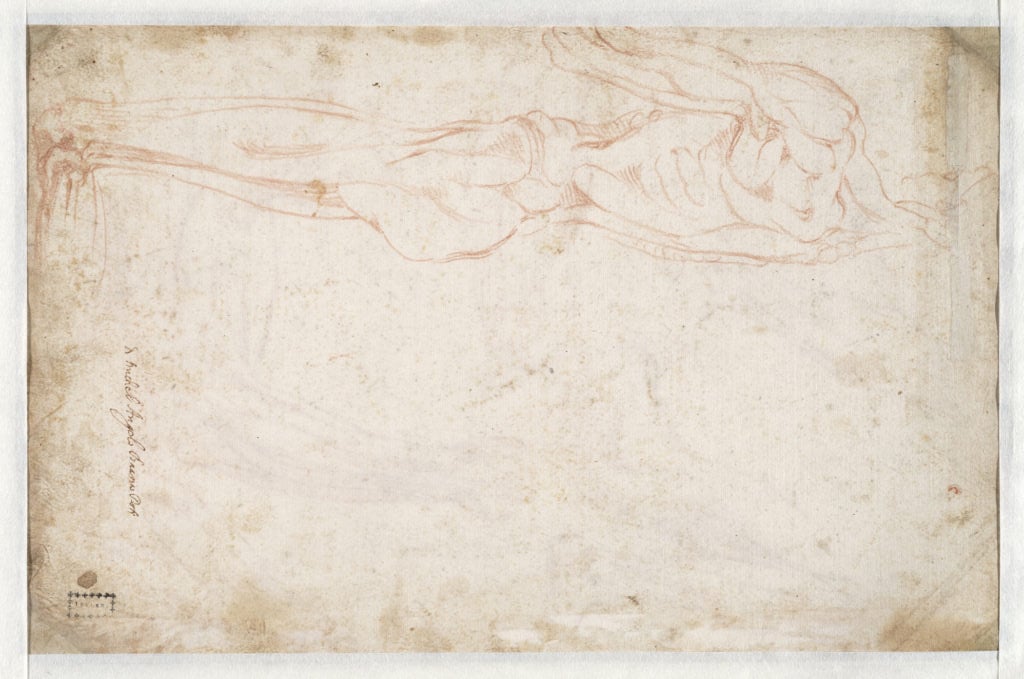
Michelangelo, Studies of a kneeling
male figure, from the left (1515–20), verso. Courtesy of the
Teylers Museum, Haarlem.
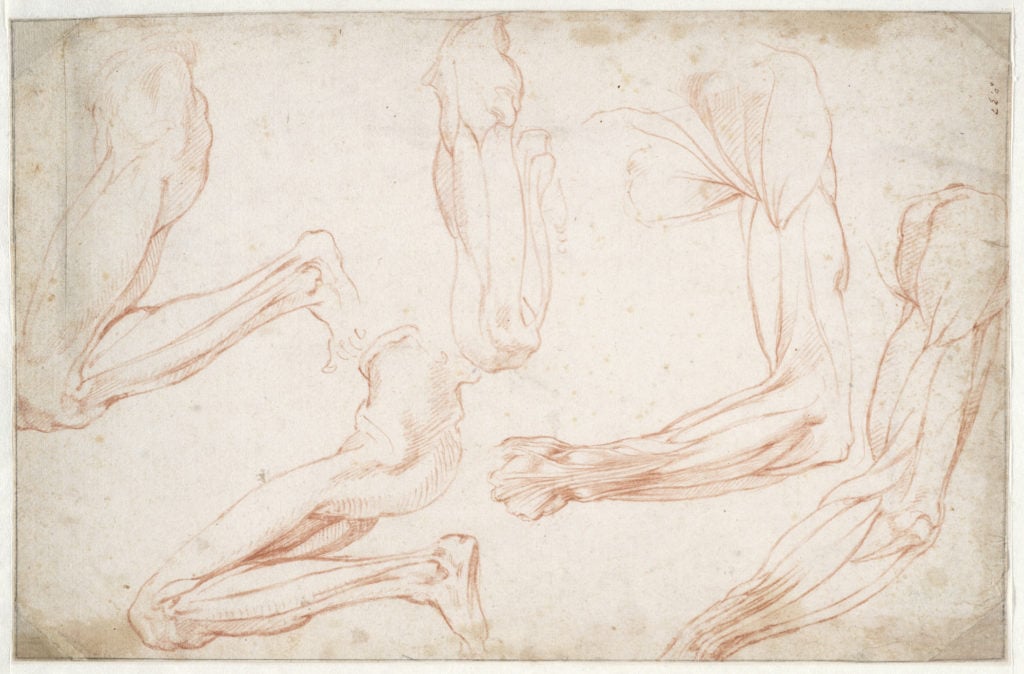
Michelangelo, Studies of a bent left
leg and a bent left arm (1515–20), recto. Courtesy of the
Teylers Museum, Haarlem.
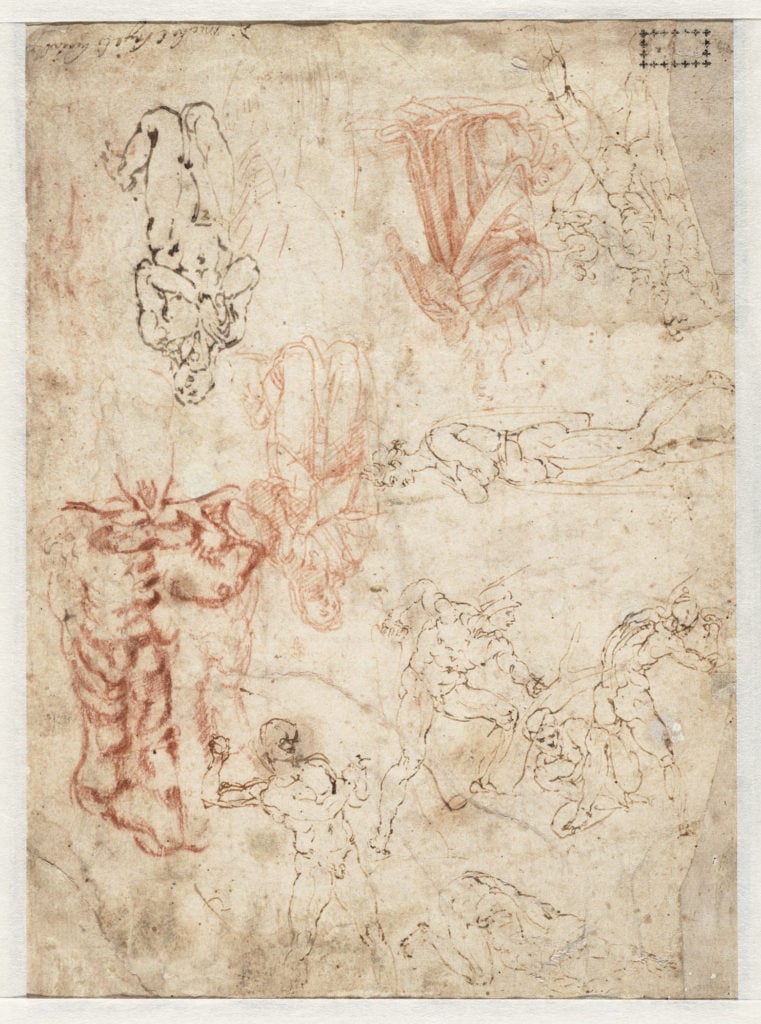
Michelangelo, Study of male torso;
various figure studies (1518), verso. Courtesy of the Teylers
Museum, Haarlem.
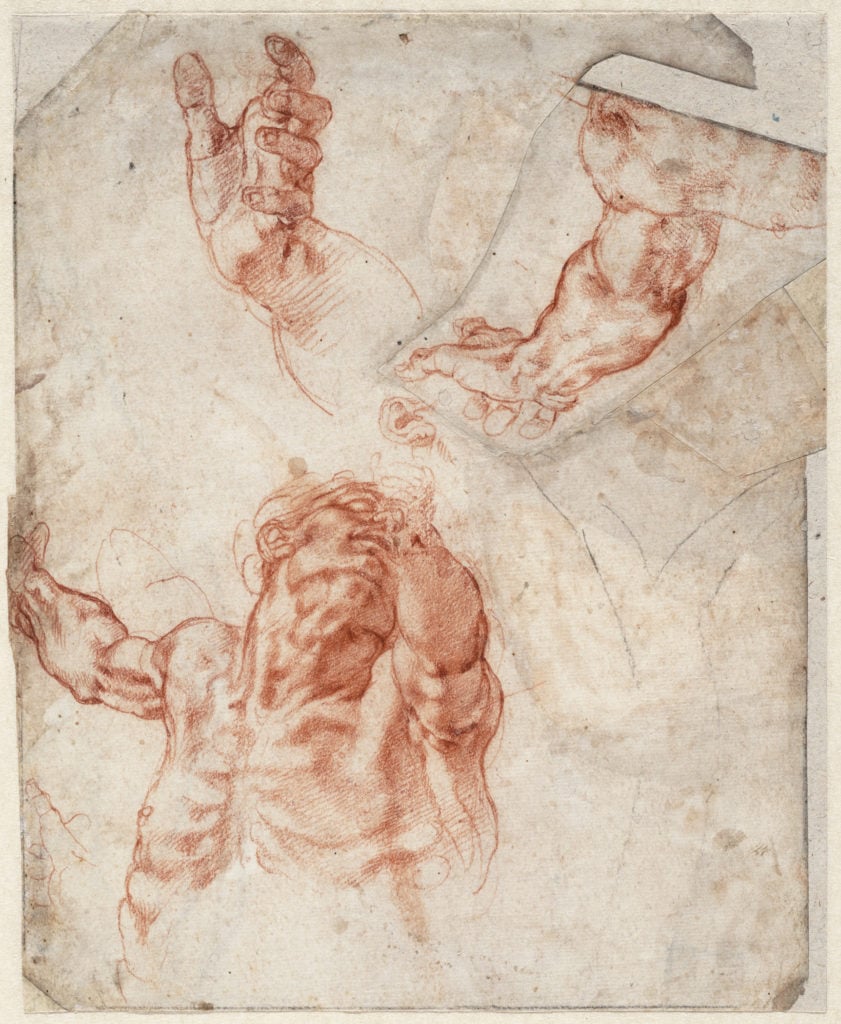
Michelangelo, Studies of the upper
body of a man and separate studies of an arm, a hand, and an ear;
sketch of a tree (1511–12), recto. Courtesy of the Teylers
Museum, Haarlem.
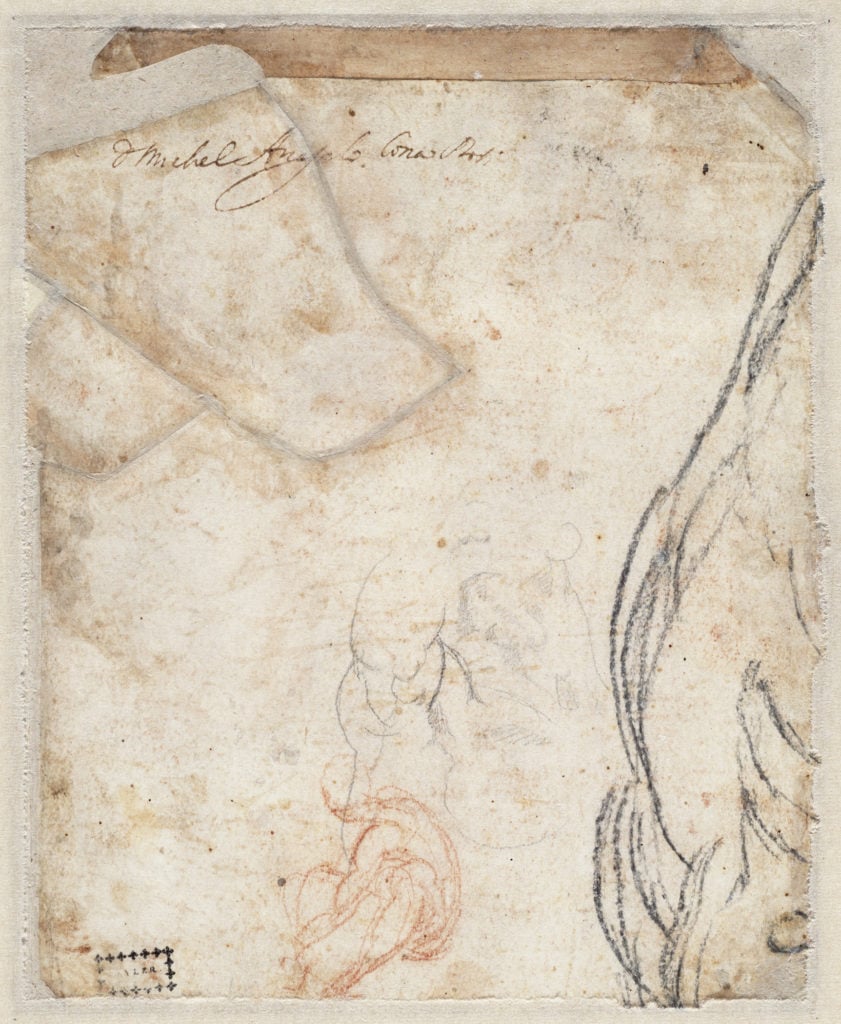
Michelangelo, Fragmentary cartoon of
a male head; upper body of a man; study of a crouching figure
(1511–12), verso. Courtesy of the Teylers Museum, Haarlem.
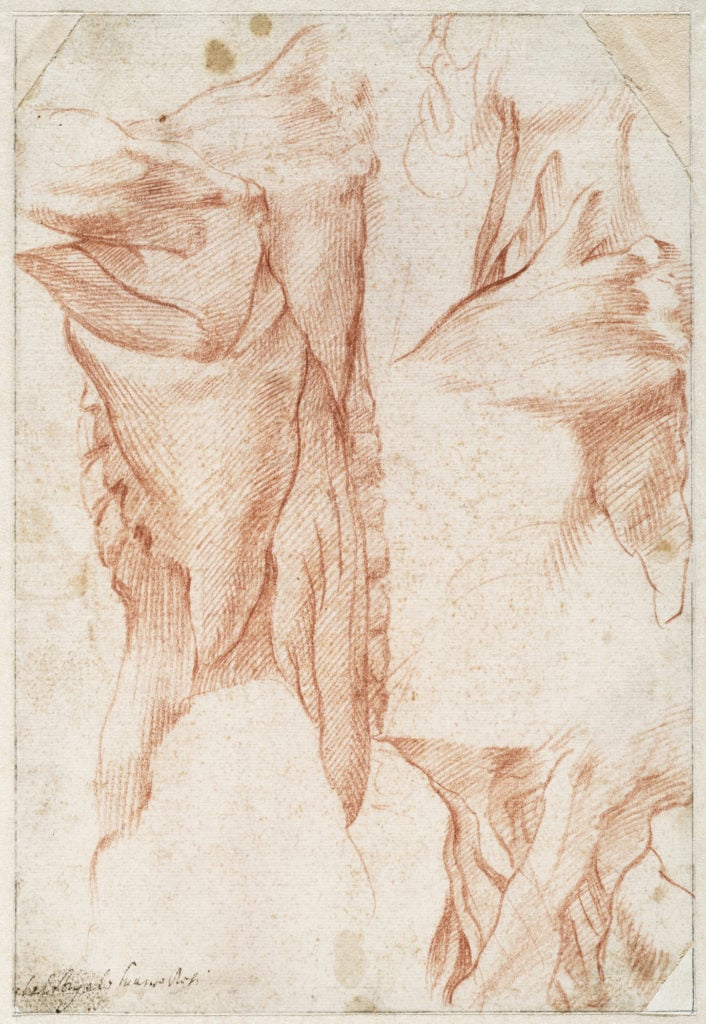
Michelangelo, Studies of a neck and
shoulder, from the back and side (1515–20), verso. Courtesy of
the Teylers Museum, Haarlem.
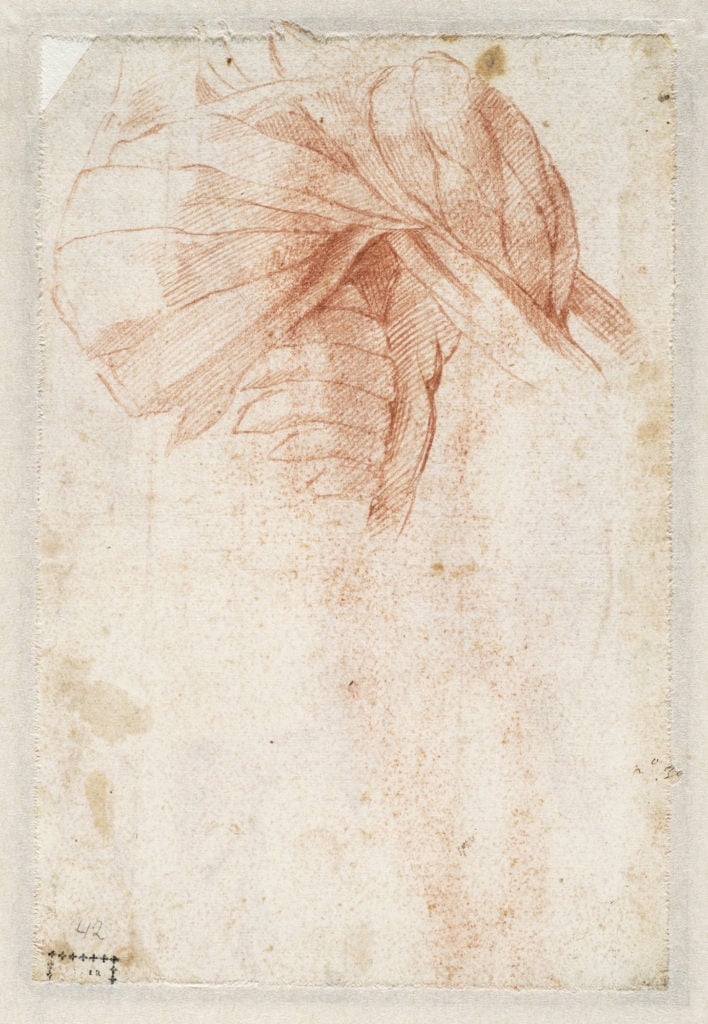
Michelangelo, Study of a
shoulder (1515–20), verso. Courtesy of the Teylers Museum,
Haarlem.
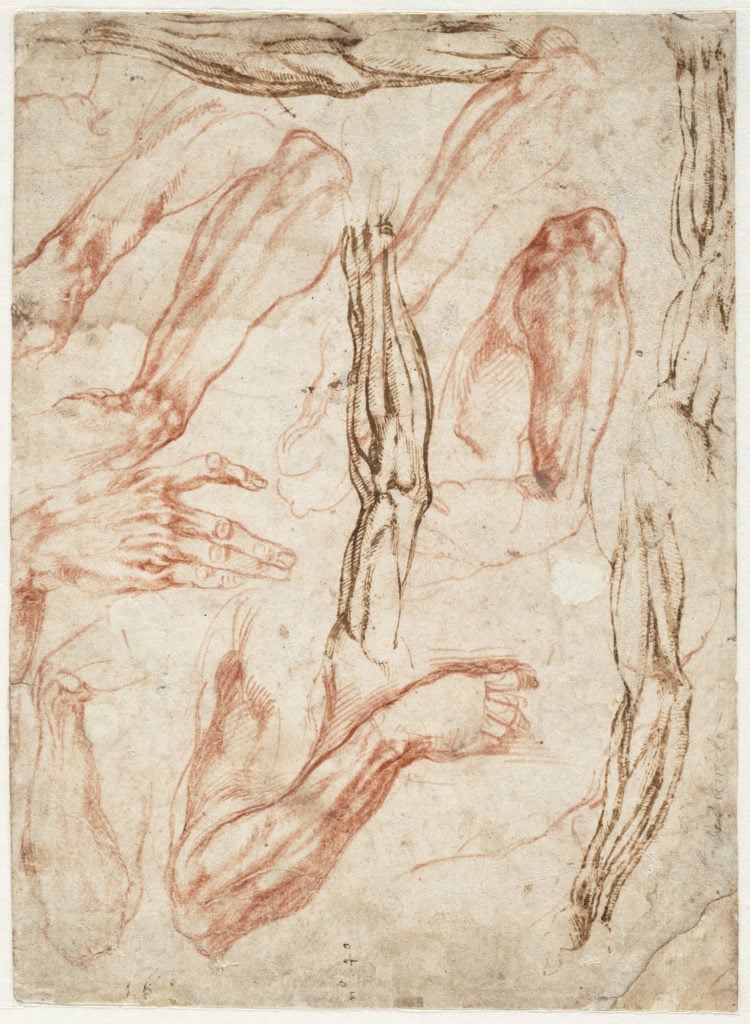
Michelangelo, Studies of arms and
hands (1513–14), recto. Courtesy of the Teylers Museum,
Haarlem.
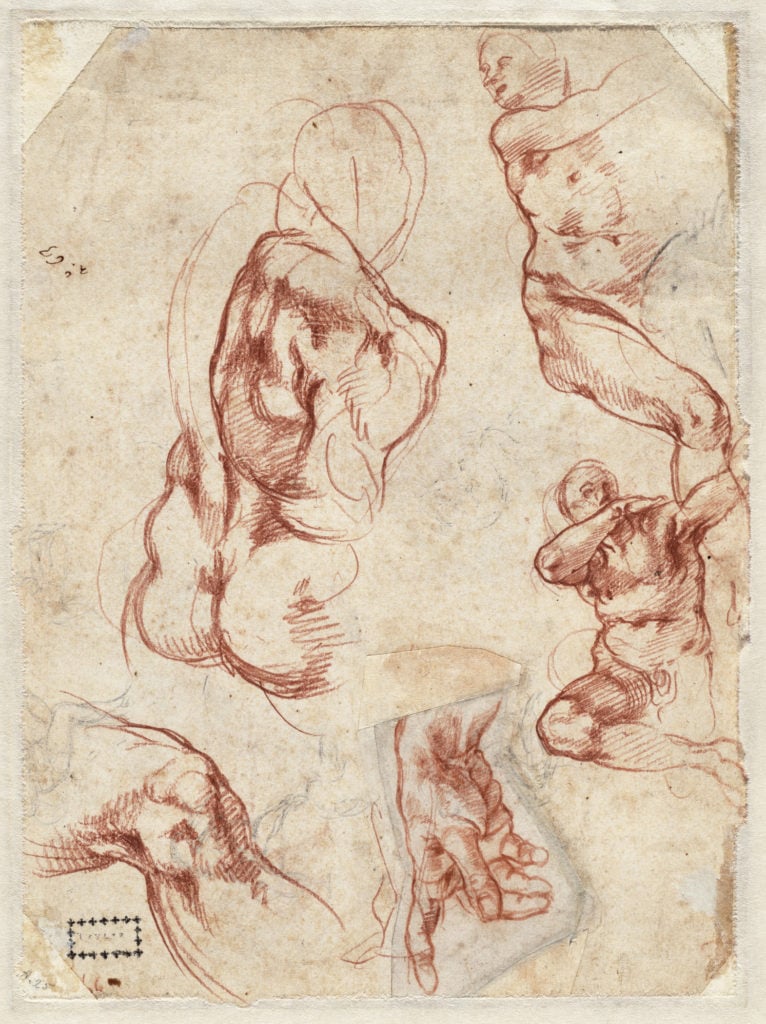
Michelangelo, Various figure
studies (1511), verso. Courtesy of the Teylers Museum,
Haarlem.
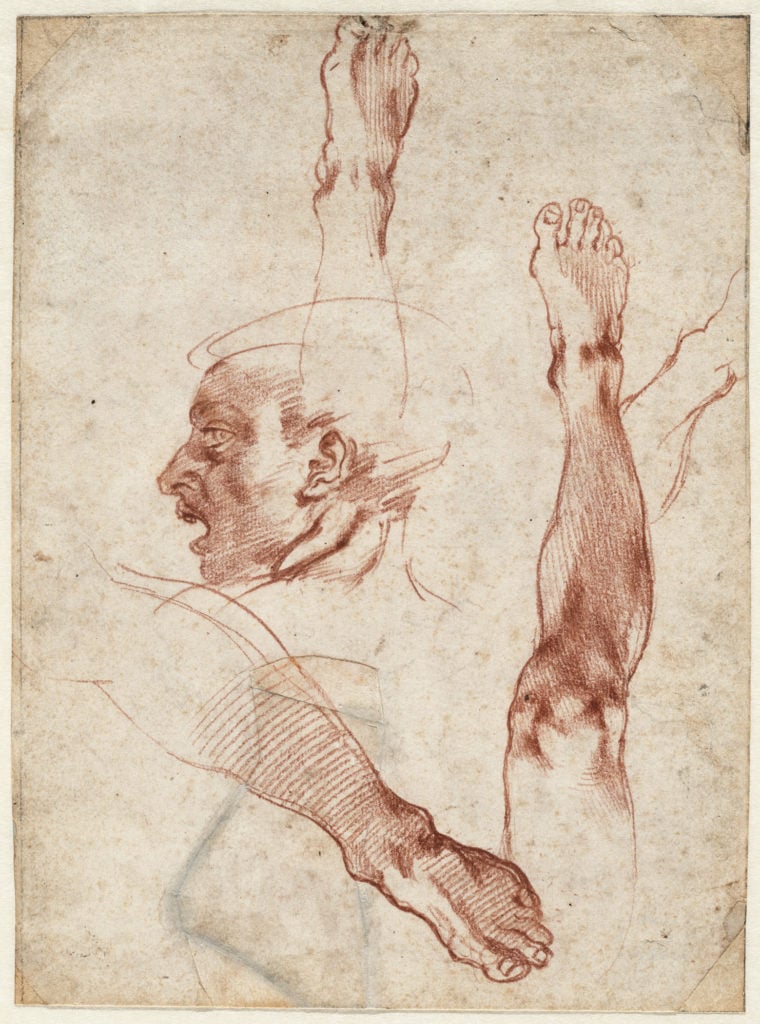
Michelangelo, Male head in profile,
studies of limbs (1511), recto. Courtesy of the Teylers
Museum, Haarlem.
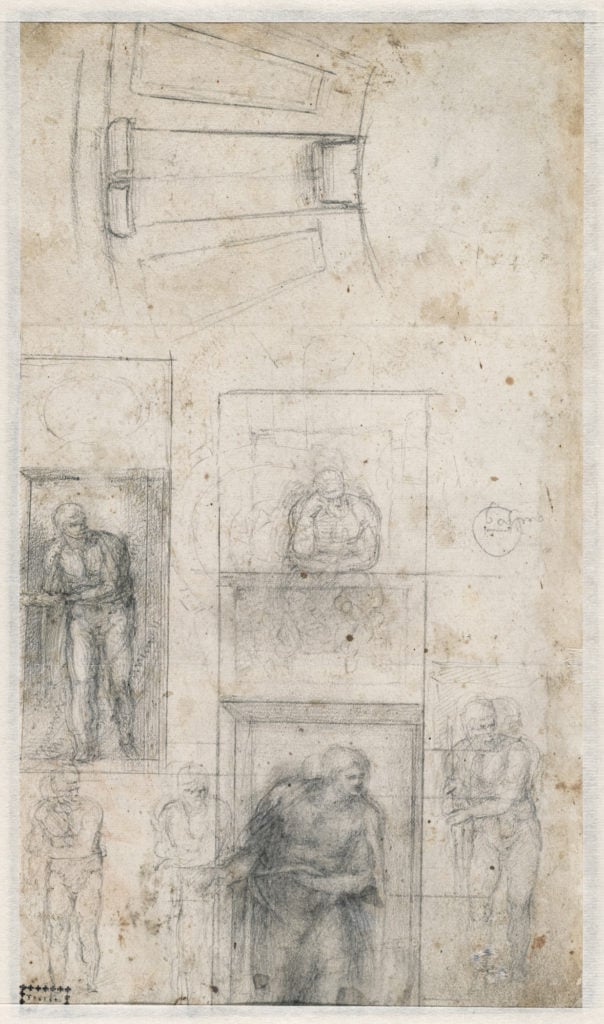
Michelangelo, Ground plan of the
lantern’s base with volutes; figure studies (1547–59), verso.
Courtesy of the Teylers Museum, Haarlem.
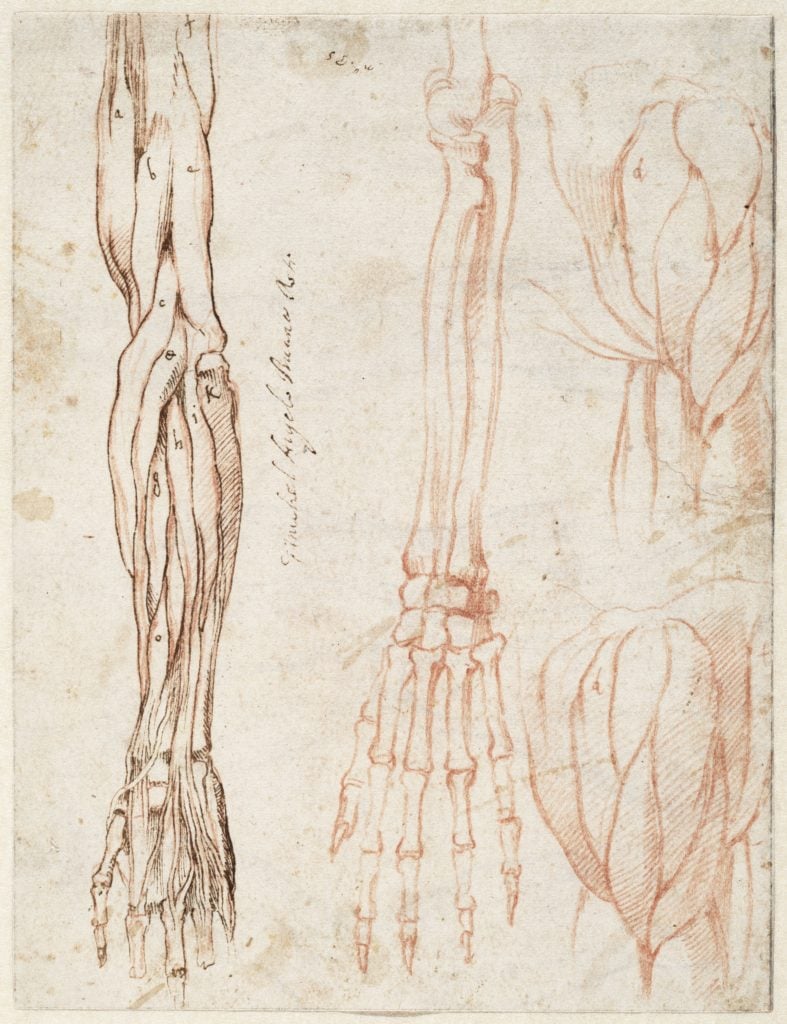
Michelangelo, Studies of a left arm
and a shoulder (1515–20), recto. Courtesy of the Teylers
Museum, Haarlem.
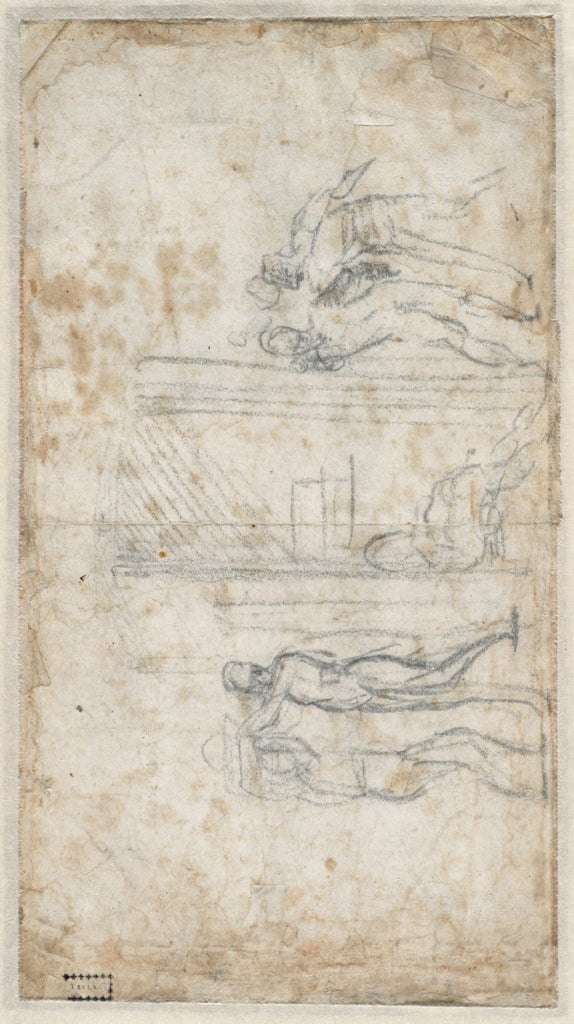
Michelangelo, Composition sketch
with Judith and Holofernes (1506–08), verso. Courtesy of the
Teylers Museum, Haarlem.
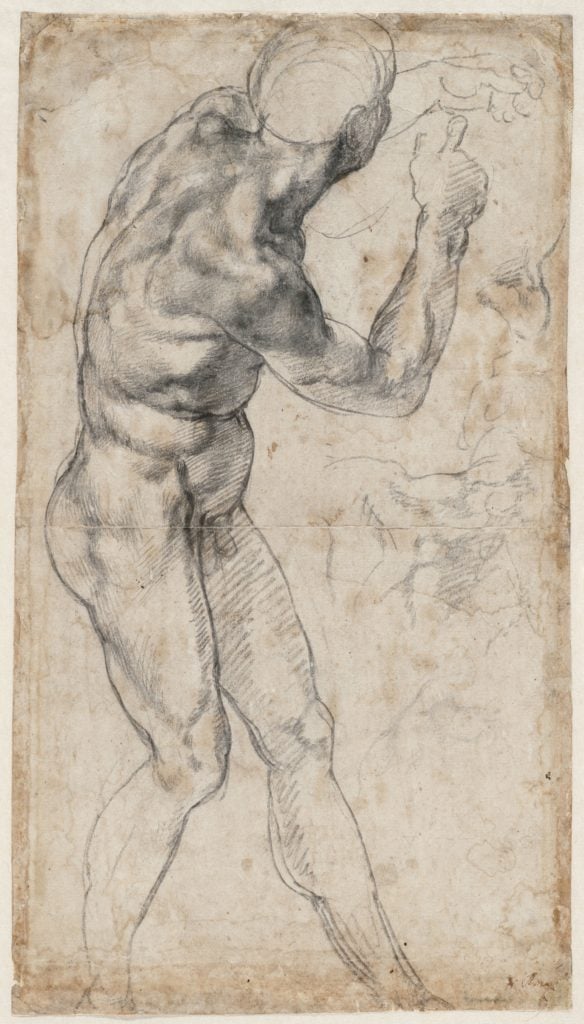
Michelangelo, Male nude, turning to
the right; studies of anatomical details (1504–06), recto.
Courtesy of the Teylers Museum, Haarlem.
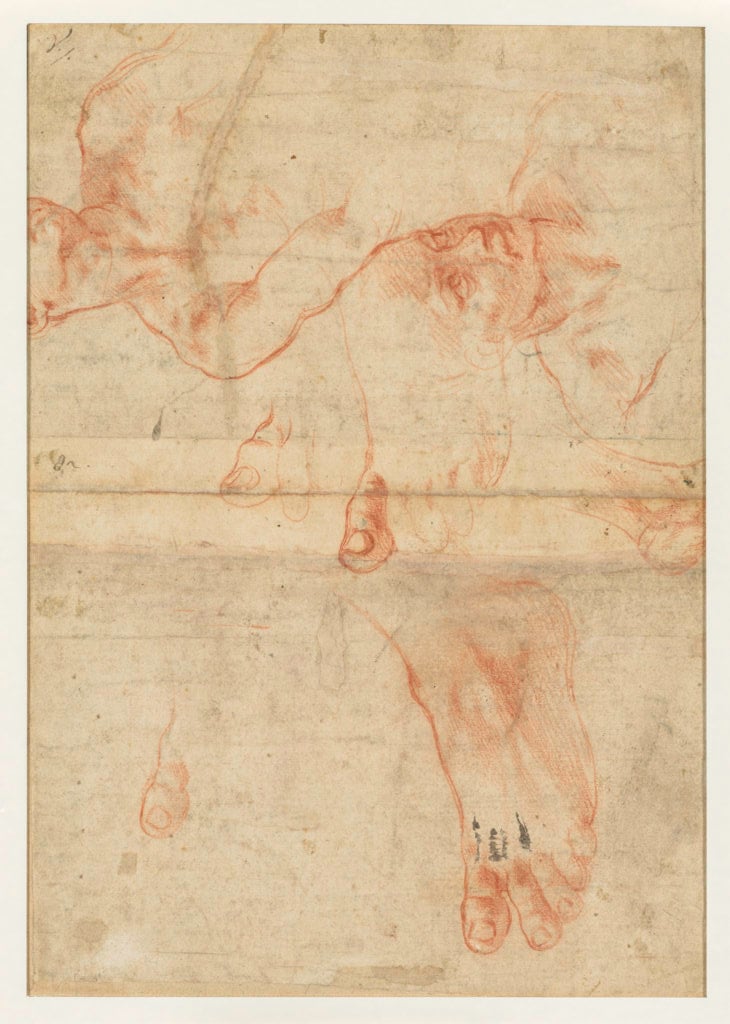
Michelangelo, Figure studies for the
Sistine ceiling (1510–11), verso. Courtesy of the Teylers
Museum, Haarlem.
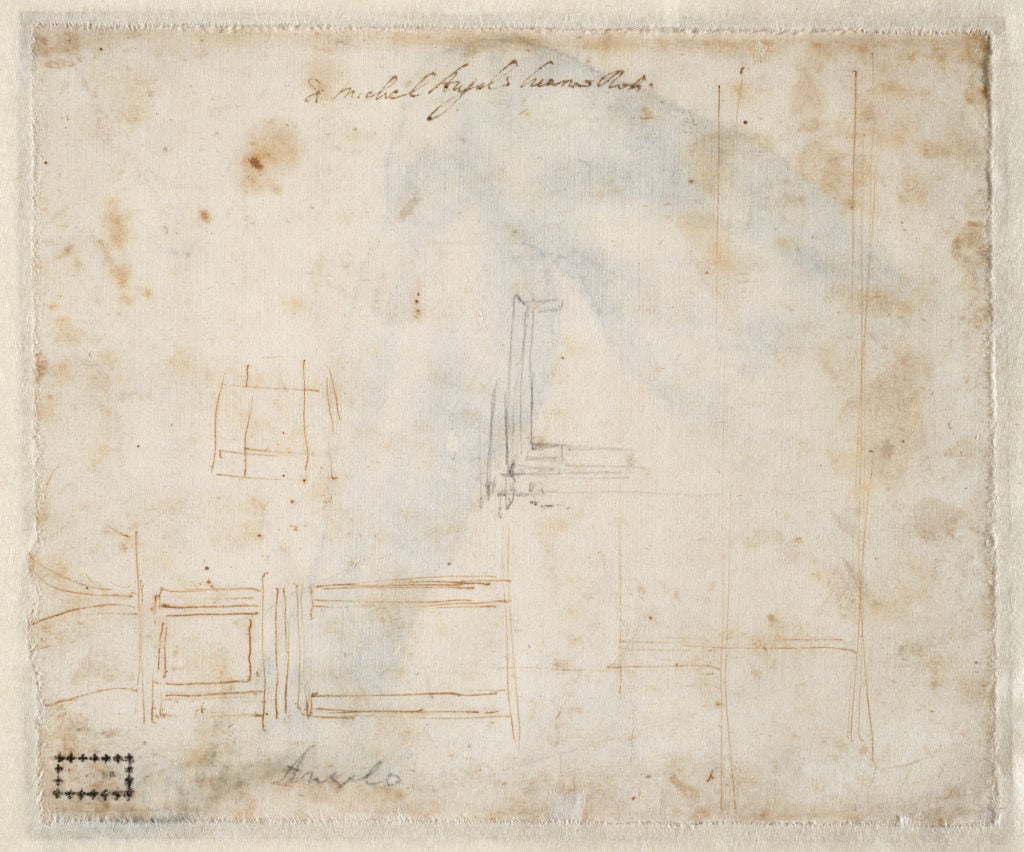
Michelangelo, Architectural
studies (1524), verso. Courtesy of the Teylers Museum,
Haarlem.
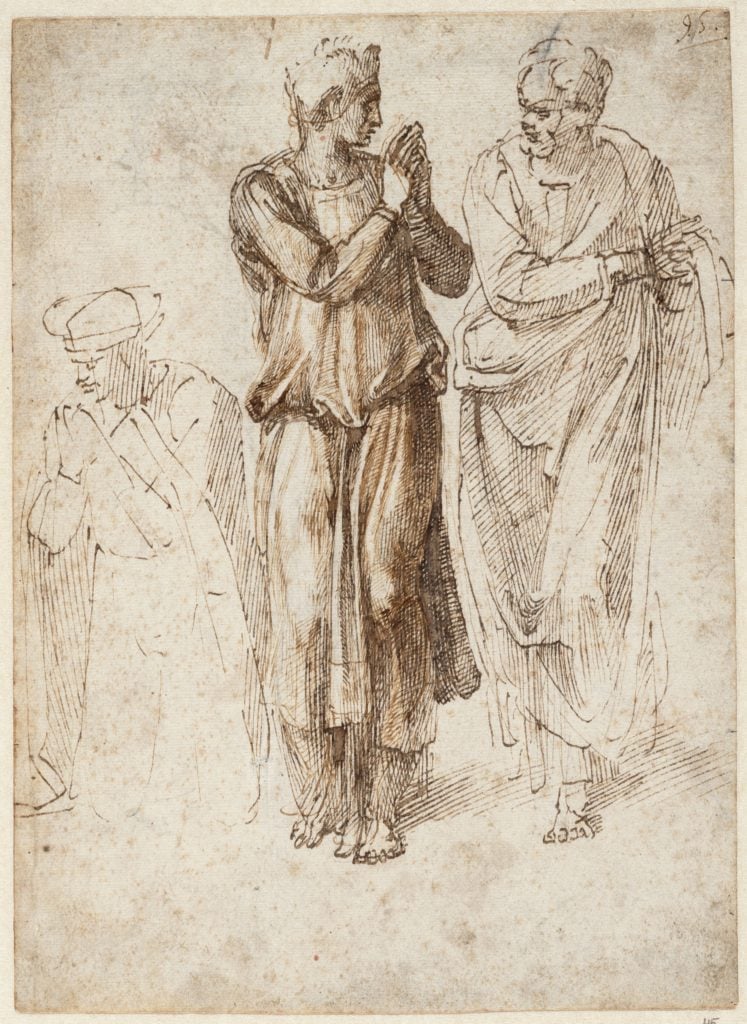
Michelangelo, Three draped figures,
with hands joined, one kneeling, the others standing
(1496–1503), recto. Courtesy of the Teylers Museum, Haarlem.
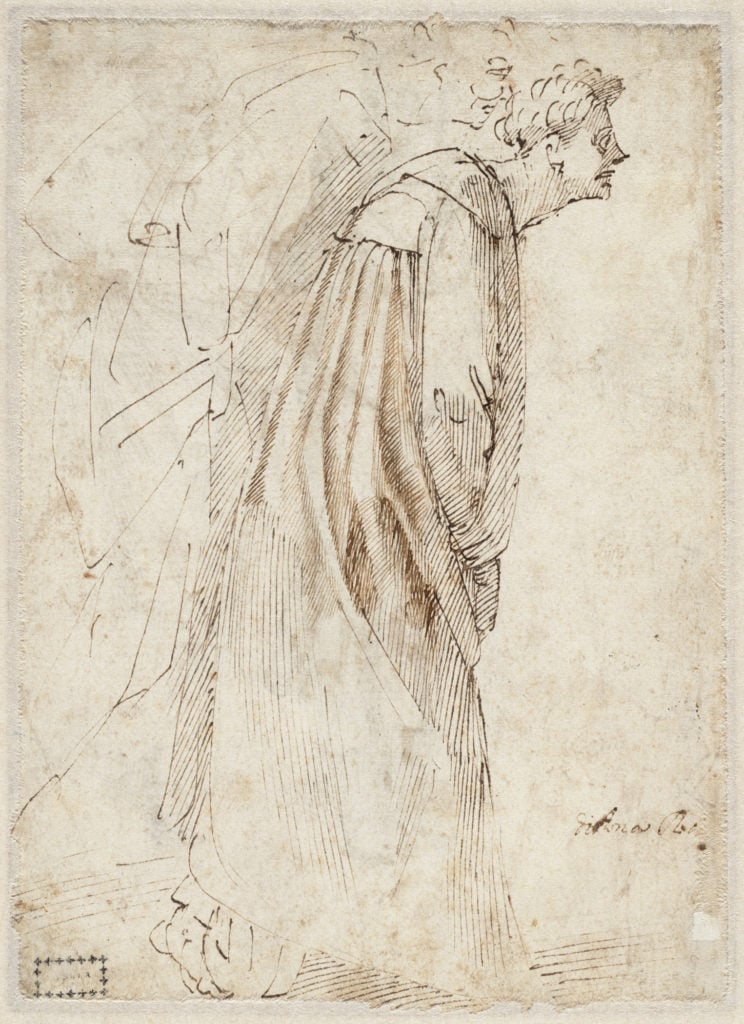
Michelangelo, Two robed figures
bending forward, in profile to the right (1496–1503), verso.
Courtesy of the Teylers Museum, Haarlem.
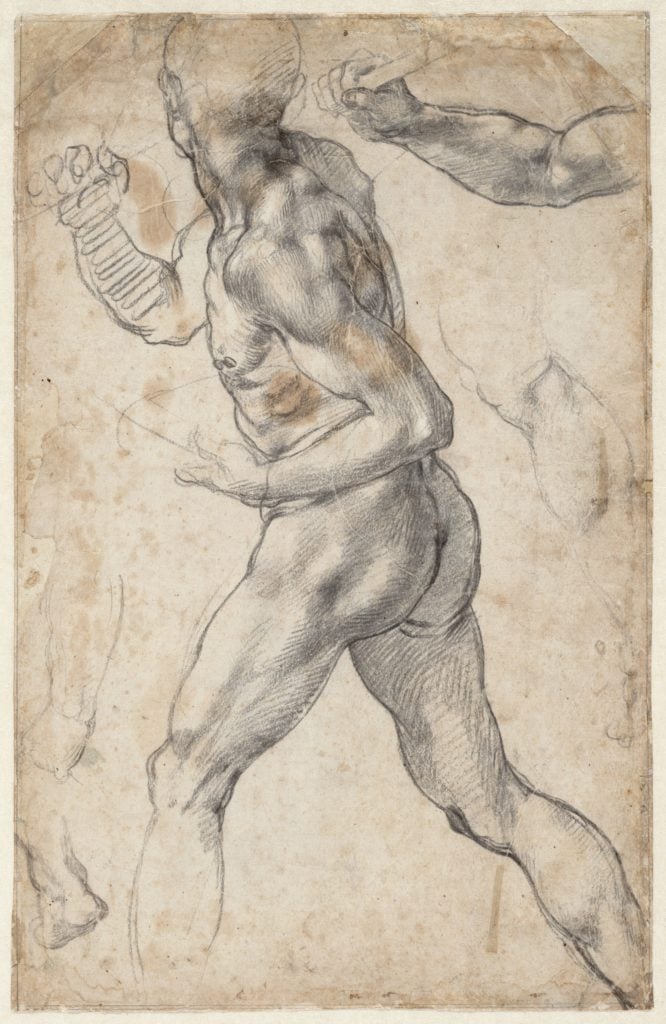
Michelangelo, Study of a striding
male nude, to the left; studies of anatomical details (1504 of
1506), recto. Courtesy of the Teylers Museum, Haarlem.
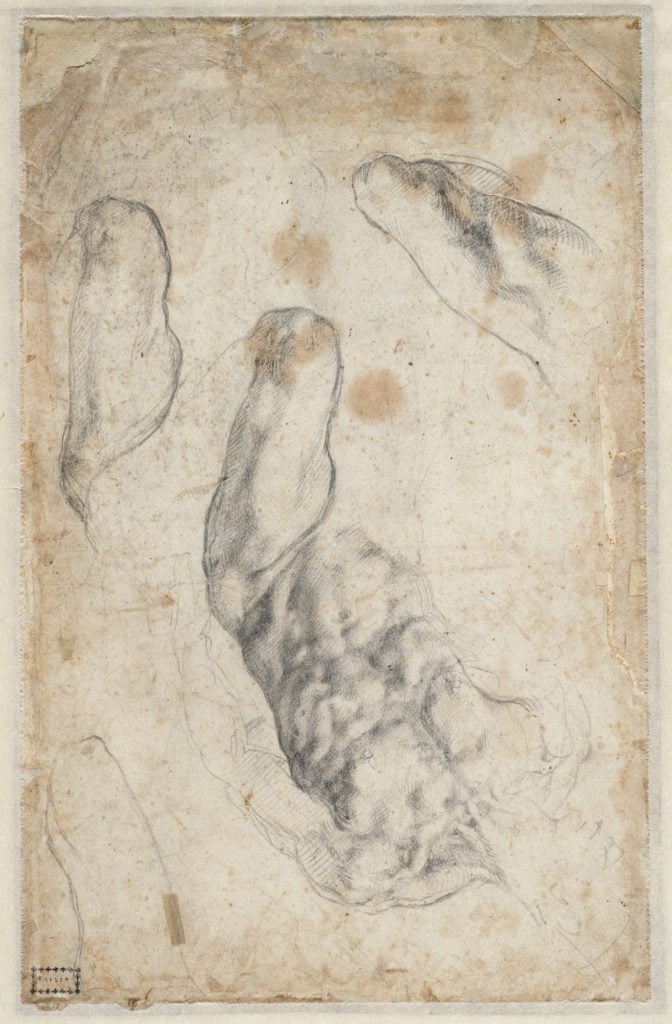
Michelangelo, Study of torso and
left leg of a male nude; separate studies of the left leg
(1525–30), verso. Courtesy of the Teylers Museum, Haarlem.
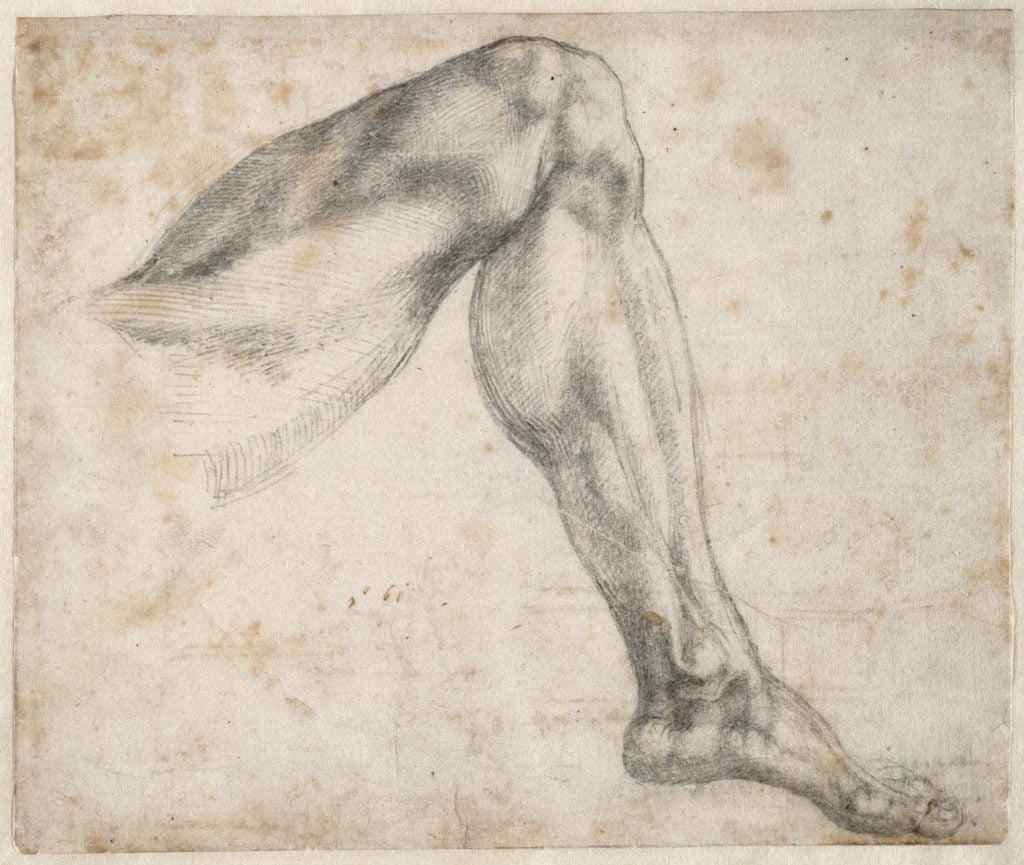
Michelangelo, Study of a leg
(1524), recto. Courtesy of the Teylers Museum, Haarlem.
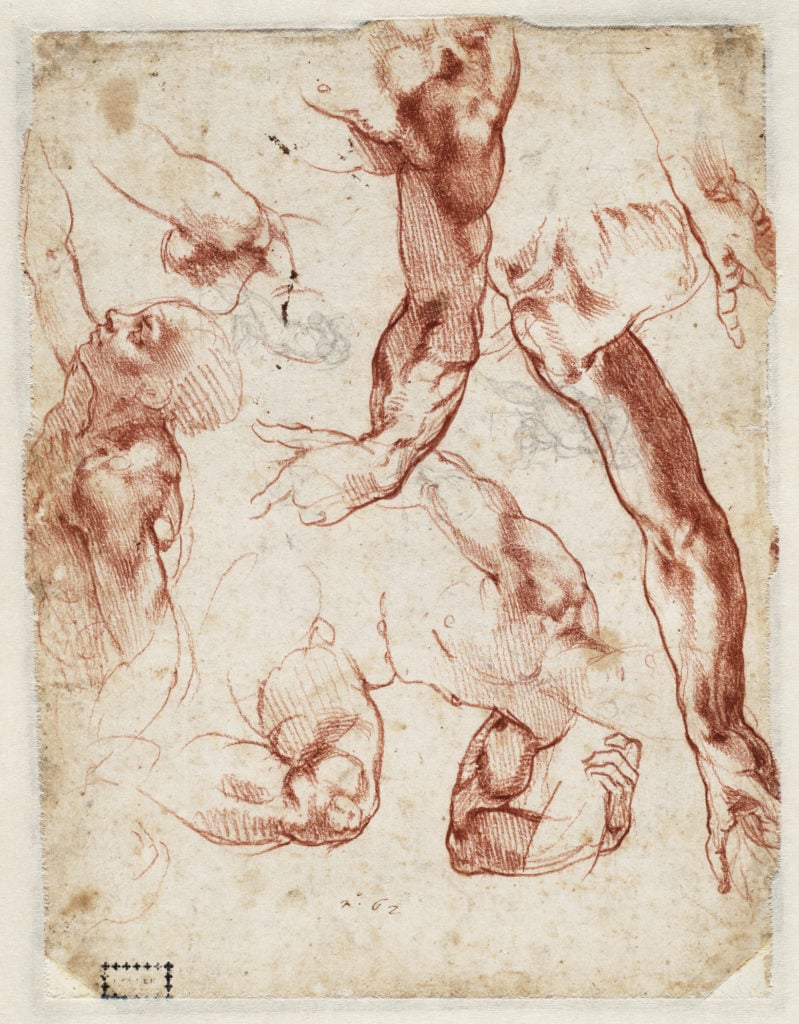
Michelangelo, Studies of figures and
limbs; figure sketches (1511), verso. Courtesy of the Teylers
Museum, Haarlem.
“Michelangelo: Mind of the
Master” is on view at the Cleveland Museum of Art, 11150 East
Boulevard, Cleveland, Ohio, September 22, 2019–January 5, 2020; and
the J. Paul Getty Museum,
1200 Getty Center Drive, Los Angeles, California, February 25,
2019–June 7, 2020.
The post The Cleveland Museum of Art Got Its Hands on a
Group of Rare Michelangelo Drawings the Met Could Never Get—See
Them Here appeared first on artnet News.
Read more https://news.artnet.com/exhibitions/michelangelo-drawings-cleveland-museum-art-1657066
Further reading


Leave a comment