
The Getty Trust Will Spend $100 Million to Protect Archaeological Sites Around the World From Climate Change and Sectarian Violence
The J. Paul Getty Trust has
announced that it will spend $100 million over the course of the
next ten years to help protect archaeological sites and antiquities
around the world.
The new initiative, which the
Los Angeles-based organization calls “Ancient Worlds Now: a Future
for the Past,” aims to protect ancient cultural heritage through
scholarship programs, conservation efforts, exhibitions, and
partnerships with other enterprises. The project is a direct
response to “resurgent populism, sectarian violence, and climate
change,” says James Cuno, the president and chief executive of the
Getty Trust.
“Cultural heritage embodies a
global community united by a common need to make things of beauty
and usefulness, and to compose stories and rituals about humanity’s
place in the world,” he said in a statement. “We will launch with
urgency and build momentum for years to come. This work must start
now, before more cultural heritage is neglected, damaged, or
destroyed. Much is at stake.”
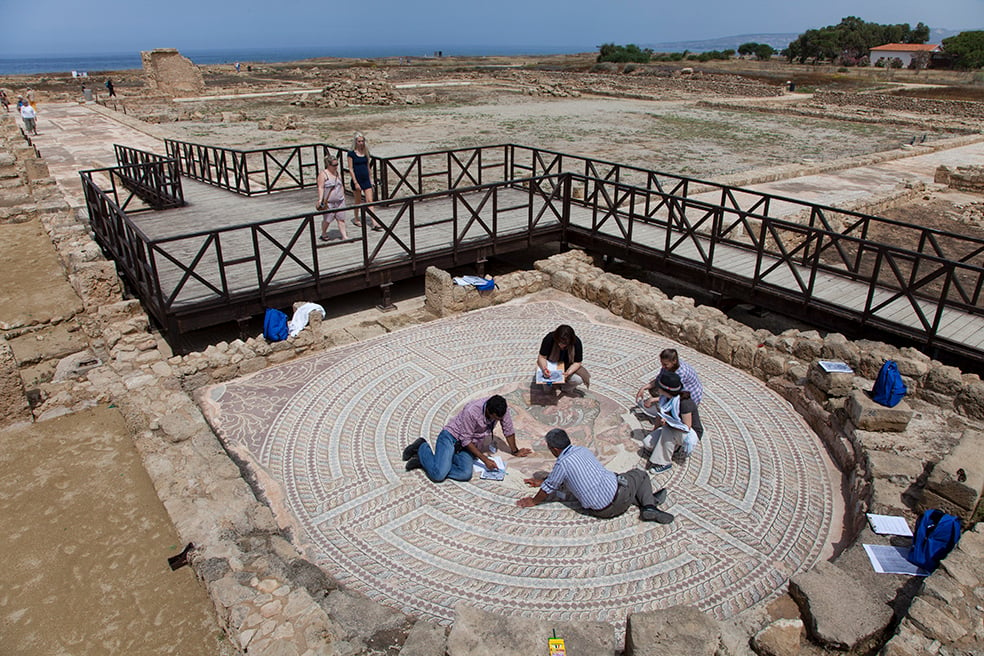
Participants in a 2014 course studying
the conservation and management of archaeological sites conducting
a survey of the Achilles Mosaic at the Paphos Archeological Park,
Paphos, Cyprus. Courtesy of the J. Paul Getty Trust.
While the initial stages of the
initiative are already underway, the full scope of its plan will be
put into place by next summer, when the Getty plans its
official launch. The initiative
will be in operation through 2030 and beyond, the organization
says.
The J. Paul Getty Trust, which
oversees the Getty Foundation, Getty Research Institute, Getty
Conservation Institute, and Getty Museum, has for years invested
much of its resources in select areas, especially in ancient Greek
and Roman sites in the Mediterranean. While it will maintain those
efforts, the new project will have an expanded purview, funding a
number of conservation training programs throughout the world in an
effort to better equip local researchers with the means to protect
artifacts.
A select group of specialists in
Iraqi Kurdistan will be taught to preserve damaged cultural
artifacts, while professionals in the United Arab Emirates will be
equipped to conserve earthen architecture in Abu Dhabi. Another
program will focus on digitizing 20 years’ worth of research
collected from Çatalhöyük, a UNESCO World Heritage Site in
Turkey.
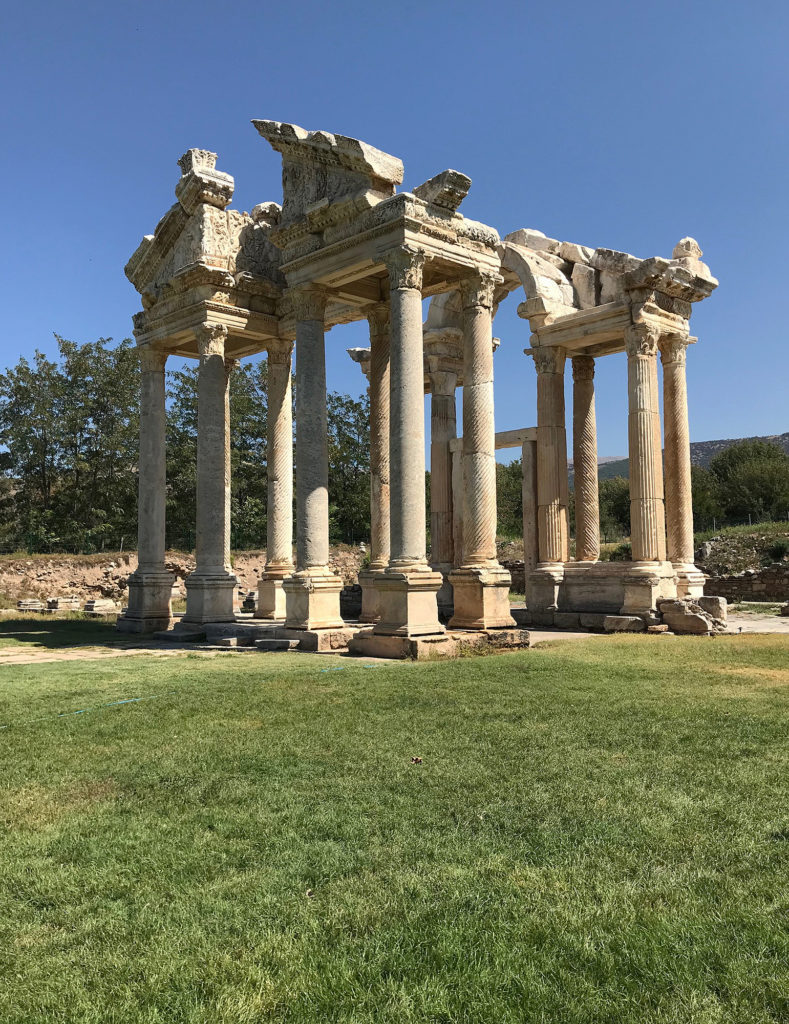
The Tetrapylon of Aphrodisias, an
archaeological site in Caria, present-day Turkey. © 2018 J. Paul
Getty Trust.
The organization will also fund
a traveling seminar on the art and architecture of ancient Thrace,
a region in present-day Bulgaria, Greece, and Turkey, and a book
that looks at the destruction of cultural heritage in the name of
political gain, such as the systematic campaign to destroy ancient
cultural relics by the Islamic State.
“Getty’s initiative is
critically important because, tragically, threats to the survival
of the world’s cultural heritage through neglect, purposeful and
collateral destruction, overdevelopment, and climate change are
putting at risk the lessons and legacy of the past,” Irina Bokova,
the former director-general of UNESCO, said in a statement. “Such
threats will require global partnerships and the work of
non-governmental, non-political organizations such as Getty to
heighten understanding on a global scale of the importance of the
world’s ancient cultures and common past.”
The post The Getty Trust Will Spend $100 Million to Protect
Archaeological Sites Around the World From Climate Change and
Sectarian Violence appeared first on artnet News.
Read more https://news.artnet.com/art-world/getty-trust-ancient-worlds-now-1654363
Further reading


Leave a comment