
The Gray Market: Why a Slew of Postponed Art-Market Events Will Trigger a Reckoning in an Overcrowded Field (and Other Insights)
Every Monday morning, Artnet
News brings you The Gray Market. The column decodes important stories from the
previous week—and offers unparalleled insight into the inner
workings of the art industry in the process.
This week, asking a natural
follow-up question about an art year in flux…
MOVE IT OR LOSE IT
Starting last Wednesday—only
hours after the World Health Organization declared the novel 2019
coronavirus a global pandemic—a tidal wave of museum and gallery
closures, art-fair postponements, and auction-sale delays
began surging across the
Western art world in
response to the growing public-health crisis. And although
the reopening of select art institutions in East and
Southeast Asia on Friday provided a jolt of optimism to art lovers
and the nonprofit side of the industry, the reality on the
for-profit side is that COVID-19’s temporary reshuffling of events
could also permanently reshape the art-market calendar in the years
ahead.
If you haven’t been tracking the
minute-by-minute changes, here’s just one small sample of what the
virus triggered in the art market between Wednesday morning and
Saturday night:
- TEFAF Maastricht
ended four days early after an exhibitor tested positive for
COVID-19. - Pace,
Gagosian, and Acquavella announced the postponement of their joint
exhibition of the $450 million
collection of Donald Marron, shortly before seemingly every gallery in New
York (including all Pace and Gagosian locations in the city) shut
down until further notice. - Four
major spring art fairs on three continents, including
Art
Cologne and the
inaugural edition of Paris Photo New
York, moved their
opening dates either to the fall or another time yet to be
announced. - Christie’s postponed 14 spring sales (so far
excluding its major May auctions in New York) and closed down 26 of
its locations worldwide, leaving only its King Street venue in
London operating at full capacity. - Phillips delayed all sales in the US and Europe
through mid-May, including the premier 20th-century and
contemporary auctions it would have held during May auction week in
New York. All physical locations in the US and Europe are also
vacant until further notice.
Aside from their largely
high-profile nature, the examples above capture one of the most
important points about the (much) larger list of changes to the
2020 schedule: “postponed” is the magic word. Only a small number
of art-market players have admitted defeat by outright cancelling
key events.
And who can blame the
organizers? Every business owner has a responsibility to try to
adapt to market conditions, and almost every human being has an
urge to try to maintain as much normalcy as possible in unsettling
times.
However, it seems highly
unlikely to me that the art market can effectively transfer a full
quarter’s worth of sales and trade fairs into the back half of the
year without a significant amount of cannibalism taking place. (To
be clear, I’m strictly talking about metaphorical cannibalism.
Things aren’t that bleak yet.) And the reason why has been staring
us in the face like a creepy train passenger for years.
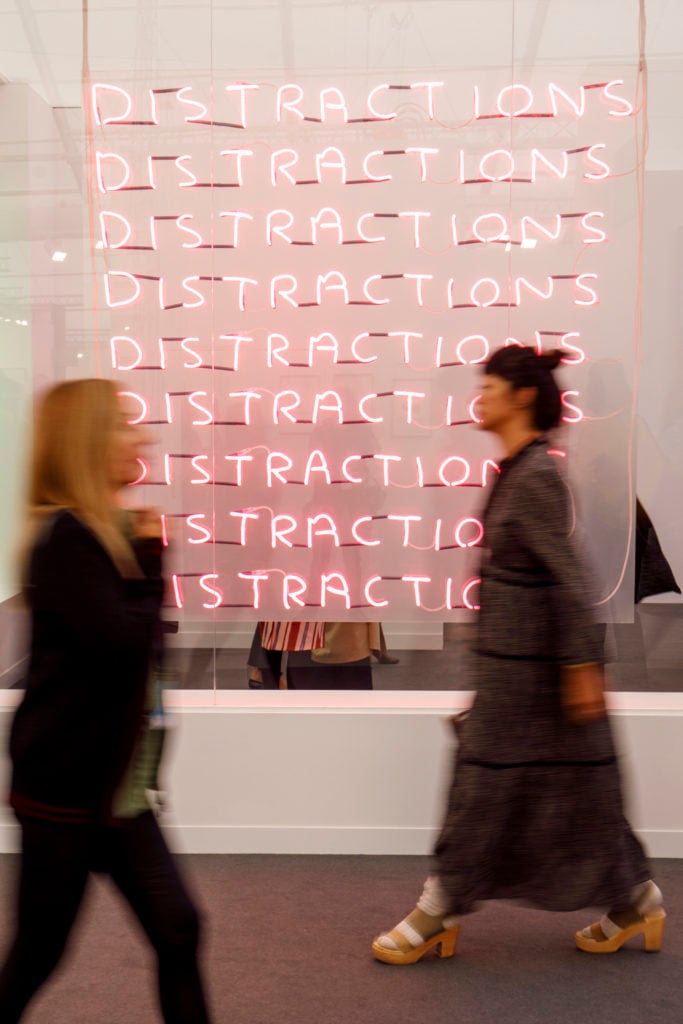
David Shrigley’s Distractions at
Frieze 2018. (Photo: TOLGA AKMEN/AFP/Getty Images)
BALANCING ACT
One common refrain you’ll hear
about crises is that they inevitably reveal the structural flaws in
the underlying systems they affect. Demand incentivizes realtors to
price beachfront property as an aspirational luxury until climate
change threatens to obliterate entire coastlines. Bankers beat
their chests about the virtues of radical self-reliance until a
global financial crisis wrought by some of their own actions sends
them to the federal government begging for a gargantuan publicly
funded bailout. The examples are almost endless.
True to form, the coronavirus is
unearthing all kinds of foundational problems in government and
industry alike. The art economy is most definitely among those
whose vulnerabilities are getting exposed, and perhaps one of the
most obvious is the potentially unsustainable bloat of the
art-market calendar.
Many, if not most, people
involved in the industry have agreed for at least the past couple
of years that the lineup of annual events has gotten too packed,
too frenzied, too all-consuming for anyone’s good. We all know the
numbers by now: somewhere between 200 and 300 yearly art fairs;
thousands of live and online auctions (Sotheby’s alone held over
400 combined sales in 2019); dozens of biennials, triennials,
quinquennials, and seemingly every other -ennial you can imagine;
plus, an almost-incalculable glut of gallery openings.
Put it all together, and the
visual that keeps popping into my head is that of Red
Panda, the acrobat who
wows audiences during halftime at NBA games by kick-flipping
ceramic bowls into a stack on top of her head while simultaneously
riding a giant unicycle. In other words, the sheer amount of
activity in a typical art year means that even a modest shock to
the system can upend the entire spectacle.
Events cancelled outright are a
micro problem—a blow to the people and businesses directly
involved, but not a macro problem that radiates out to the rest of
the calendar. And while the logistics would no doubt be difficult,
it would probably still be possible for a handful of postponed
events to find a safe haven later in the year without encroaching
on others in the field.
However, the coronavirus has now
pushed the balance hopelessly out of whack for 2020. Too many
events have already been knocked out of their respective positions
in the spring, and too few of them have thrown in the proverbial
towel. It sounds fine in principle for the dozens of art-market
events scheduled for March, April, and now early May to push back a
few months. But where are they all going to go,
exactly?
Sure, August is mostly open, but
that’s because it’s the only month on the art-world calendar
designated for something resembling leisure. How successful is an
event going to be if it has to ask its clientele to diminish their
Hamptons or St. Barths time? And good luck finding an opportune
makeup moment in the fall art season, which is already
packed-to-bursting with its own slate of gallery openings, fairs,
and auctions. The center can no longer hold.
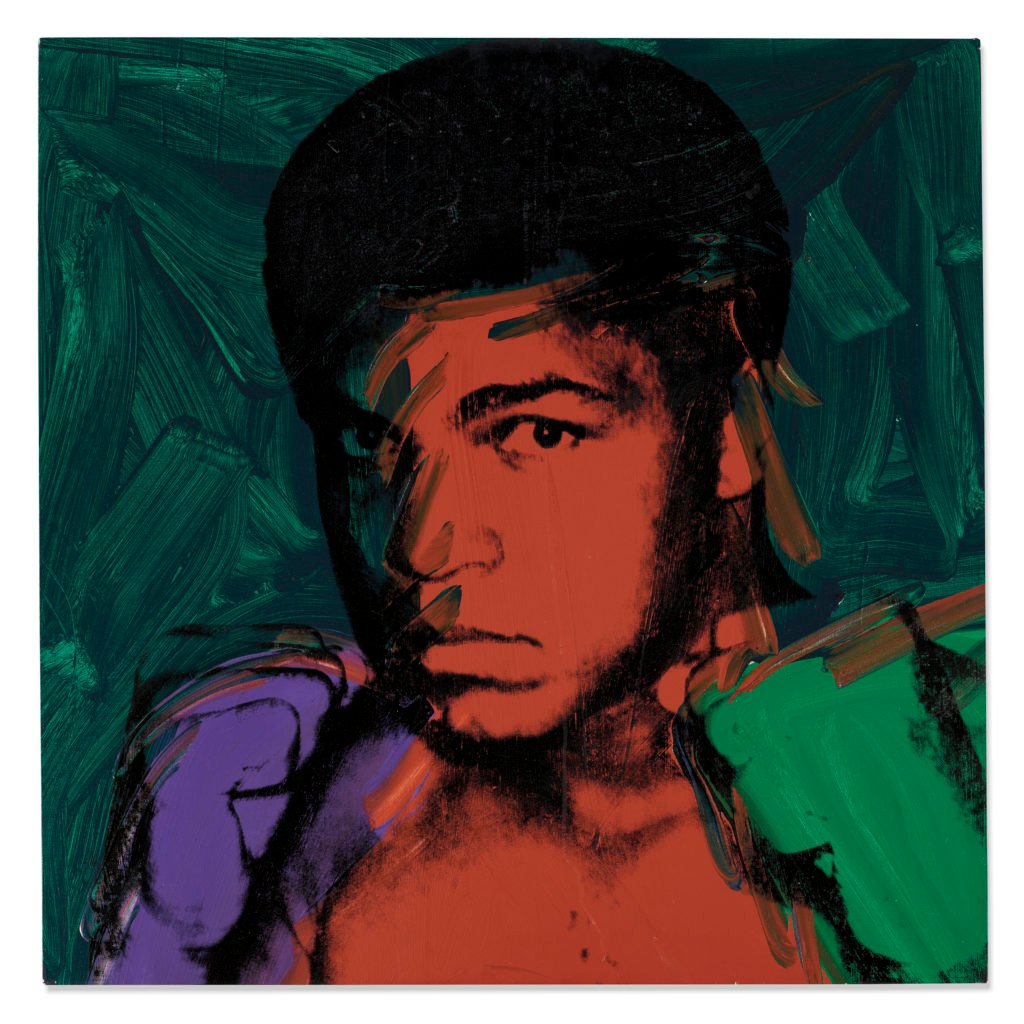
Andy Warhol, Muhammad Ali (1977).
Courtesy of Christie’s.
KNOCK-DOWN, DRAG-OUT
All of the above leads me back
to my comment about art-market cannibalism. As much as dealers,
fair organizers, and auction houses will want to—or at least want
to look like—they’re playing nice with one another in the aftermath
of this crisis, their respective leaders all know that they can’t
bend the space-time continuum to allow buyers, curators, and even
the dealers themselves to be in multiple places at once with the
best works on hand. Direct conflicts are going to
arise.
Those conflicts will force
people to make hard choices, and those choices will in turn take
events with favorable odds for success when they were able to
occupy their own slice of turf and turn them into losers when
they’re forced to go head-to-head (or close enough) with
competitors normally ensconced in other parts of the
year.
I think this clash would play
out even if buyers ultimately wrote just as many checks after the
coronavirus fiasco as they would have in a pandemic-free year. But
that scenario seems unlikely to me, too. Again, all signs point
to COVID-19 triggering
a global recession—a
circumstance in which discretionary spending on items like artwork
tends to tighten up dramatically. Combine more cautious buyers with
an overabundance of available works resulting from so many spring
events shifting to fall, and the supply-versus-demand dynamic tips
into worrisome territory for almost everyone on the sell
side.
I suspect the stakes are
especially high for many (but not all) regional fairs. Assuming
they won’t have to refund gobs of cash to exhibitors if their 2020
editions go forward at later dates—not a guarantee, depending on
the tortuous specifics of insurance
policies and exhibitor
contracts—the situation will get especially dire if galleries use
the recession as either an easy excuse, or a truthful basis, for
opting out of returning to smaller fairs where results have been
middling (or worse) for multiple editions.
After all, many dealers have
been openly talking about their intent to cut back on their annual
booth count for some time. What better motivation is there to
finally do it than a financial crisis? Even more sobering, how many
galleries won’t manage to survive the months between the original
and rescheduled dates of fairs at which they’ve agreed to show, let
alone endure long enough to pay the fees to take part in next
year’s edition?
In the end, then, postponements
may not save several art-market events whose prospects were already
looking a bit shaky in a consolidating field. So when the dust
settles on the coronavirus catastrophe, I expect it will leave
near-future annual calendars in the industry sparser than the ones
we’ve grown accustomed to. And while that won’t be a good thing for
the organizers of the lost events, it very well could restore a
measure of sanity to an industry that for years has been clamoring
for exactly that.
That’s all for this week. ‘Til
next time, remember what Mike Tyson said: everyone has a plan until
they get punched in the mouth.
The post The Gray Market: Why a Slew of Postponed Art-Market
Events Will Trigger a Reckoning in an Overcrowded Field (and Other
Insights) appeared first on artnet News.
Read more https://news.artnet.com/opinion/postponed-events-coronavirus-1805184
Further reading


Leave a comment