
The Inaugural Rabat Biennial Only Includes Female Artists. Its (Male) Curator Explains Why the Move Was Necessary
As museums and galleries
recognize that there is a lot more work to be done to
address the historic bias against female artists, the gender equality of biennials another
other big group shows has also come under increasing scrutiny. This
year’s Whitney Biennial included 50 percent
female-identifying artists. The main exhibition at the Venice
Biennale? 44 percent. But one exhibition has opted to take a more
dramatic tack. Enter: the all-female Rabat
Biennale.
The inaugural edition of the
biennial in the Moroccan capital launches today, September 24, and
its main show features 63 artists and collectives, all of whom are
female. Highlights include work by leading artists Mona Hatoum,
Ghada Amer, and Candice Breitz, sculpture by Sara Favriau and Ikram
Kabbaj, and a film by the director Tala Hadid.
The biennial’s curator, the
French-Algerian philosopher, art historian, and museum director
Abdelkader Damani, tells artnet News that he decided to include
only female artists in the central exhibition, which he has
titled “An Instant Before
the World,” in order to
elevate voices that have been silenced in the conventional
narrative of art history.
“Equality of men and women is a
chief concern of humanity that we should be engaged with,” Damani
says. “If you want to rewrite the history of art, you need to
create new conditions for how you select the artists, because if
you use the same protocol that has been done from the 19th century
to now, you are going to end up with about 90 percent of the
selected artists being male, and working in English, French, or
Spanish.”
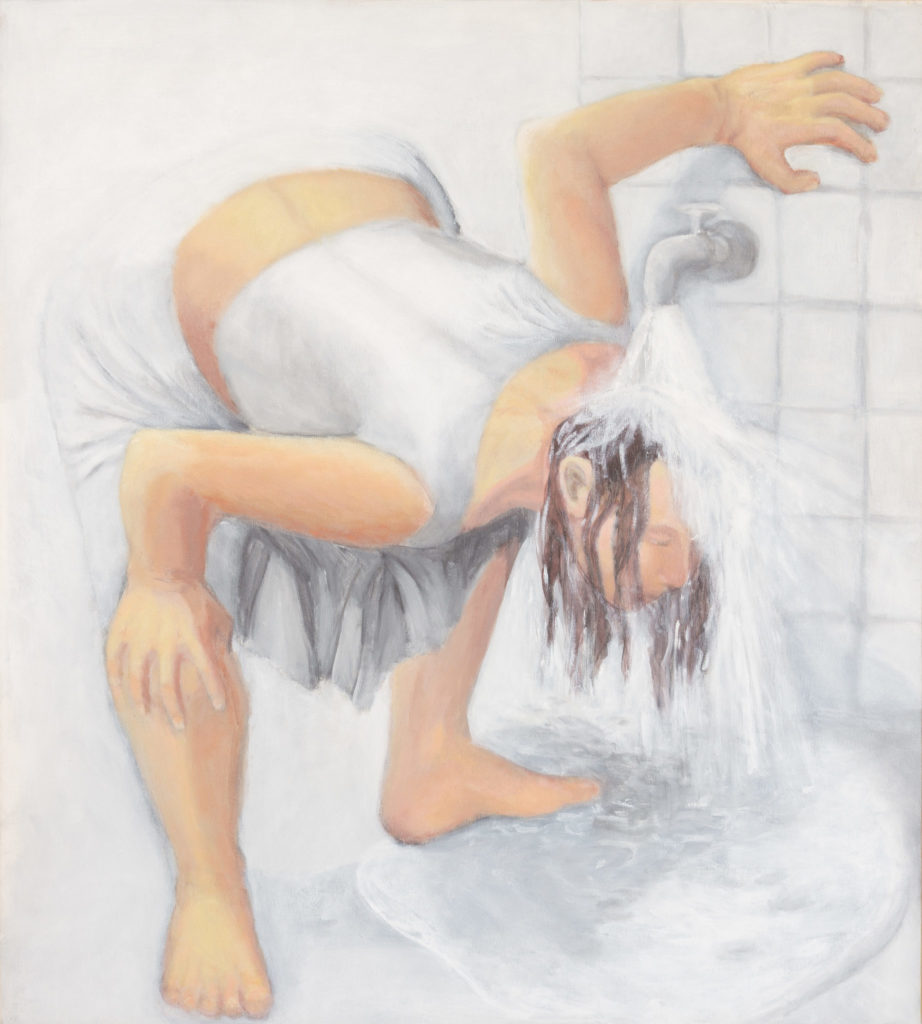
Fella Tamzali Tahari, Arachnée
(2015). Courtesy the artist, ©Fella Tamzali Tahari.
In his attempt to forge a new
history of art, Damani wanted to make space for women, as well as
to give Arabic-speaking artists the international exposure they
have long been denied. Some 30 percent of the work included will be
newly commissioned, and some 50 women writers—novelists, essayists,
and poets—will also participate in a conference tied to the
biennial. They have been invited to write a new history of art from
a female perspective.
A New Geography
Damani is the director of
the FRAC Center-Loire Valley, a
contemporary art center in central France, and is also the artistic
director of the Orleans Architecture Biennial, also in France. But
the Moroccan biennial holds a special place in his
heart.
“If you want to create the
conditions for a new writing of history of art, you need to create
the conditions in a new geography,” he says. Morocco, he notes, is
at an ideal crossroads as an African country, an Arab country, and
also a country from the West. “Don’t forget that the word Morocco
in Arabic, al-maghrib al-Aqṣá, means ‘from the Far West,’” he
says.
Although Rabat is Morocco’s
capital city, it is not the country’s first biennial. The fifth
edition of the Casablanca biennial is due to open next year. The
Marrakech Biennale, on the other hand, was cancelled in 2018 due to
lack of funds. Damani wanted to do something different in Rabat.
First, the biennial has impressive political support, plus a budget
of MAD10 million (around $1 million), funded by the National
Foundation of Museums of Morocco and backed by the King Mohammed
VI. Second, he says, it will attempt to involve the entire
city.
“A biennale is not just an
exhibition—it’s something that happens on the scale of a city,”
Damani says. Where other biennales may have secured international
visitors and tourists, he argues that they have often failed to
fully involve the local population.
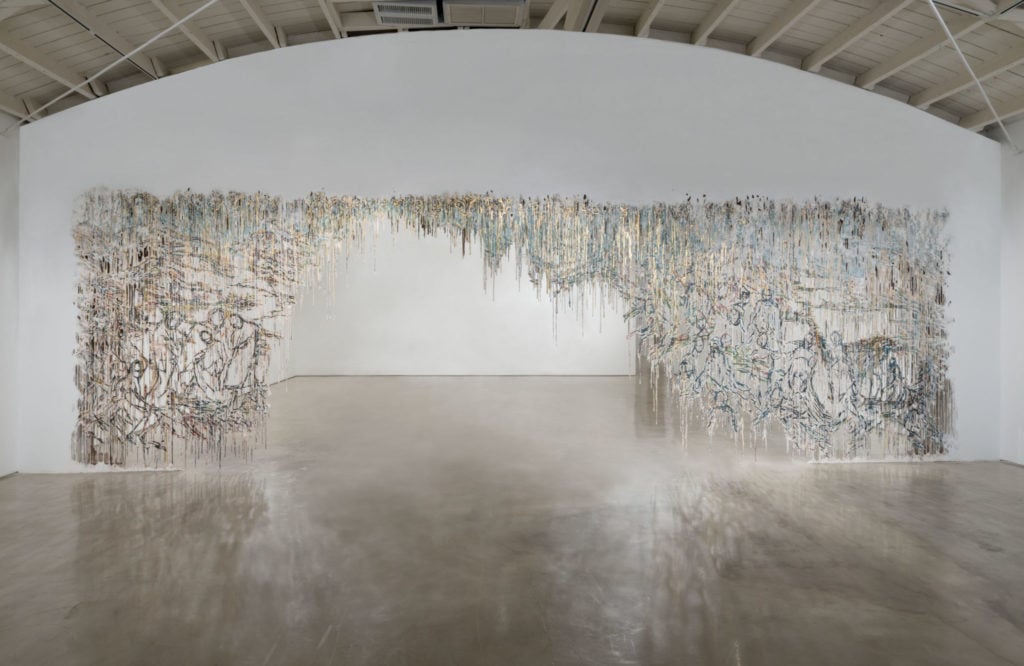
Diana Al Hadid, Smoke Screen
(2015). Courtesy Marianna Boesky Gallery ©Diana Al Hadid. Photo
©Joshua White.
A UNESCO World Heritage Site,
Rabat already attracts international visitors (although the
majority head for Marrakech). The biennale will make the most of
Rabat’s historic sites, including the Rottembourg Fort, as well as new spaces such as
the Mohammad VI Museum of Modern and Contemporary Art.
The event also promises to
engage locals, offering free entry and presenting work in a variety
of disciplines, from visual art to music to film to performance as
well as street art by the popular Moroccan artist Futura and a series of rising talents.
Outside the main exhibition,
the biennale will also offer a platform to a few carefully selected
male artists, including Mohamed El Baz.
The Rabat Biennale runs from
September 24 through December 18 at various venues in Rabat,
Morocco.
The post The Inaugural Rabat Biennial Only Includes Female
Artists. Its (Male) Curator Explains Why the Move Was Necessary
appeared first on artnet News.
Read more https://news.artnet.com/exhibitions/rabat-biennale-1660024
Further reading


Leave a comment