
The Marciano Art Foundation Denies All Charges in an Ex-Employee’s Labor Lawsuit, Saying It Doesn’t Owe Former Staffers Back Pay
At this time last year, the Marciano Art Foundation, the private
museum in Los Angeles founded by Guess fashion moguls and
art-collecting brothers Paul and Maurice Marciano, was planning a
splashy party to kick off the opening of Frieze Los Angeles.
The museum, housed inside a former Masonic Temple on
Wilshire Boulevard, which the brothers bought and overhauled for
tens of millions of dollars, was about to get busy. And
according to one former employee, staffers were told to brace
themselves for a considerable uptick of VIP tours.
One year later, as Frieze Los Angeles is set to open its second
edition, the foundation is permanently shuttered. Its website leads nowhere and former members of its
staff are wondering how a museum that was in the works for five
years could have closed after only two years of operations.
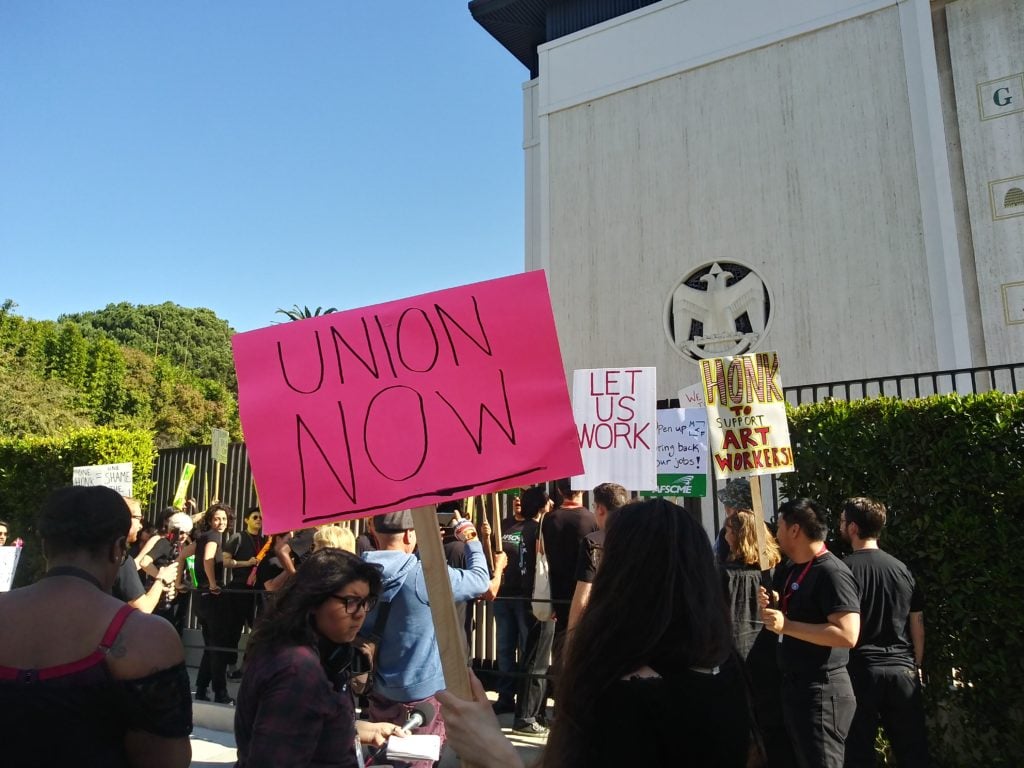
Protests outside of the Marciano
Foundation in Los Angeles. Photo: Catherine Wagley.
What Happened?
The abrupt shutdown came last fall, on November 7, just two days
after a majority of the institution’s staffers—said to be about 70
visitor service associates and docents—voted to unionize.
The Marcianos said their sudden decision to close the museum was
driven by poor attendance figures—a reason that seems odd,
considering that they never charged for admission, and were no
relying on visitors for financial support.
“People were very surprised at the swiftness and intensity of
the reaction from the Marciano Foundation,” says Kenneth Moffitt,
a former visitor service associate. “It appeared it was a
reaction to our announcement” about intending to unionize.
“Mostly, people were just really upset,” he adds. “This was an
important job for us and a lot of the employees were relying on the
income.
At a meeting several days later that was attended by almost
every visitor service associate and docent, Moffitt says the group
decided “to do something to hold the Marciano Foundation
accountable, so ultimately we decided on a class action suit.”
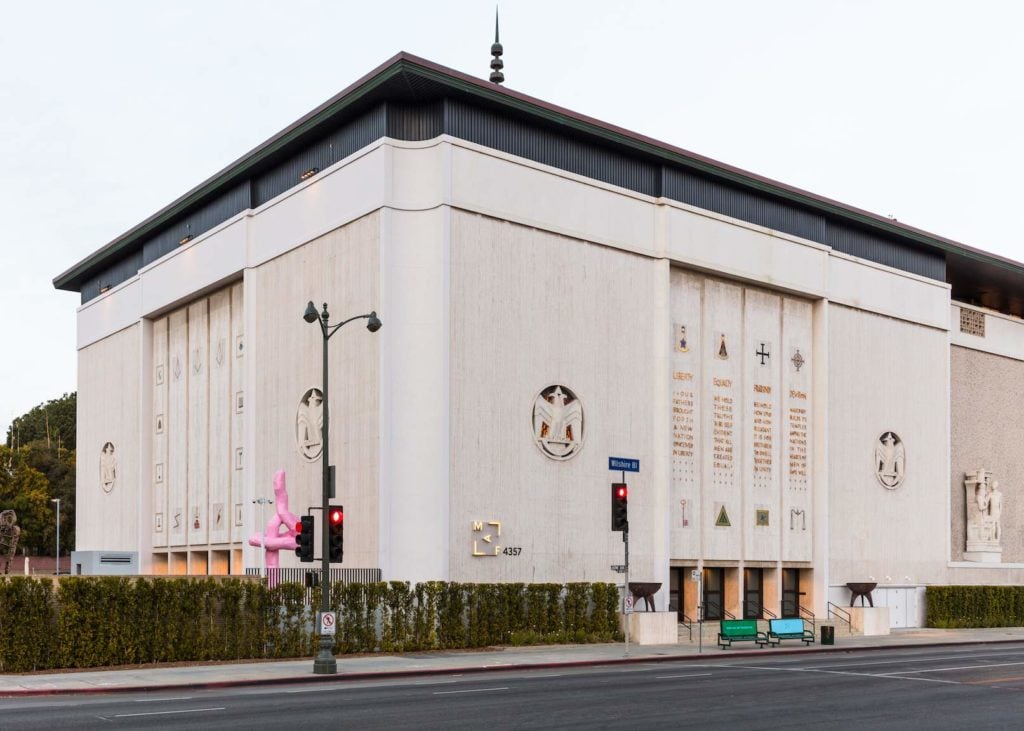
Exterior of the Marciano Art Foundation.
Photo by Julian Calero.
Double Duty as Museum Security
In a phone interview with Artnet News, Moffitt, who worked at
the Marciano Foundation since July 2017, praised his fellow visitor
service associates and docents and said he enjoyed his time working
there.
But he said that he and others were frustrated by the
minimum-wage pay and what he described as “inconsistencies” with
scheduling, including dropped shifts and last-minute tours. With no
guards on staff, he said, he and others were expected also to
monitor visitor activity and make sure no one got too close to the
art.
In December, Moffitt filed an claim in California State Superior
Court seeking class-action status for what he alleges are unfair
and unlawful business practices, as well as violation of the
state’s WARN act, which stipulates that employers must provide
sufficient notice before ceasing operations and conducting mass
layoffs.
According to his complaint, the museum heads are liable for “up
to 60 days of back pay and the value of the cost of any benefits,
civil penalties,” and attorney’s fees.
Attorneys for the foundation did not respond to Artnet News’s
requests for comment, but in the foundation’s response to the suit,
which was filed on January 31, its lawyers “deny generally and
specifically each and every material allegation contained in the
complaint… each and every alleged cause of action… and [that] the
putative class members have been injured in any sum.”
The response further says that Moffitt’s complaint “fails to
state facts sufficient to constitute a cause of action,” arguing
that the foundation is not a “covered establishment” under the
WARN act.
The Marcianos are asking the court to block class-action status,
and are seeking to recoup their attorneys’ fees.
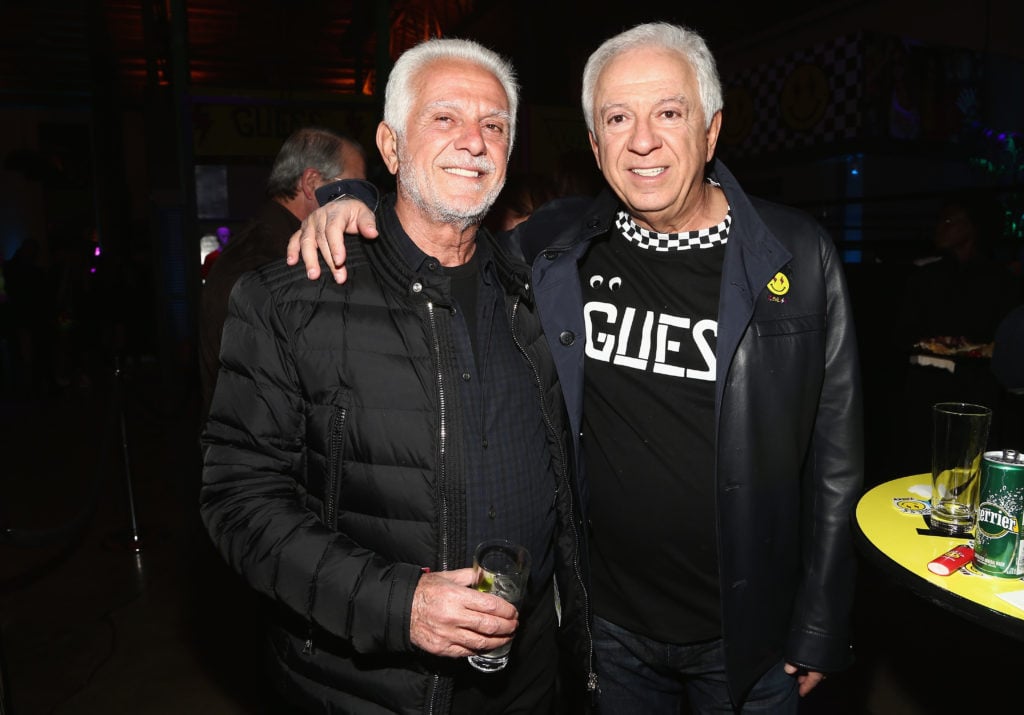
Maurice Marciano (left) and Paul
Marciano. Photo by Tommaso Boddi/Getty Images for GUESS.
And Now Comes the Legal Wrangling…
Daniel C. Rojas, an attorney for Moffitt, told Artnet News that
a meeting between the two sides is scheduled to take place on March
20.
“We will discuss, and be provided by the judge presiding over
this case, the schedule for discovery and briefing on the issue of
class certification,” he said. “After briefing, the judge will
decide whether or not the class is appropriate as described in the
complaint.”
“We are confident that the Marciano Art Foundation violated the
California WARN Act by suddenly abandoning a substantial portion of
its operations without adequate prior notice to employees,” Rojas
added. “We look forward to proving the merits of this claim in a
court of law.”
The post The Marciano Art Foundation Denies All Charges in
an Ex-Employee’s Labor Lawsuit, Saying It Doesn’t Owe Former
Staffers Back Pay appeared first on artnet News.
Read more https://news.artnet.com/art-world/marciano-foundation-closure-lawsuit-1776147
Further reading


Leave a comment