
The US and China Have Reached a Trade Deal—But What Does That Mean for Chinese Art and Antiquities?
The business world let out a sigh of relief last week when news
broke that the US and China had reached an initial trade deal. The
agreement will reduce or eliminate punishing tariffs on Chinese
goods in exchange for China’s pledge to purchase agricultural
products from US farmers. But it is too soon for that relief to
extend to dealers specializing in Chinese art, who have already
been hit with a 15 percent tariff on Chinese arts and antiquities
that went into effect in
September.
In lieu of eliminating those tariffs, the new agreement will
likely cut them in half, to 7.5 percent. (It also staved off a new
series of 10 percent tariffs that was set to go into effect this
past weekend.)
September’s Section 301 tariff covers some $120 billion in Chinese goods,
including, to the dismay of auction houses and dealers, antique
Chinese art and artifacts. Although the final text of the deal has
not been finalized or signed by state officials, “the United States
has agreed to modify its Section 301 tariff actions in a
significant way,” wrote the USTR, the government agency responsible
for recommending trade policy to the president, in a fact sheet
about the agreement.
“I believe there are reasons to be hopeful, but it remains to be
seen whether and when there will be a deal that
lifts tariffs on art, antiques,
and collectibles,” Peter Tompa, the executive director of the
Global Heritage Alliance, an advocacy group based in Washington,
DC, told Artnet News. “Presumably, any such deal will be a boon to
the trade because purchasers in the US who have laid back from
buying abroad will now do so.”
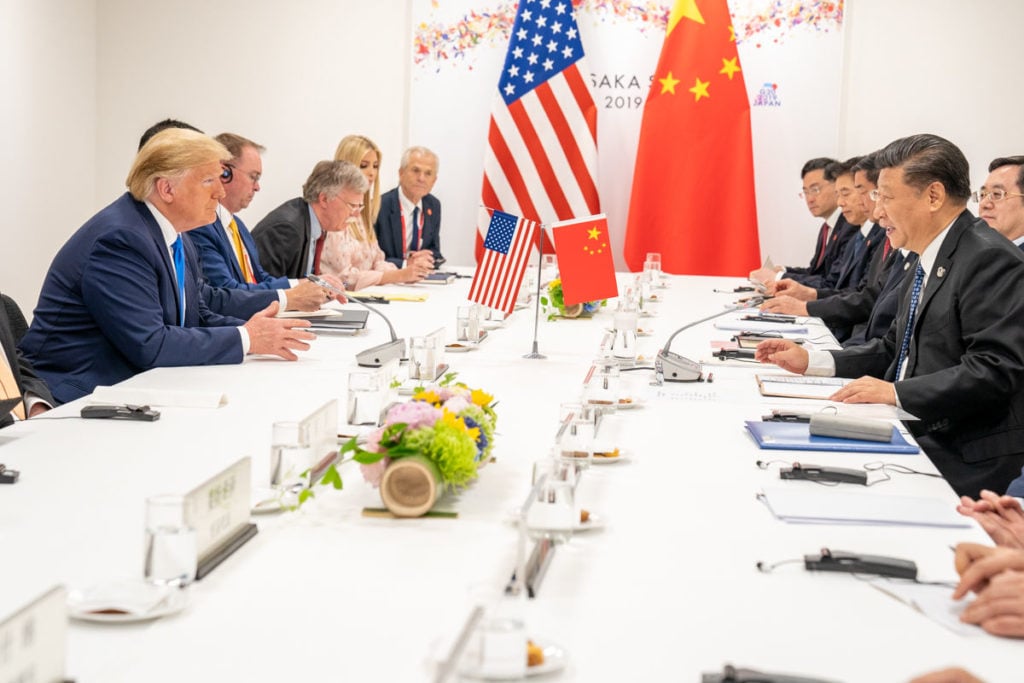
US President Donald Trump and Chinese
President Xi Jinping at the G20 Japan Summit in Osaka, Japan. Photo
by Shealah Craighead for the White House.
The tariffs are particularly hard-hitting for the art world,
because they apply to all Chinese art created more than 100 years
ago—even works being imported from countries other than China.
“US collectors and dealers very seldom import art from mainland
China because the mainland Chinese government prohibits the export
of all Chinese antiques,” Jim Lally, of New York’s J.J. Lally & Co. Oriental Art, told Artnet
News. “But the US tariff is applied to all Chinese art regardless
of where it is found, so US collectors cannot import any Chinese
art from any source (including for example, London auctions or
Tokyo dealers) without paying the tariff.”
Lally plans to file an application for an exclusion from the US
import tariff, following in the footsteps of auction houses
Christie’s, in late October, and
Sotheby’s, this month. Both houses claim that the tariff will only
hurt US businesses, causing severe harm to the country’s art market
by pushing demand for Chinese works overseas.
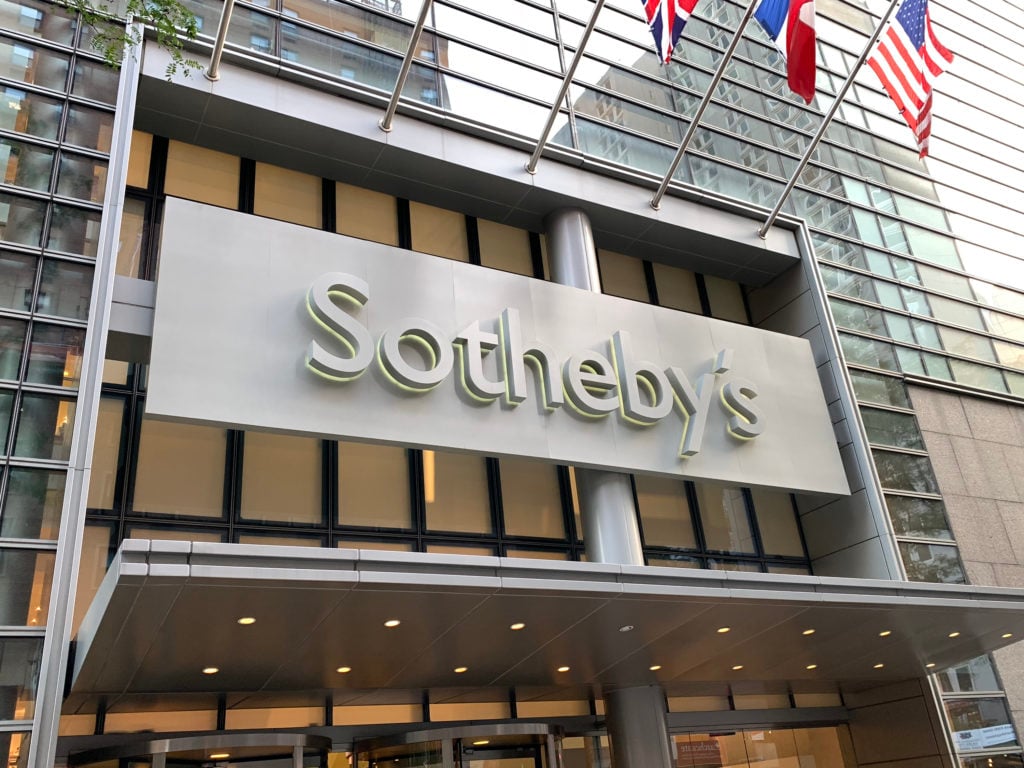
A view outside Sotheby’s in New York
City. Photo by Noam Galai/Getty Images.
The USTR had gone back and forth on whether or not to
include Chinese-origin artwork, antiques, and collectibles in
Section 301 tariff. Artwork was taken off the table in July 2018,
only to be included in the final set of tariffs, known as List 4.
In its exemption application, Sotheby’s argued that removing art
from the list had been the right call, “since tariffs on these Chinese-origin items would only
harm US companies and US interests.” The house noted that the US
and China currently represent the world’s largest and third largest
art markets.
“Given the global and fluid nature of the international art
market,” the application stated, “there is every reason to expect
that the business of selling and buying Chinese-origin antique art
will be diverted elsewhere.”
And if US buyers decide not to get that antique Chinese scroll
because the tariff is too steep, it’s not like there’s an
equivalent product being made here—which might be the case, for,
say, televisions or toys. “The art market is completely distinct
from the market for industrial and manufactured goods,” Sotheby’s
noted. “Imposing duties on Chinese-origin antique art will not
result in increased demand for American-made antique art.”
The post The US and China Have Reached a Trade Deal—But What
Does That Mean for Chinese Art and Antiquities? appeared first
on artnet News.
Read more https://news.artnet.com/art-world/what-does-us-china-trade-deal-mean-for-art-tariffs-1732263
Further reading


Leave a comment