
‘They Had No One in Their Corner’: Meet the Lawyer Who Is Battling Big Corporations on Behalf of Street Artists
In recent years, a growing number
of street artists have found themselves in court—but not to defend
themselves from law enforcement. Instead, they have been
proactively filing suits in droves against big corporations like
General Motors and
H&M for using their art in advertising and on products without
their consent.
The wave of legal activity—often
after initial efforts like cease and desist letters go unheeded—has
been viewed as a sign of the increasing professionalization and
commodification of street art. But as it turns out, it can also be
linked in large part to the efforts of one man: a young lawyer in
Los Angeles named Jeff Gluck. Since he opened his eponymous law
firm in 2016, he has filed dozens of lawsuits on behalf of artists
including Revok, Rime, and Smash 137, and settled hundreds of cases
ahead of litigation.
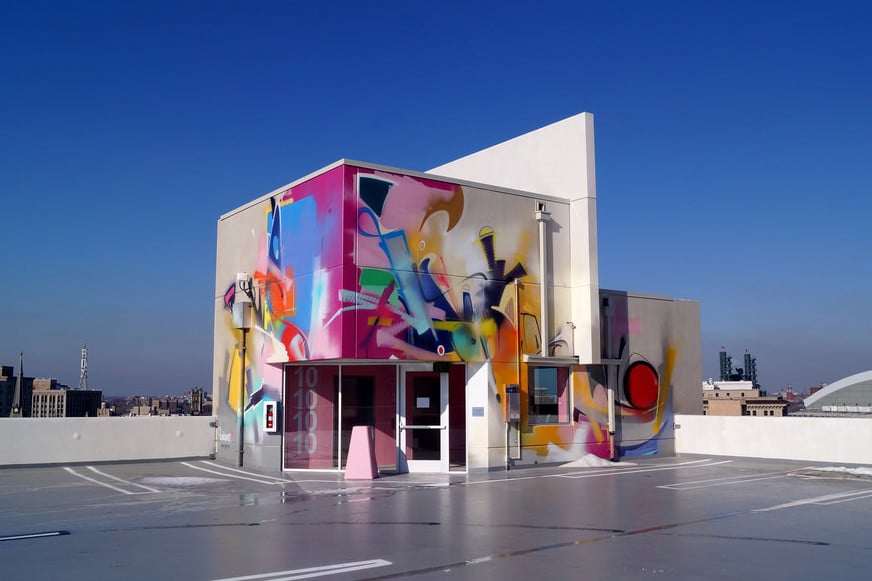
Adrian Falkner, also known as SMASH 137,
painted this mural on a Detroit parking garage in 2014. He sued GM
for using it in a social media campaign. Photo courtesy of Library
collective, Detroit.
“When I began working with
artists, I noticed how frequently they were being ripped off,”
Gluck, a forthright speaker who chooses his words carefully, tells
Artnet News. “These big corporations would just take their work,
and try to intimidate them and push them around. They were
underrepresented and had no one in their corner. No other law firm
was helping them.”
A Godsend or a Shakedown?
Over the past decade, as
streetwear brands like Supreme have become billion-dollar
businesses, corporations have become eager to align themselves with
the edgy and hip spirit of street art. But because street artists
often work independently, without a gallery or agent—and because
the nature of their work is not always entirely authorized—it often remains unclear exactly what
rights they have to their own work, and under what
circumstances.
But sometimes, Gluck argues,
companies take advantage of this gray area to willfully avoid
getting permission from artists who create the murals or designs on
which their commercials and fashion lines rely.
“This type of thing happens more
than you could ever imagine,” artist Jordan Nickel, who works under
the name Pose, tells Artnet News. Until he was connected with Gluck
about five years ago through an artist friend, he said he had
largely resigned himself to being “powerless” when he saw his work
appropriated.
“My assumption was, ‘It’s a
bummer, but it is what it is,’” he says. Gluck has since negotiated
on his behalf in several instances when his murals were used
without his permission and negotiated settlements. “To be honest,
it’s a godsend,” he says.
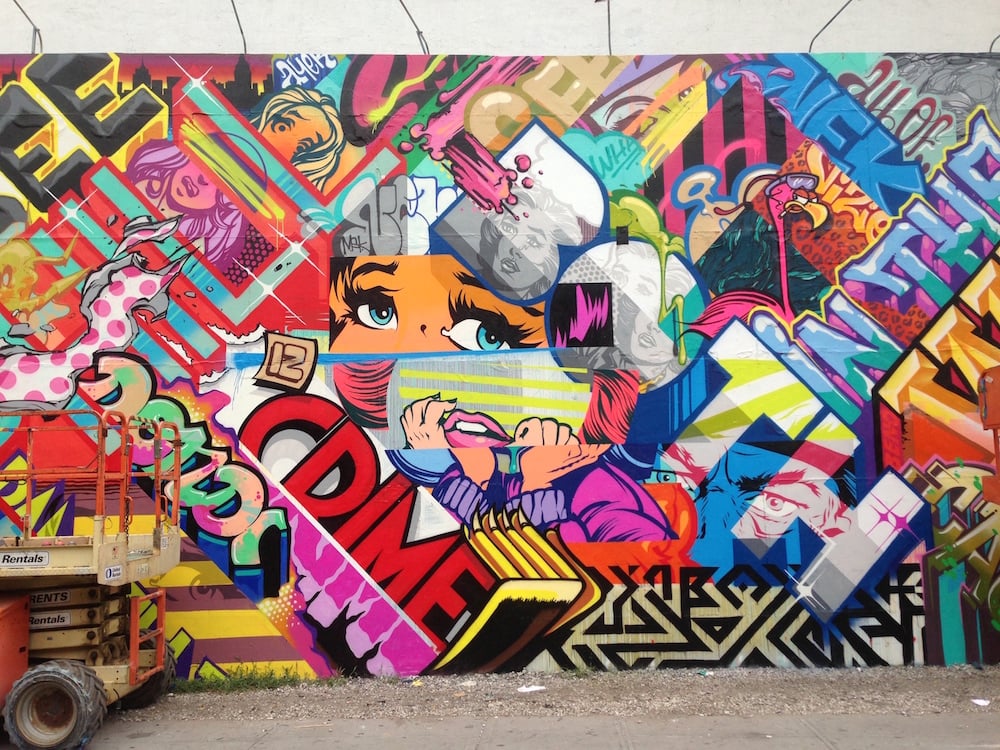
Collaborative mural painted by Pose with
Revok in 2013 on a wall at Houston & Bowery. Image courtesy of the
artists.
The stakes are high for these
artists. Pose says he works with certain brands for ad campaigns,
but selects his projects carefully. Unauthorized use of his images
has the potential to “burn me up to work with other brands,” he
says. In this business, “your livelihood is your image.”
But not everyone considers Gluck
a folk hero. Some liken him and others who bring these claims to
legal trolls, actively searching for infringements and filing
actions only after scouring the internet for evidence that their
work has been borrowed. They also raise concerns about the
scattershot nature of the litigation, which they say isn’t always
tailored to each artist’s individual interests.
Car manufacturer Mercedes Benz,
which is currently locked in a legal dispute with several artists
Gluck represents over pictures of Detroit murals used in a series
of Instagram posts, characterized the threat of a copyright
infringement lawsuit from the artists as a “shakedown
attempt.”
Good for Business
So far, however, those shakedowns
have proven reasonably lucrative. Gluck claims he has obtained
multimillion-dollar settlements for artists who have had their work
infringed.
Since the art isn’t always done
with permission, Gluck can’t necessarily sue for copyright
infringement. But he has been promoting a new and relatively
untested brand of lawsuit under the Visual Artists Rights Act,
which gives artists some recourse to protect the integrity of their
work.
And while these artists might not
have galleries or collectors to advocate on their behalf alongside
their legal teams, they do have an army of online fans that can
help push companies to respond. Take mass retailer H&M, which
received a cease and desist letter from Gluck in 2018 on behalf of
Los Angeles-based artist Jason Williams (also known as Revok), who
spotted a mural he created in Williamsburg, Brooklyn prominently
featured in one of their ad campaigns. (H&M, for its part, asserted that it had
checked with the New York City Department of Parks and Recreation
about the identity of the artist in order to obtain permission but
was informed that the work had been created illegally.)
The company could never have
anticipated the backlash that ensued when it filed a federal
lawsuit against Revok seeking a declaratory judgement asserting
that his work did not merit copyright protection since it was
created without permission from the park.
View this post on Instagram
After being blasted online by
high-profile artist KAWS, producer and art collector Swizz Beatz,
and other critics who called for a boycott of H&M, the retailer
backed off. Further, as part of a settlement
hammered out by Gluck, H&M agreed to donate to a number of
Detroit institutions and charities handpicked by Revok, including
City Year, MOCAD, Teen Council, and the Empowerment
Plan.
“Jeff has been a tremendous help
to me,” Revok told Artnet News. “We were able to take this
unfortunate and bad situation, which was really not good press for
anybody, and turn it into a positive.”
For Renee Vara, an appraiser and
artists’ rights expert who testified at length during the now-famous 5Pointz
trial, Gluck’s emergence and artists’ increased ability to
galvanize support on social media are interconnected. “His work has
collectively helped to empower artists to seek their rights in the
US,” she says. “Now artists are increasingly getting creative in
not just utilizing the legal space, but also effectively utilizing
the social space, by leveraging social media and their position as
influencers.”
Resistance to Authority
Gluck—who was a street art fan
when growing up and says he has always been drawn to
“countercultures” and “acts of rebellion”—started his legal career
in 2008 as in-house counsel for an experiential marketing agency in
LA. That’s where he met a number of artists and began hearing about
their struggles with companies using their work without permission.
In 2016, he opened his own intellectual property litigation firm with an
emphasis on representing designers and visual
artists.
Now, he considers many of those
clients friends—and even collaborators. Earlier this year, he
partnered with New York-based artist Othelo Gervacio on a
limited-edition line of hoodies and sweats that spell out “Gluck
Law Firm” in the artist’s signature, drippy letters on black
fabric.
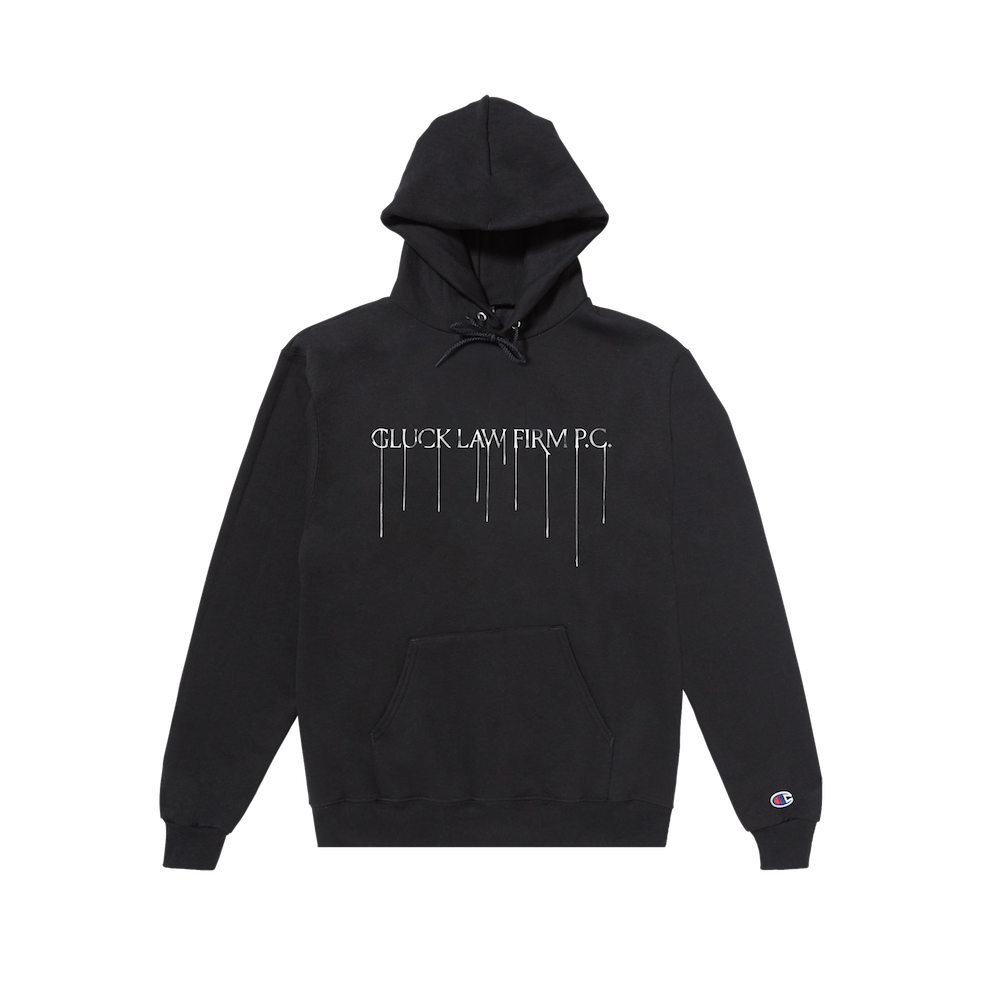
Othelo Gervacio collaborated with Jeff
Gluck for a limited edition line including this hoodie.
Image courtesy of the artist and Jeff Gluck
“I care deeply about their work,
their well-being, and protecting their rights,” Gluck says of his
artist clients. “Livelihoods are at stake when your work becomes
copied and used without permission. These cases are personal for
me.”
Gluck traces the origins of these
cases to the rise of the internet—and so as long as companies
continue to trawl the web for inspiration, he will remain busy.
“The internet is a place
where creatives can post and share their work, which is great, but
that also means it can become a massive source for corporations to
search for artwork to use in campaigns, often without permission,”
he explains. “Platforms like Instagram provide both an opportunity
for artists and designers to share content, but also a place for
marketing agencies to seek inspiration and, unfortunately, that
inspiration sometimes turns into copying.”
Graffiti and street art is
popular enough among upwardly mobile consumers that “some companies
that market and sell streetwear merchandise send out scouts to find
out where the hot spot graffiti areas are, be it in New York, LA,
Detroit or Houston,” notes attorney and copyright expert Sergio
Muñoz Sarmiento.
And since the popularity of
street art shows no sign of waning, artists’ advocates hope that
the increasing legal activity will eventually change the way
business as usual is done. “Hopefully, the trend wherein large
companies seek forgiveness after infringing will soon evolve to a
standard which seeks permission first,” Vara says.
In the meantime, Gluck will be
watching. “My clients are the only authority figures I respond to,”
he says. “That’s how I see it. I don’t care about big
companies.”
The post ‘They Had No One in Their Corner’: Meet the Lawyer
Who Is Battling Big Corporations on Behalf of Street Artists
appeared first on artnet News.
Read more https://news.artnet.com/art-world/jeff-gluck-street-art-1697589
Further reading


Leave a comment