
We All Want a Healthy Art Industry. Don’t Forget the Role of Independent Art Media in Keeping It That Way
It’s clear that the art world
will be drastically altered by this year of upheaval. But in
addition to great loss, this disruption may also result in some
welcome changes. Many of us hope for new paradigms and approaches
on the other side: more inclusion, innovation, collegiality, and
fair-mindedness, for starters. What exactly our new environment
will look like depends on each of us stepping up now and defending
what matters.
For my part—and from a
self-serving perspective at the helm of a New York art and design
PR firm—I am feeling a new urgency to roll back the retrenchment of
the independent art media sector, before its march toward
extinction is accelerated by current business
instability.
In recent years, I have read too
many analyses of media malaise in the art world and beyond,
offering a diagnosis of numerous contributing causes. But this
moment demands we face the obvious: Art and culture media need
advertising dollars and more paid content partnerships to survive,
even while many of us are encumbered by seemingly more important
overheads and obligations.
Whether as consumers or subjects of
the news, we all depend on unbiased journalists to keep us
accountable, to report on trends bigger than individual operations,
and to provide critical insights on art as well as the myriad
people who facilitate it and profit from it. No one wants to
imagine an industry with no impartial market analysis, no profiles
of emerging leaders, no new ideas, no listings of the great IRL and
virtual talks and events, no reviews to argue over—not to mention
coverage of how major world events, from the pandemic to the
current protests against police brutality and systemic racism,
are impacting our institutions and the audiences they serve.
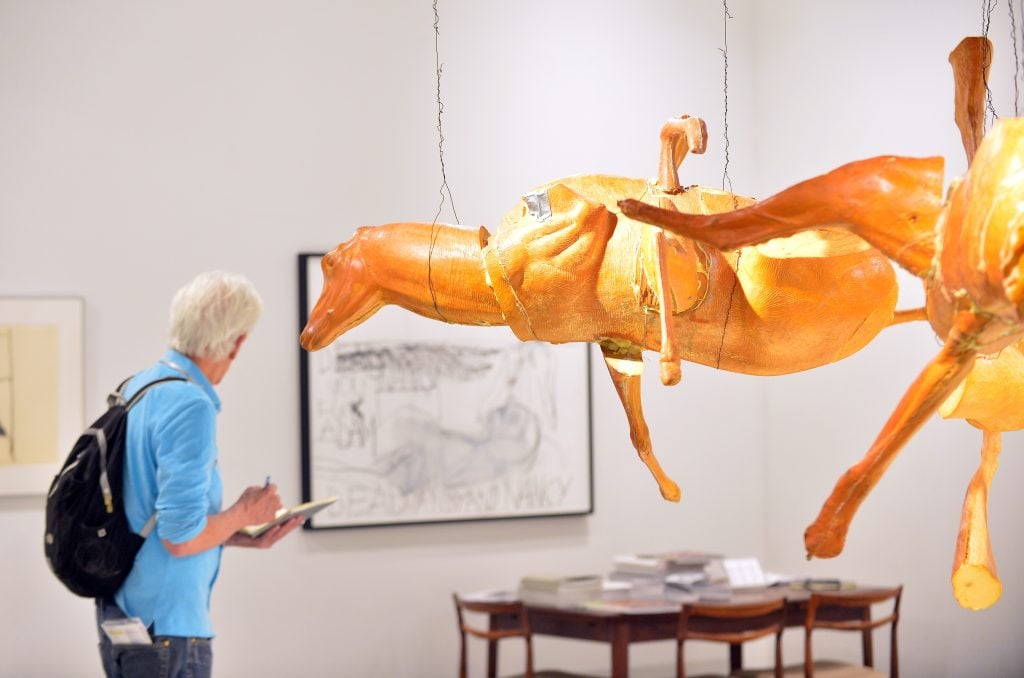
A veteran art-market journalist at Art
Basel Miami Beach 2017. (Photo by Johnny Louis/WireImage)
Yet over the years, as
advertising budgets have been redirected to social-media campaigns
and private publishing ventures, the art world has been edging ever
closer to a reality in which few if any independent voices are left
to tell our stories. This is true for many industries, but none so
pronounced as ours, which leans heavily on critical discourse and
informed opinion to activate audiences and grease the wheels of
business.
It’s more than just the arts
media mainstays to be concerned about. In Miami Beach last
December, well before
scientists told us about COVID-19, I was struck by the conspicuous
absence of many of our freelance media colleagues at one of the art
world’s networking polestars—even though Art Basel and its
satellite stalwarts were still flourishing. I missed many among
that awesome if slightly irascible band of reporters who cover what
our gallery clients present, what collectors buy, and what curators
are saying on and off the record.
While some might be happier to
see less art-fair coverage and fewer hangers-on, members of this
freelance mob are often the ones cutting their teeth by reporting
on smaller projects, artists, and events, revealing the
under-recognized and underfunded endeavors we’d otherwise never
hear about above the din of champagne glasses. These people write
for smaller outlets, infuse art and aesthetics into all kinds of
lifestyle and street-smart rags and blogs, and may be lucky to make
$50 for some of their efforts—but they persist.
It’s been fashionable to
complain about the plight of the freelance writer, but less in
vogue to pony up the advertising dollars needed to fund their
assignments—and their airfares to Miami or wherever else we might
congregate in the future.
The bigger media guns aren’t
unaffected. Before enthralling us with their art criticism in
the New Yorker
and the New York Times, Peter Schjeldahl and Roberta Smith
respectively paid their dues for decades at the kind of
publications that in recent years have slashed art coverage, if not
folding altogether. Will there be anywhere left for the next
generation to learn the ropes?
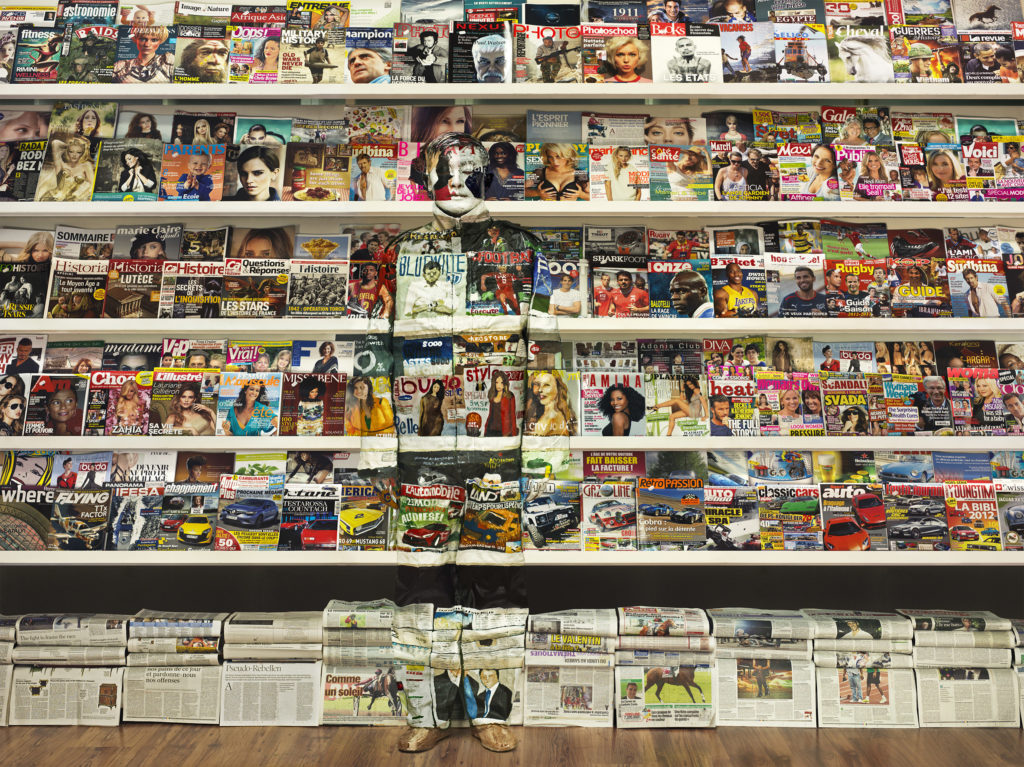
Liu Bolin, Hiding in the City –
Switzerland Magazine Rack (2012). Courtesy the artist.
Those MIA writers were just the
most recent symptom of a long, slow decline following the layoff of
virtually all critics at regional newspapers, reductions in
frequency at national art titles, and more. In a recent Pew Charitable Trust
report, Elizabeth Grieco found that 23 percent of newsroom jobs
were cut in the United States between 2008 and 2019. I personally
know several regional art critics who’ve lost their full-time jobs
since I entered the PR game and noticed that most art outlets have
reduced their full-time staff over the past two years.
Moreover, as advertising
revenues have fallen, so have salaries. According to a 2019 survey of the arts
journalism field, Mary Louise Schumacher (former art critic for
the Milwaukee Journal
Sentinel) found that 60
percent of writers in the field make half of their total earnings
or less from arts writing and fewer than half of those surveyed
make more than $20,000 per year. It makes you wonder not only what
kind of arts journalism is sustainable, but who can even afford to
enter the field today.
Notably, even as the variety of
legitimate media outlets has waned since I founded Blue Medium in
2000, I have seen the number of art and culture PR agencies (all
with similar offerings) multiply fivefold. There’s something out of
balance in that equation. One result of that discrepancy is that
many of us are diversifying our practices with digital content
creation. For instance, in 2017, my firm established a digital
division Bower Blue to help clients create fresh content about
their exhibitions, studios, artists, and events to post on their
digital platforms. In some cases, we hire freelance writers to
conduct interviews and write reports, but I respect that this often
isn’t their preferred way to make a buck.
This content creation is part of
the social/digital evolution and to ignore the new reality would be
foolhardy. But don’t confuse this form of controlled storytelling
and self-publishing with authentic, independent journalism that
covers everything from a scrappy new gallery initiative in Detroit
to a blockbuster museum show in London. And for the authentic arts
media outlets that do exist, the constant need to produce more
content with shrinking budgets is eroding their ability to do
deeper dives into urgent subjects and to communicate the richness
and diversity of what’s happening in the art world beyond
provocative headlines about Banksy, KAWS, and
Koons.
With that in mind, I would offer
the same advice that I offer all my clients to a new institution or
languid foundation looking to get noticed or a gargantuan gallery
trying to bolster or rescue its reputation: Don’t skimp on or cut
all your advertising, or at least forge a small media partnership
if you want to be seen and heard. If you can afford it, do it for
your brand (yes, the art world has brands), your community at
large, and those who have dedicated their careers to covering what
you and your colleagues do. While the fate of arts reporters at
regional newspapers might be settled, the dedicated arts media is
small enough for our industry to make a meaningful impact by
staying engaged with its publishers.
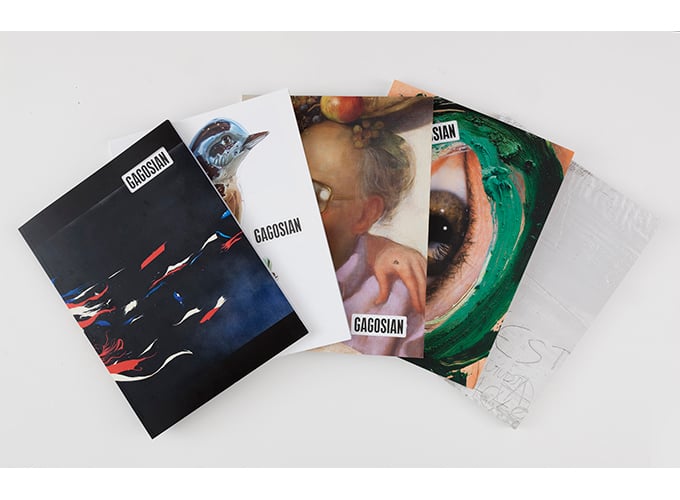
Gagosian Quarterly. From left to
right: spring 2018 through spring 2017 issues. Courtesy
Gagosian
Despite the contraction in the
field, there are probably more options to support media than ever
before, as most outlets have branched out in ways similar to PR
firms. In addition to their print and digital ads, wraps, inserts,
podcasts, and videos, the art and culture media offer digital paid
and promoted posts, targeted newsletter campaigns, or, if you want
to get creative, work directly with them on native advertising or a
new content series. This applies to both for-profit and nonprofit
media outlets, the latter offering some tax deductions to boot.
They have a built-in reach and valuable reputations to
leverage.
Please keep self-publishing your
glossy magazines, continue with your beautifully lit videos,
well-scripted podcasts, and special events, both virtual, and soon
perhaps, in person (miss you!). But don’t forget our media outlets
and how vital they are to the very existence of the art ecosystem,
along with their value in a more universal, democratic sense. We
need to know what’s happening in the art world beyond our
social-media echo chambers. Spending your money on reputable
outlets will never guarantee you the sort of coverage you want, but
it is the only way to guarantee us the kind of journalism we all
need.
Decades of trend lines won’t be
reversed in the months ahead, but we must attempt not to let
short-term pressures exacerbate long-term problems. If we wait
until we feel safe to create the art world we want, it may be too
late, and not just for the media.
John Melick is the founder of
the PR firm Blue Medium (2000) and the digital content agency Bower
Blue (2017).
The post We All Want a Healthy Art Industry. Don’t Forget the Role
of Independent Art Media in Keeping It That Way appeared first
on artnet News.
Read more https://news.artnet.com/opinion/john-melick-op-ed-1888225
Further reading


Leave a comment