
What Amy Sherald Is Looking At: The Painter on 8 Cultural Touchstones That Inspire Her, From Wes Anderson to WEB Du Bois
Given the headlines Amy
Sherald made last year with her official portrait of
former First Lady Michelle
Obama, one might be surprised to learn
that her
debut exhibition at Hauser and Wirth, which opened in New
York this week, is her first solo show in the city.
“I purposely skipped the New York scene,” Sherald told artnet
News. “If I was going to have a show in New York, I wanted it to be
a show like this, not just at a random art space.”
The show features eight new paintings, all but one of which were
completed this year. With two canvases measuring at least 10 feet
tall, this body of work sees Sherald working at a larger scale than
ever before. But you’ll still spot the immediately
identifiable trademarks of her work: Colorfully clad black men and
women posed against a vivid, single-hue backdrop, their skin
rendered in gray-scale. (Sherald plucks her models off the street
when they catch her eye, and she often outfits themselves in
clothes she’s purchased for that purpose.)
Sherald grew up spending summers with family in Panama, where
each room in the house was painted a different color. In the two
monumental works in the show, she’s evolved beyond her
highly-saturated monochromatic grounds to feature fully realized
scenes. In one, the figures stand on a beach; in the other perched
on a steel girder. (The latter is inspired by Charles Ebbets’s
famous 1932 photograph of workers sitting on a construction beam
high over Rockefeller Center eating their lunches.)
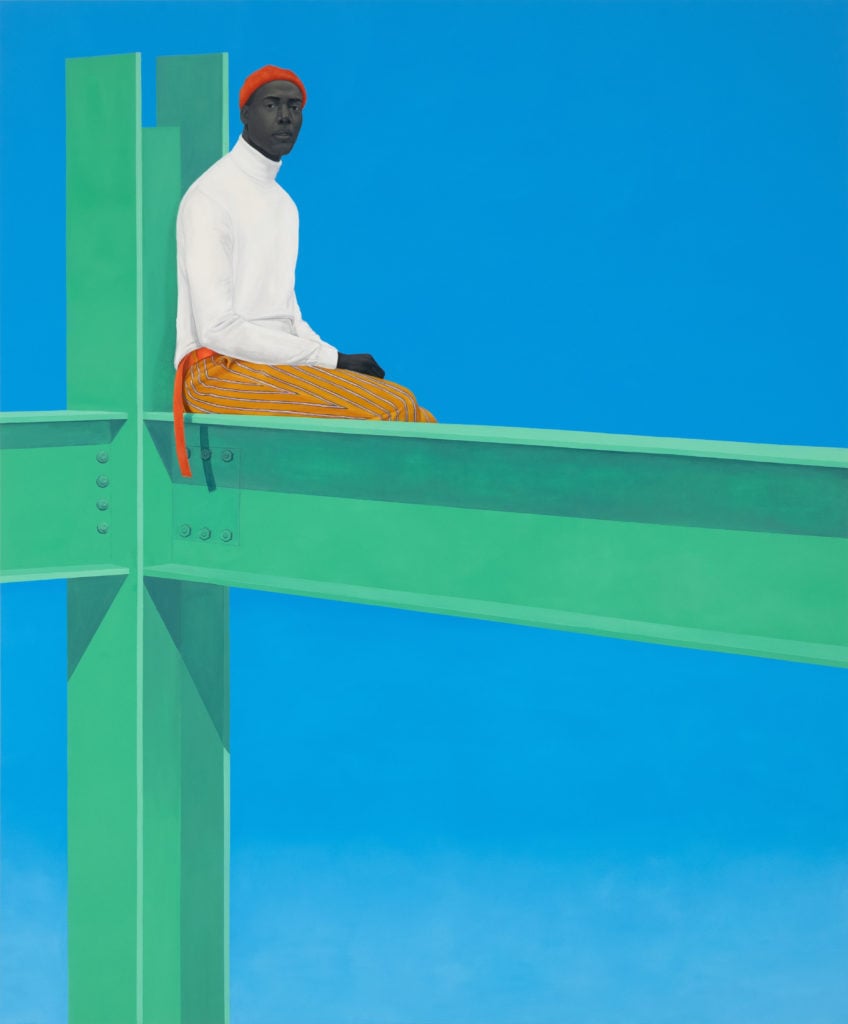
Amy Sherald, If you surrendered to
the air you could ride it (2019). Photo by Joseph Hyde, ©Amy
Sherald, courtesy the artist and Hauser & Wirth.
And over the past year or so, Sherald’s ideas about what she
hopes to do in her work—to represent African Americans through the
lens of “interior space and our own private identity”—have
crystallized. Some of her influences have stayed with her for many
years, such as Bo Bartlett’s 1986 canvas Object
Permanence, which Sherald considers “the first real painting I
ever saw in my whole life.”
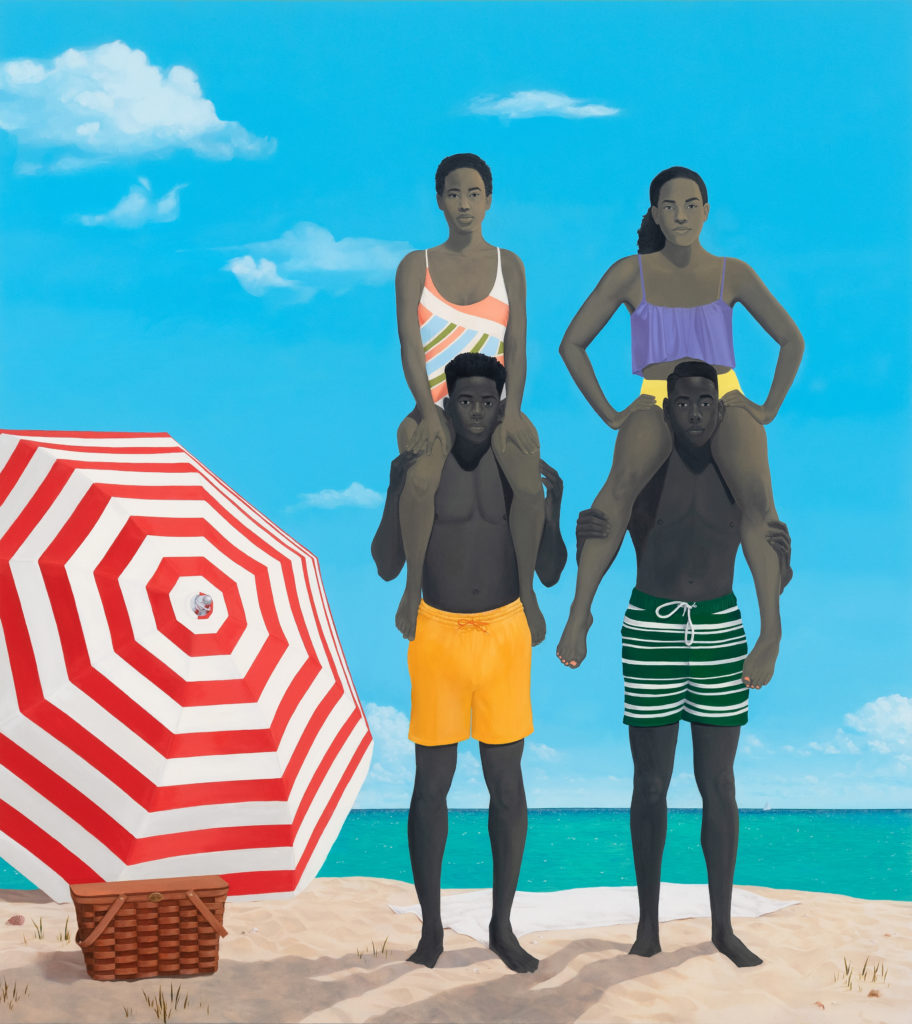
Amy Sherald, Precious jewels by the
sea (2019). Photo by Joseph Hyde, ©Amy Sherald, courtesy the
artist and Hauser & Wirth.
She’s also been doing a lot of reading, and has found that
writers including Elizabeth Alexander and Kevin Quashie had
articulated in words many of the themes she was hoping to
communicate in the paintings.
Ahead of this week’s opening, we spoke with Sherald about the
cultural touchstones that have fueled her latest paintings—all of
which have already sold, by the way—and what ties them
together.
Bo Bartlett, Object
Permanence (1986)
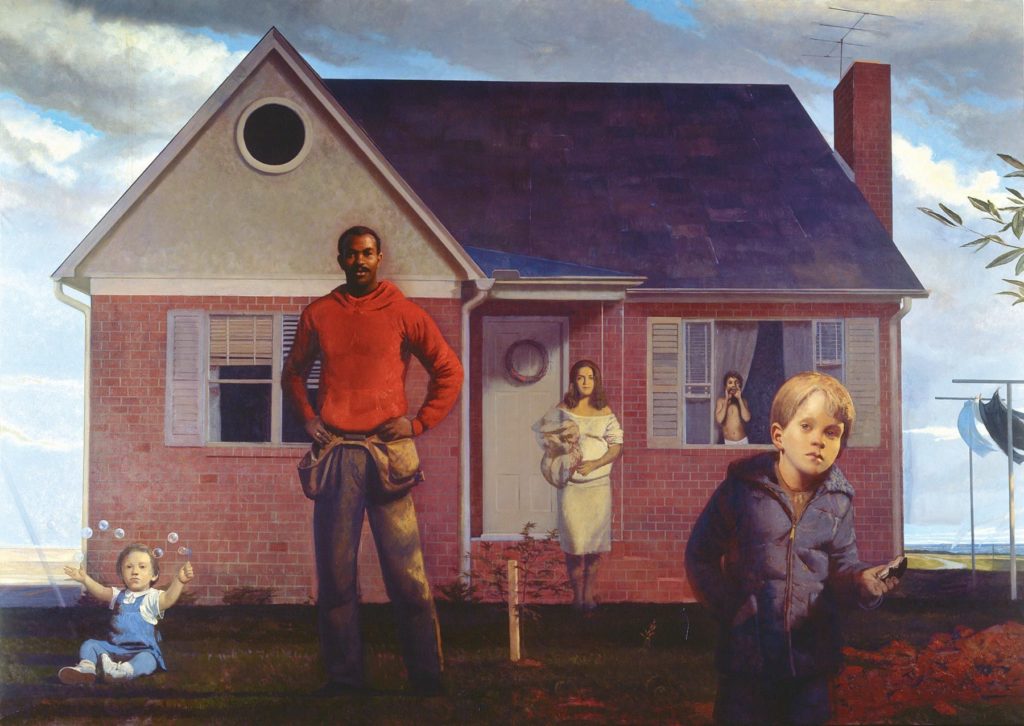
Bo Bartlett, Object Permanence
(1986). Courtesy of the artist.
Sherald first saw this painting, in which Bartlett, a white man,
depicts himself as African American, on a sixth-grade field trip.
“The image of a young black man looking at me, just seeing myself
in that work was powerful,” she said. “I still feel the same about
it and it’s still a great part of my inspiration as a figurative
painter. It’s a reminder that there need to be more images out
there existing in the world that can offer other children and
people that same experience that I had in that moment when I first
saw that painting in a museum.”
The artist only realized that Bartlett was white a few years
ago, but “that made it more interesting to me,” she said. “I grew
up loving Reese Witherspoon movies. I was able to look at her and
internalize who she was. But I don’t think people for the most part
look at black people and see themselves. When a white cop sees a
young white teenager, he sees his son. He won’t look at a young
black teenager and see the same thing. For Bo to imagine himself
into that body is essentially what brings humanity together, what
brings empathy to and humanizes the black experience.”
Tim Burton’s Big
Fish (2003)
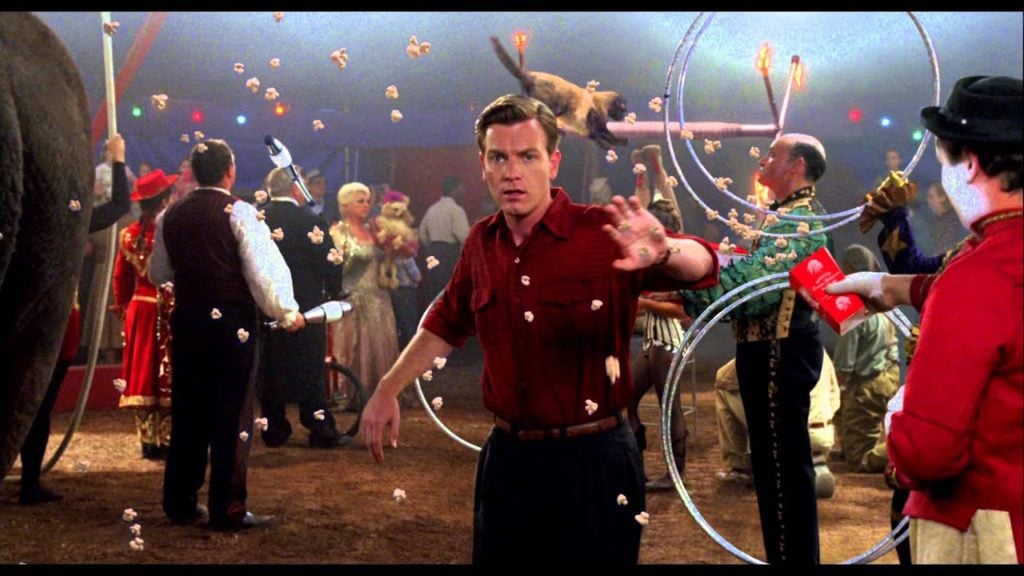
Ewan McGregor in Tim Burton’s Big
Fish. Film still courtesy of Columbia Pictures.
A few years after Tim Burton’s film Big Fish
appeared in theaters, Sherald checked the film out of the
library. “It was maybe in 2007, it was a year where I was
trying to figure out what kind of work I wanted to make, and what I
wanted to bring to the conversation and the art historical
narrative,” she recalled. “In the film, watching this father tell
his son all of these stories about his life and his experiences, I
realized he had the freedom to see himself any way he wanted to—in
a magical way.”
“I realized that the paintings I wanted to make were the
paintings that I wanted to see in the world,” Sherald said.
“There’s a way of being that you don’t see in art history when it
comes to the black figure. The body is always relegated to
political action. The public identity of a black person is what
becomes, as opposed to who we are in our interior experiences. But
I realized that as a figurative painter, I have the power to create
these archetypes that can critique art-historical narratives and
offer people a reflection of themselves.”
Salvation: Black People
and Love by bell hooks (2001)
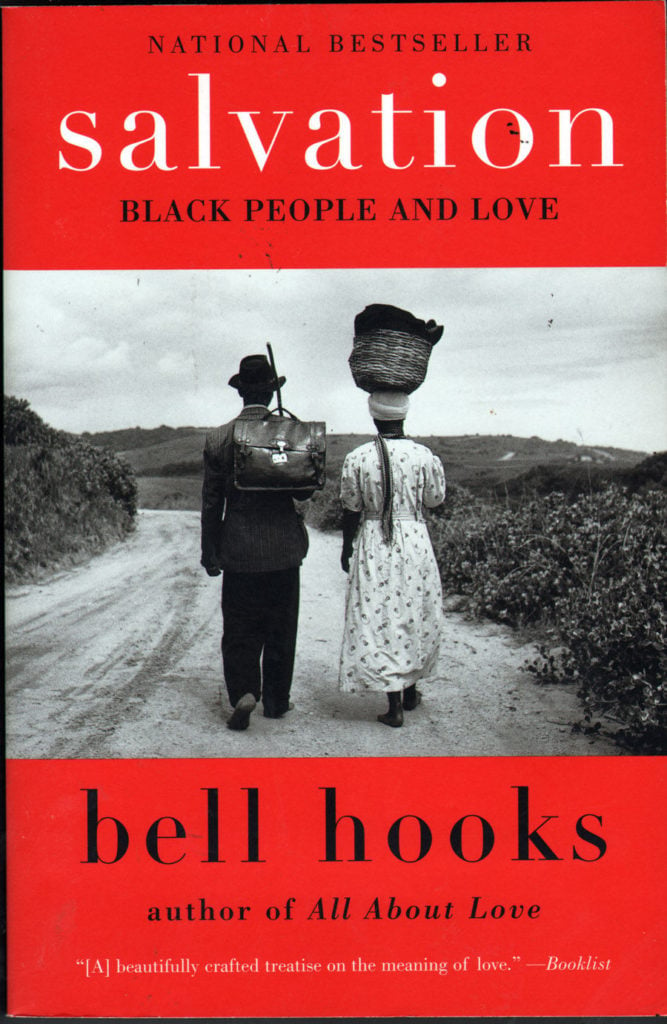
Salvation: Black People and
Love by bell hooks (2001). Courtesy of Harper
Perennial.
For the past year, as Sherald was at work on the show, she was
reading Salvation. She borrowed the exhibition
title, “The Heart of the Matter,” from the first chapter
because, she said, “I feel like my work gets down to the heart of
matter of what it means to be us in the world and the everyday
reality. That chapter speaks about a love ethic and getting back
into loving yourself. That’s a very rudimentary way to describe
it.”
WEB Du Bois’s photography
exhibition “American Negro” at the 1900 Paris
Exposition
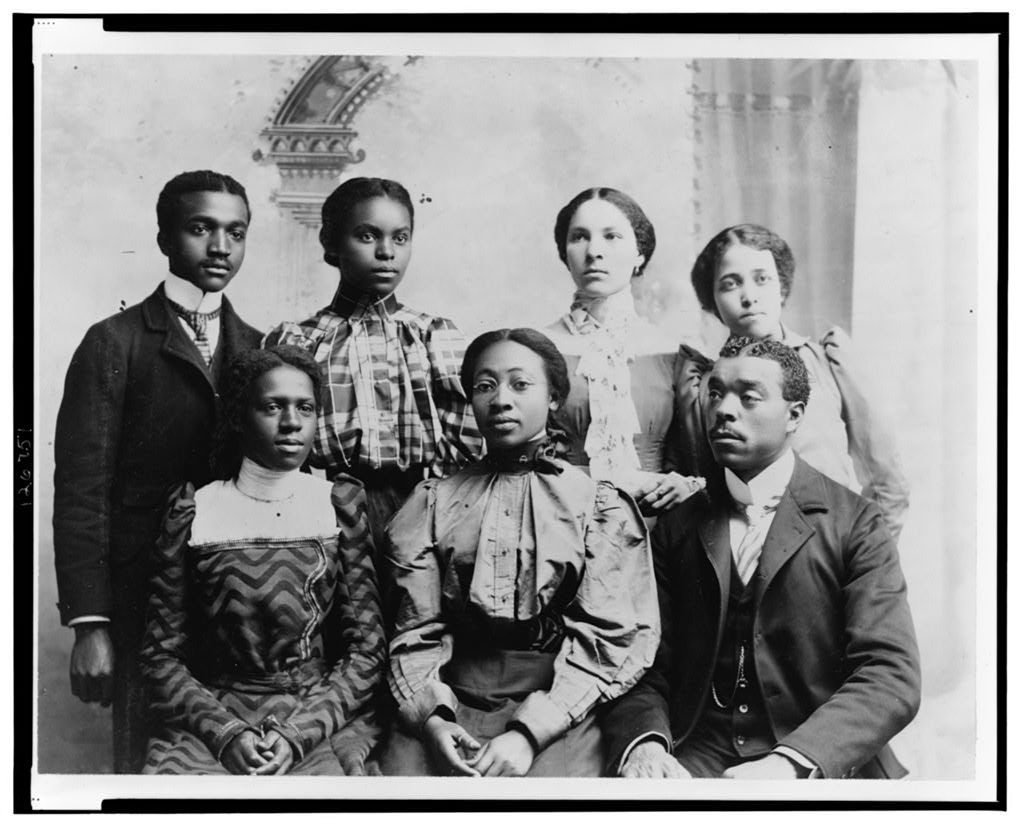
This photo was included in “American
Negro,” presented by WEB Du Bois at the 1900 Paris Exhibition.
Photo courtesy of the Library of Congress Prints and Photographs
Division Washington, DC.
When Sherald began her research about depictions of black people
throughout art history, she was immediately taken by the
photographs of African Americans that WEB Du Bois presented at the
Paris Exhibition in 1900. “They were there to counter racist
propaganda; to say ‘this is who we really are.’ For a long time, we
couldn’t control that narrative, but after the invention of the
camera, we could become authors of our own narrative,” she said.
“When I saw these photos, it was affirmation that I was headed in
the right direction. The show was about the expression of our own
humanity and a counter narrative.”
There’s also a purely visual connection between these historic
images and Sherald’s work, she added: “I’m painting the figures in
gray, and these beautiful photographs are in gray.”
The Sovereignty of
Quiet: Beyond Resistance in Black
Culture by Kevin
Quashie (2012)
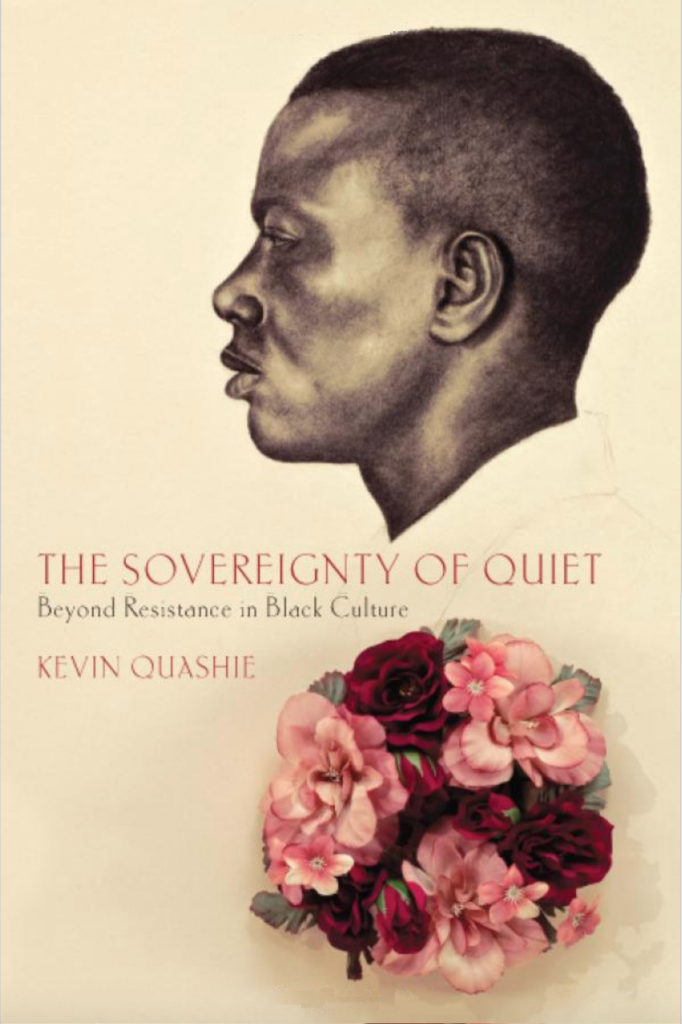
The Sovereignty of Quiet: Beyond
Resistance in Black Culture by Kevin
Quashie (2012). Courtesy of Rutgers University Press.
“Kevin wrote about the feelings that I want people to leave with
when they look at the work,” Sherald said. “They’re quiet and
they’re about going into yourself as a form of resistance. In the
African American narrative from slavery to now, it’s about
resisting and overcoming and about getting to a place of
equality.”
“I did a talk at Spellman College in Atlanta, and the woman I
was speaking with said, ‘the way that you’re speaking about your
work is the way that this author wrote in his book,” Sherald added.
“I was like, ‘this is exactly what I’m trying to say, except he
says it better.’ I speak visually and he’s a writer, so he
clarified it for me.”
The Black Interior
by Elizabeth
Alexander (2004)
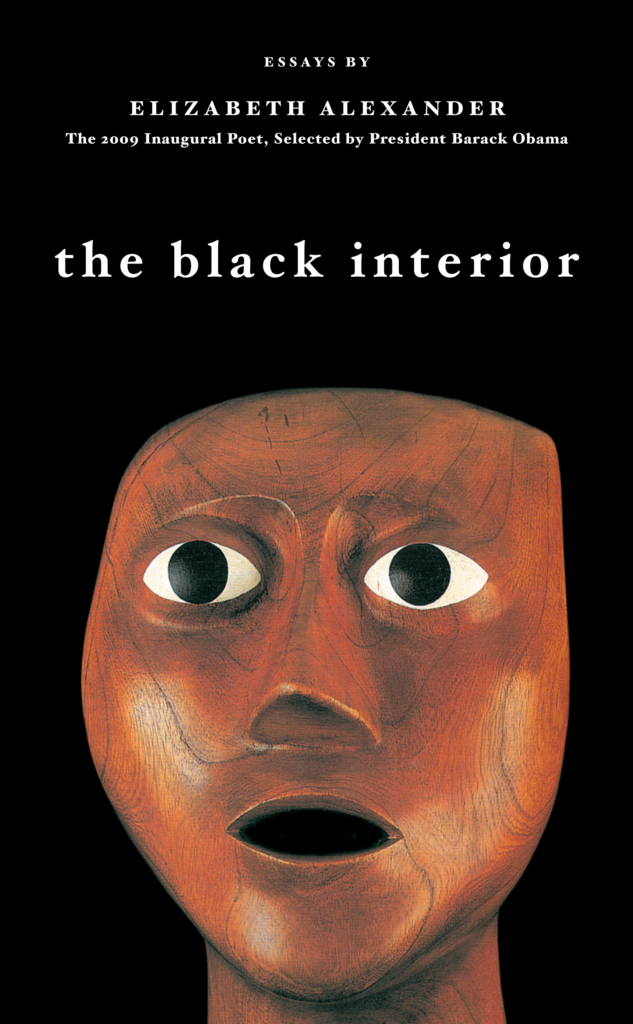
The Black Interior: Essays by
Elizabeth Alexander. Courtesy of Graywolf Press.
“I am interested in an exploration of a more private identity of
blackness versus a more public identity,” said Sherald. “This is
another book that clarified what my work was doing. It’s our truth
is being represented visually and becoming a part of the American
art canon.”
Wes Anderson’s Moonrise
Kingdom (2012)
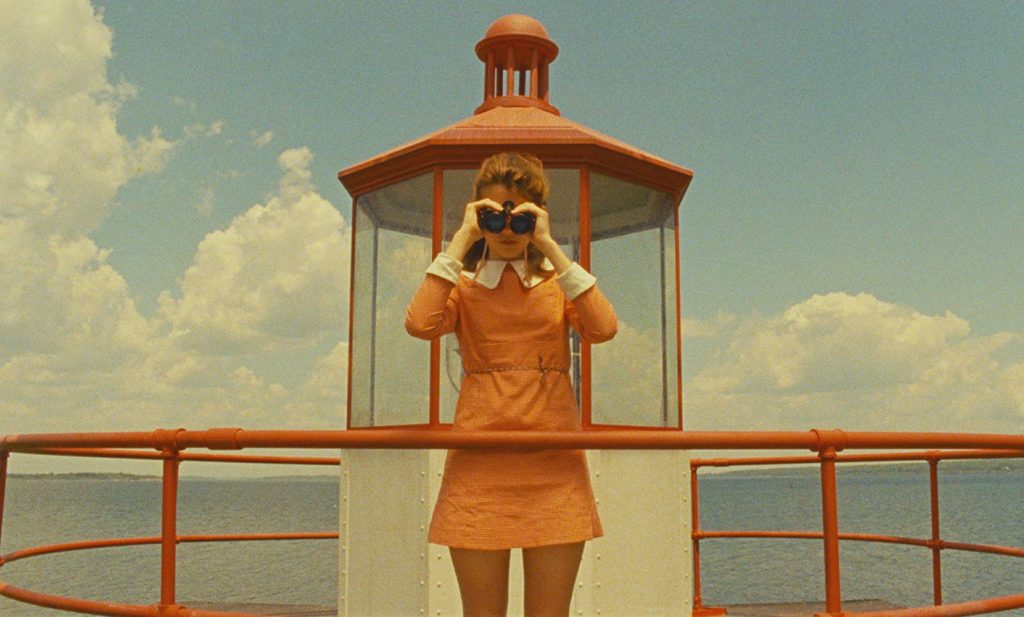
Kara Hayward in Wes Anderson’s
Moonrise Kingdom. Film still courtesy of Focus
Features.
“I’m a big fan of Wes Anderson, his palette, his dressing style,
how he frames his scenes,” said Sherald. “I watch his movies and
pause them and say ‘that would be a beautiful painting, and this
would be a beautiful painting, and this would be a beautiful
painting!’” She named the scene where Suzy Bishop, one of the two
main characters in the coming-of-age film Moonrise
Kingdom, stands atop a lighthouse tower looking through the
binoculars out over the water, as a particular favorite.
Thomas Allen Harris’s
Through a Lens Darkly: Black
Photographers and the Emergence of a
People (documentary 2014)
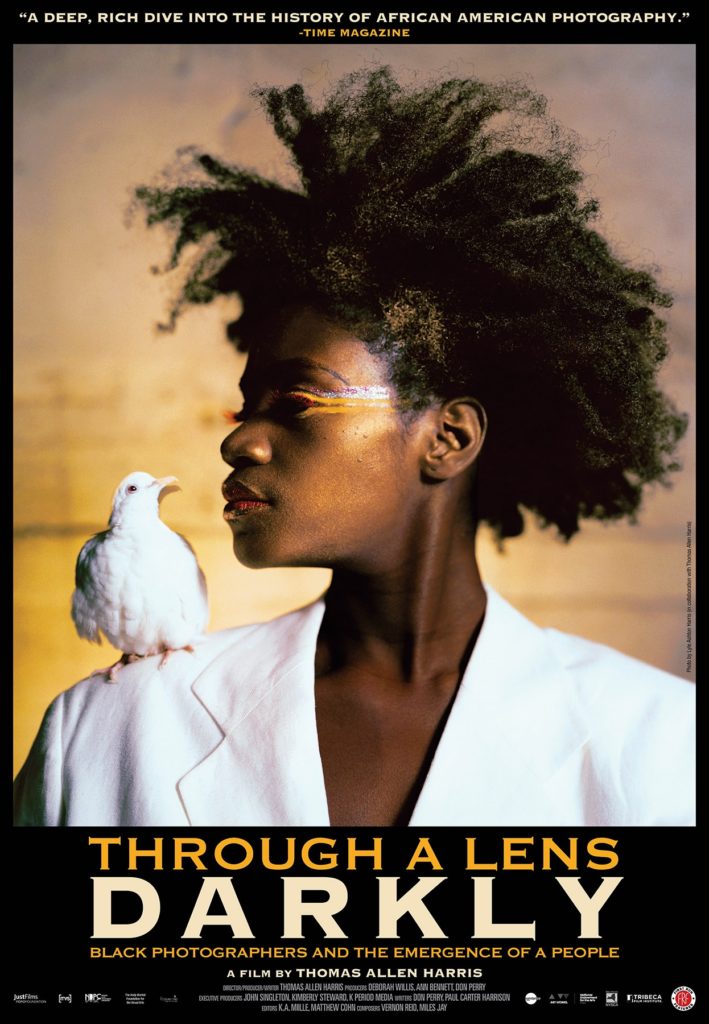
Thomas Allen Harris, Through a Lens
Darkly: Black Photographers and the Emergence of a People
(2014). Courtesy of Chimpanzee Productions.
With her busy schedule, Sherald rarely makes time to go to the
theater, but a friend who works at Philadelphia’s BlackStar Film
Festival once loaned her this documentary produced by photographer
Deborah Willis.
“The documentary is about how the camera was put into use by
African Americans,” said Sherald. “Frederick Douglass was the most
photographed person of his time, more than [Abraham] Lincoln. He
saw the camera as a tool to do work—having images out there that
represented the humanity of black people was the most powerful
thing we could do.”
“Amy Sherald the heart of
the matter…” is on view at Hauser & Wirth, 548 West 22nd
Street, New York, September 10–October 26, 2019.
The post What Amy Sherald Is Looking At: The Painter on 8
Cultural Touchstones That Inspire Her, From Wes Anderson to WEB Du
Bois appeared first on artnet News.
Read more https://news.artnet.com/exhibitions/amy-sherald-cultural-inspirations-1648324
Further reading


Leave a comment