
‘What Does a Gallery Become?’: Small Galleries Seek Solutions as They Face a Perilous Spring Without Fairs or Exhibitions
For decades, the contemporary
art market has essentially functioned as a bountiful flow of
physical meetings: crowded openings, boozy dinners, and chatty fair
floors, not to mention handshake deals. So what happens when all
that evaporates? We’re about to find out.
As galleries close their doors to do
their part to prevent the spread of COVID-19, and collectors (not
to mention employees, artists, and every other cog in the art-world
machine) are advised to stay home for an indeterminate amount of
time, the market is preparing for a prolonged period of pain. One
pressing question is exactly how smaller galleries—who lack the
cash reserves of larger art businesses and who rely heavily on
income generated at now-cancelled or postponed art fairs—will fare
in this new world.
“Within the art ecosystem, it
seems like everyone will suffer in varying capacities,” said
Taymour Grahne, an art advisor who ran a New York City gallery from
2013 to 2017. “Galleries still have running costs, including rent,
and will need ways to sell in order to cover their basic costs,
even if their spaces are closed.”
While more collectors are
comfortable buying online or via PDF than ever, Grahne cautions
that it will still be difficult “to make up for the sales they
would have made had the galleries been open or at a fair.” And
indeed, initial sales reports from Art Basel Hong Kong’s online
viewing room, which opened Wednesday, favored the mega-galleries
over the smaller dealers, with reported sales in the six- and
seven-figure range from David Zwirner and
Gagosian.
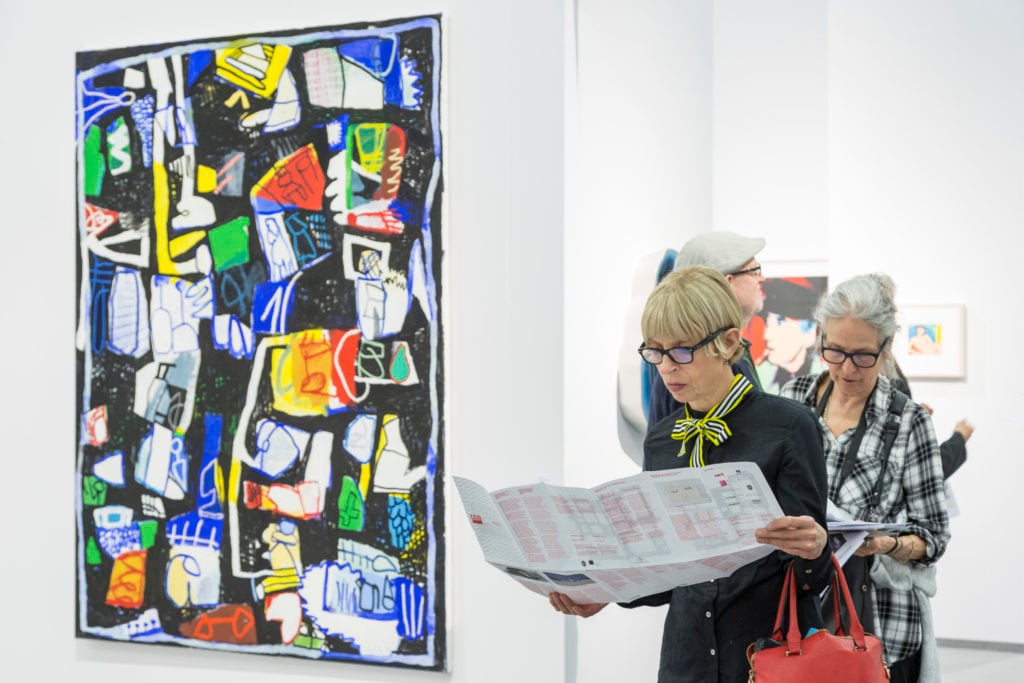
NOTHELFER’s booth at Art Cologne
2019.
Already, one collector notes, buyers are asking for discounts
and prices are being adjusted downward across the board. “Whatever
happens to the virus, the activity in the art market will not
return before years to the level of six months ago,” said the
Belgian collector Alain Servais, “and the prices of a month ago are
not the prices of today. It will take time as usual for the art
market to adjust to this gap between hoped-for selling prices and
what people are ready to pay.”
The Question of Cash Flow
There are early signs that
governments might step in to help ease the burden. Last week,
Germany’s culture minister vowed to help the arts and
cultural sectors with grants and liquidity assistance. The
scope of the package, and just how much will be made available to
galleries in particular, remains to be seen. Berlin’s senate is
launching an application today for “bridging loans,” for which
small businesses, including cultural businesses, can
apply.
And New York City has
launched the
Employee Retention Grant Program to help retain employees as businesses face
decreased revenue—and galleries are hoping to qualify. The program
is available to city businesses with one to four employees that can
demonstrate at least a 25 percent drop in revenue as a result of
COVID-19. Eligible businesses can receive a grant covering up to 40
percent of their payroll for two months, up to $27,000. The
department did not immediately respond to Artnet News’s questions
about whether art galleries are eligible.
“If people decide that they’re
willing to take on more financial burden, and that debt, those are
going to provide legitimate solutions for the short term,” New York
dealer Robert Dimin said of grants and no-interest
loans.
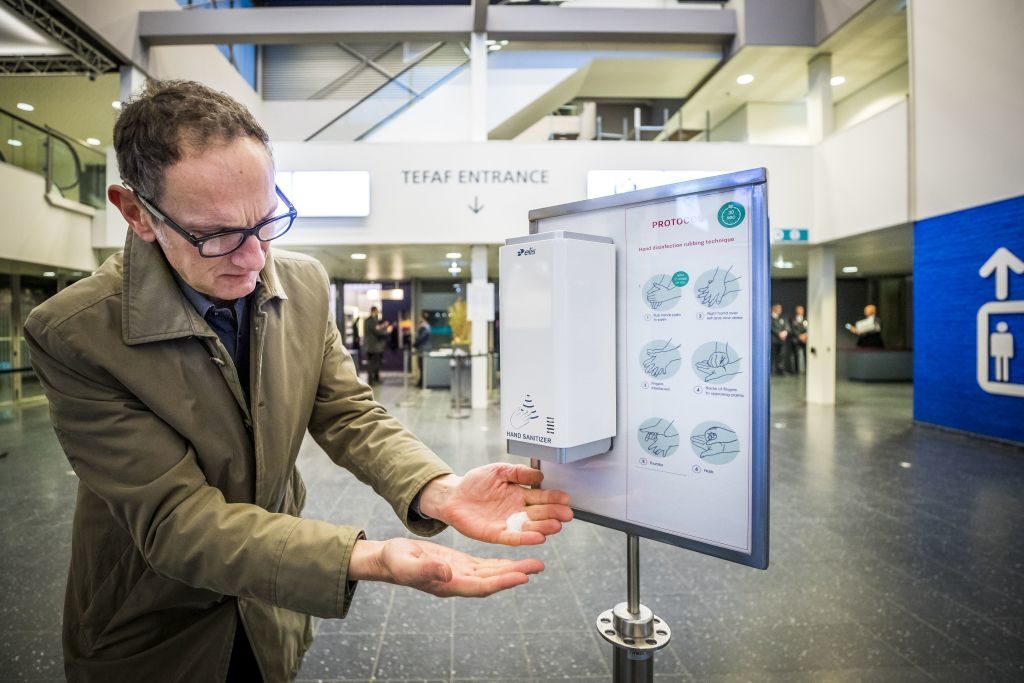
A visitor uses disinfecting hand gel at
the main entrance to TEFAF Maastricht. Photo: Marcel Van
Hoorn/ANP/AFP/Netherlands OUT via Getty Images.
Elsewhere, members of trade
organizations like the New Art Dealers Alliance have been having
conversations via web chat to brainstorm solutions. “Yesterday,
about 25 of us were talking about ways to collectively approach
people—maybe in the chamber of commerce—to ask for help,” Dimin
said.
But measuring and providing
exact figures about revenue declines—an important factor in
qualifying for certain support programs—may prove challenging for
galleries. “Because our industry functions differently than, let’s
say, a restaurant, it’s a matter of, how do we show our losses?”
Dimin noted. “That is probably not going to be something that we’re
going to be able to show until the middle of April or the end of
April. We’re not necessarily going to be able to ask for financial
support today. It may be something we have to have to ask for in a
month.”
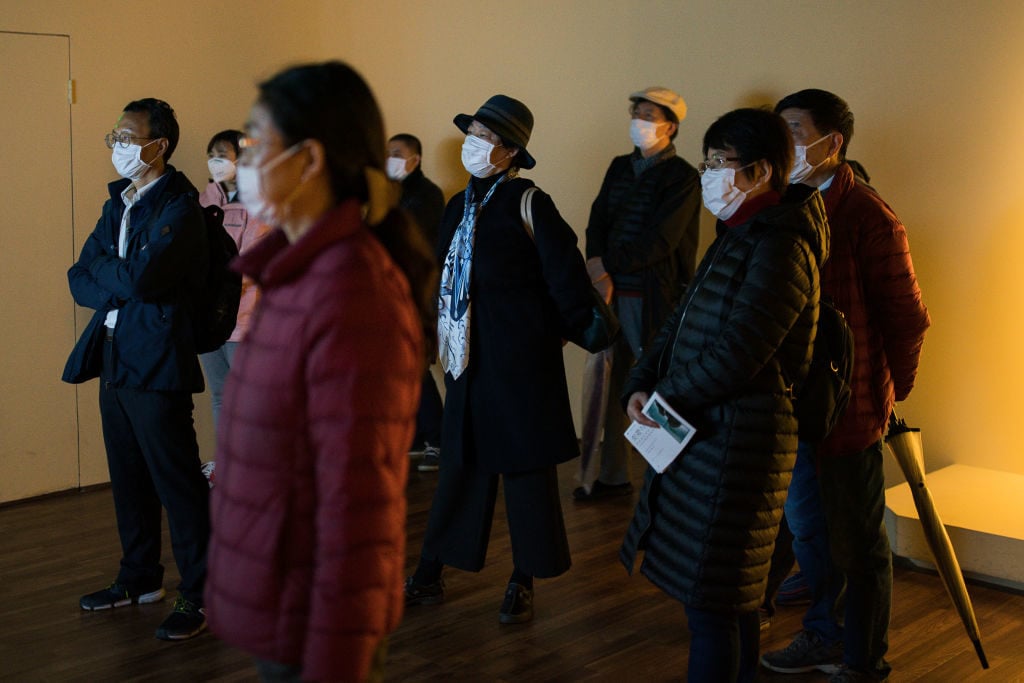
Visitors wearing protective masks watch
a video clip in Shanghai Museum on March 13, 2020 in Shanghai,
China. Photo: Yifan Ding/Getty Images.
The Costs of a Calendar Shake-Up
Though the warning signs had
been on the horizon for a while, by mid-March, a wave of fairs
around the world were officially called off. Events
including Miart, Art Cologne, SP-Arte,
Art Dubai, and, most
recently, Frieze New York were
postponed or cancelled, and TEFAF Maastricht closed early after it
came to light that an exhibitor had contracted coronavirus.
But smaller galleries seem to
be, at least for the moment, less concerned about the cancellation
of fairs than getting stuck attending those that perform badly. “I
prefer the cancellation of a fair instead of making all the efforts
and investments and in the end experience a really bad fair,” said
Nir Altman, the dealer behind a young eponymous gallery in Munich.
He was set to attend his second edition of Art Cologne, a major
financial hub for galleries in Germany, but, like many others
Artnet News spoke to, he supports the decision to cancel or
postpone fairs for health concerns.
The stakes have always been
higher for small- to mid-sized galleries, who tend to represent
emerging artists with lower price points, and therefore need to
sell a lot more work at fairs to break even. And according to the
Art Basel and UBS market
report, dealers made 45 percent of their annual sales at art
fairs last year.
“It is not so much an art fair
that did not happen than an art fair that did happen and was not a
success, like the Armory Show,” says André Schlechtriem of
Berlin-based Dittrich & Schlechtriem Gallery, who attended the fair
less than a week before New York began to limit large public
gatherings. “It was hard to have the few collectors that came to
the fair to focus on the works, and almost no curators came;
journalists also only wanted to talk about coronavirus.”
Grahne told Artnet News that he
placed four works for three
different clients last week and has encouraged them to keep
acquiring work if they are able to do so. But with the situation
escalating and shifting so rapidly—even from one hour to the
next—that focus may be hard to maintain.
“I’m not pushing sales this
week. I’m not sending out PDFs,” Dimin told Artnet News. “I need to
be sensitive to everybody’s fears and concerns. Although I want to
be concerned about the bottom line of my business, we need to give
it a moment of time and let people breathe.”
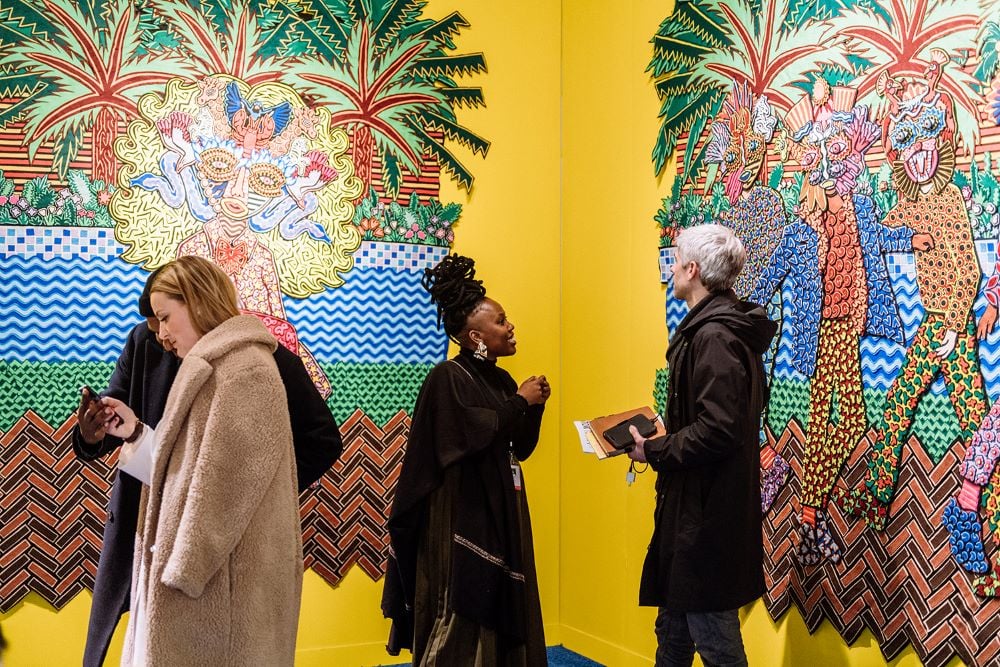
Installation view of Jody Paulsen at
SMAC Gallery. Image courtesy of The Armory Show.
A Loss of Context
New York-based dealer Cristin
Tierney says that the impact of the activity freeze is as much, if
not more, about lost encounters as lost sales. “Conversations about
museum shows do not happen, new curators and collectors are not
introduced to your program, and articles and essays that might have
been written about your artist never are,” she said. “An art fair
or thoughtful exhibition provides a context where many can be lit
at once. Losing that is a big deal.”
Nevertheless, a few dealers
Artnet News spoke to this week said that smaller galleries may be,
in some ways, in a more nimble position to weather the shutdown,
due to lower overheads and smaller staff numbers.
“We’ve got a low enough
overhead, being based in Japan, that we should be able to run
fairly smoothly,” said Jeffrey Rosen from Tokyo-based Misako &
Rosen. An inaugural gallery-share
and conference they co-founded was set to take place this week,
but it’s been indefinitely called off. “We’ve lived through the
financial crisis and, at home, the effects of the earthquake,
tsunami, and nuclear power plant meltdown… We are able to deal in
times of crisis.”
Above all, dealers seemed most
concerned about the drop in visibility to their programs, which
were already imperiled due to decreasing footfall in
galleries. Due to travel restrictions and bans on gatherings,
many exhibitions—some of which have been in the works for
years—have been postponed indefinitely.
Kristen Dodge, who formerly
operated Dodge Gallery, says the current feeling is reminiscent of
the aftermath of Hurricane Sandy, when galleries across New York
City reeled from property damage and loss of artwork. But, of
course, the pandemic is operating on a global scale.
“For us, the gallery isn’t
sustained by walk-in buyers, though that is a portion of our
already limited income, we survive because of our built
relationships,” she said. “So when the space goes dark, and the
public goes private, what does a gallery become?”
Art Basel Hong Kong in calmer times,
back in 2018. (Photo by Billy H.C. Kwok/Getty Images)
The Art World Online
Depending on how long the
shutdowns last, and how severe the economic downturn becomes, the
art industry will inevitably get creative about selling online. “I
think the biggest challenge and opportunity is to think about how
to bend some of these conventions we have all grown used to,” says
young dealer Max Mayer, who was set to attend Art Cologne and Art
Basel Statements, which is, as of now, still set to go ahead though
there is speculation it could get pushed to autumn.
Already, dealers of all stripes
are rapidly trying to accelerate their efforts in the digital
sphere. But that is easier for some than others—and those who had
been spending most of their time focused on selling art IRL to make
ends meet rather than developing a digital infrastructure are going
to find themselves further behind.
Berlin-based Tanja Wagner,
meanwhile, was quick out of the gate with an email about “Art in
Quarantine,” promoting artist takeovers on social media and a new
video platform where artists from her roster are sharing a
selection of weekly video works, as well as offering Instagram
interviews. “We all need art and culture and everyone is asked to
chip in to keep this important eco system,” she said.
For now, galleries are shifting
around money saved from fair booth fees to weather what is certain
to be several unstable months, while they also try to find a new
voice beyond their gallery walls. “The corona media-fest has left
no oxygen for anything else,” Cristin Tierney said. “No one is
visiting, viewing, or reading about our current exhibition. We are
optimistic that as the new normal settles in for everyone our
audience will return. But how long will that take?”
The post ‘What Does a Gallery Become?’: Small Galleries Seek
Solutions as They Face a Perilous Spring Without Fairs or
Exhibitions appeared first on artnet News.
Read more https://news.artnet.com/market/coronavirus-small-galleries-1808097
Further reading


Leave a comment