
‘What Is Considered Evil?’: How US Museum Leaders Are Grappling With the Fallout of Warren Kanders’s Controversial Resignation From the Whitney
Activists and artists have been pushing out what they consider
“toxic” museum philanthropists at an unprecedented pace in recent
months. In a spectacular development, in late July, Warren Kanders,
whose company Safariland manufactures tear gas, resigned from his position as
vice chair of the Whitney Museum’s board after eight artists
threatened to withdraw their work from the current biennial in
protest of his presence. Meanwhile, museums around the world have
started rejecting funding from
the Sackler family, which manufactured and aggressively
marketed the addictive painkiller OxyContin.
Now many activists and philanthropists alike are wondering,
what’s next?
There is no shortage of potential targets: The anti-climate-science
David Koch is a trustee emeritus of the
Metropolitan Museum (with his name on the fountain out front),
while David M. Rubenstein, whose weath is
linked to the fighter jets used in the slaughter of Yemeni
civilians, donated $10 million to the
Smithsonian’s National Museum of African American History and
Culture and sits on the Smithsonian’s Board of Regents. New
York magazine went so far as to put out a list last week of
the “Most Toxic Museum
Boards.”
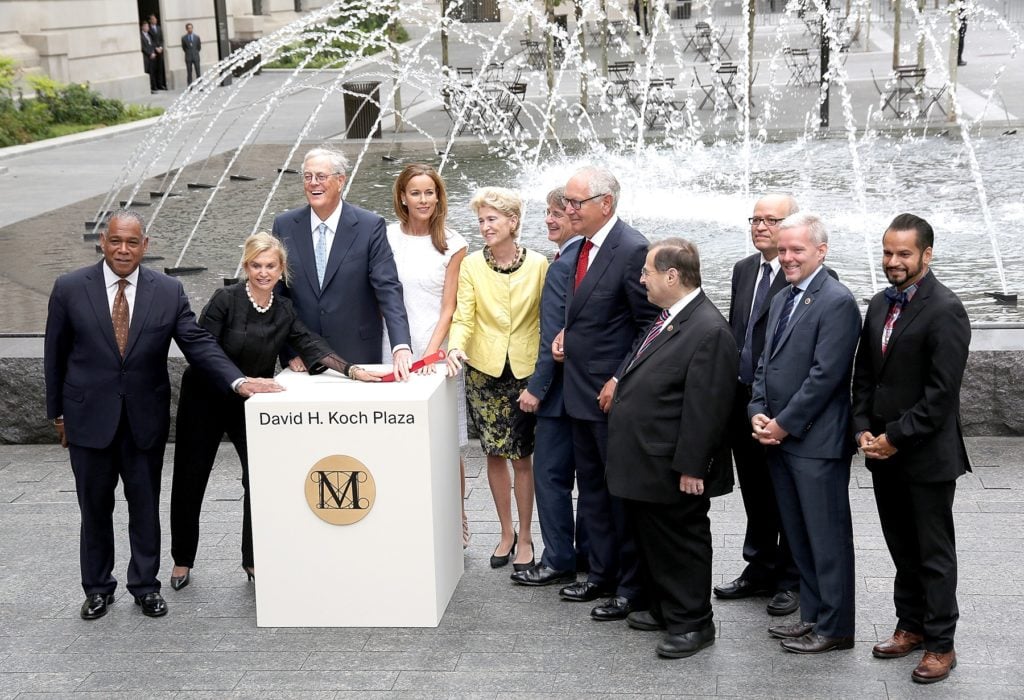
The unveiling of the David H. Koch Plaza
at the Metropolitan Museum of Art on September 9, 2014, with David
H. Koch, third from left. Photo by Paul Zimmerman/WireImage.
Meanwhile, museum leaders are caught in the middle. The
balancing act between serving their communities and securing
future funding seems increasingly precarious, and everyone is
looking for a formula to mediate the escalating tensions between
the two sides.
A Delicate Balance
“Museums depend heavily on philanthropy. How do they start
dissecting what’s okay and what’s not in terms of their policies?”
says Komal Shah, a trustee of the San Francisco Museum of Modern
Art and Tate Americas who worked for many years in the tech
industry. “There’s no black
and white. Since I come from the tech world, I’m wondering if at
some point Google or Facebook was deemed evil, do museums stop
taking their money? And what is considered evil? How do you really
define?”
Some with ties to museum boards spoke of soul-searching
conversations that are going on in the wake of the recent protests.
Others expressed deep anger and frustration with the tenor and
tone of the recent controversies, comparing the protesters to
reckless mobs or insinuating that they were distancing themselves
from museum patronage altogether.
Few, however, wanted to go on the record. Of the two-dozen
museum leaders and trustees we reached out to for comment, the vast
majority did not respond or declined to comment, including
representatives from the Metropolitan Museum, the Brooklyn Museum,
the Museum of Contemporary Art Chicago, the Morgan Library, the Los
Angeles Museum of Contemporary Art, and the Noguchi Museum.
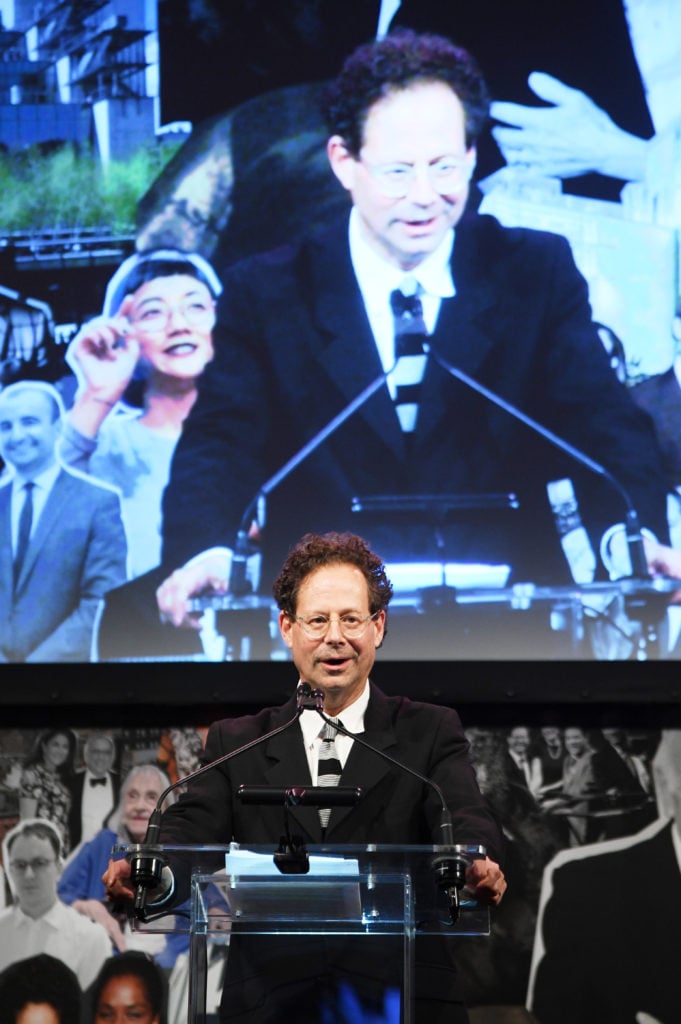
Adam Weinberg speaks onstage during the
2019 Whitney Museum Of American Art Gala + Studio Party. Photo by
Dimitrios Kambouris/Getty Images.
“We find ourselves in the
company of many other museums and non-profits that are facing these
challenging and complicated issues,” Whitney Museum director Adam
Weinberg told artnet News. “Over the last eight months, we have done what
our mission calls upon us to do, which is to support artists and to
provide a platform for them to completely and freely express their
visions. This experience has underscored how we, and other
institutions, must balance the interests and concerns of our
artists, trustees, and staff if we are going to fulfill our
cultural and civic mission.”
Increased Sensitivity
The philanthropists who spoke with artnet News generally tended
to support some form of vetting of the source of donors’
wealth.
“If you’re complicit with someone who is involved in what seems to be a
criminal or monstrously unethical enterprise, I don’t think it’s a
good idea to help that person launder their reputation,” said Nion
McEvoy, a trustee of the San Francisco Museum of Modern Art and
former trustee of the Smithsonian American Art Museum.
When it comes to Kanders, McEvoy
said he wasn’t familiar with the entire situation, but added, “I’m
particularly sensitive about issues of suppression of freedom and
the rise of authoritarianism, so I probably would have recused
myself from the board if he was going to stay on.”
“Just because an institution
supports tough or radical art does not allow it to receive a pass
when questions come up about their financial supporters,” said
Hammer Museum trustee Mihail Lari. “Raising money is critical, but
museums have something even more valuable: their reputations and
cultural currency that can disappear overnight if not protected at
every step.”
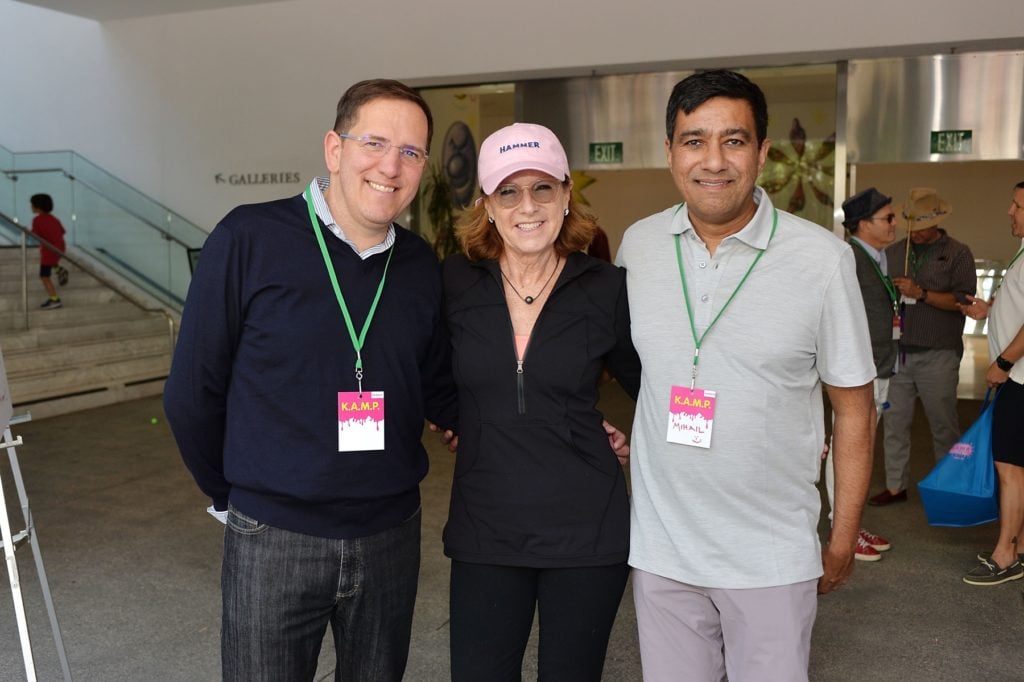
Scott Murray, Ann Philbin, and Mihail
Lari attend Hammer Museum’s Kids’ Art Museum Project 2016 in Los
Angeles. Photo by Stefanie Keenan/Getty Images for Hammer
Museum.
It’s even possible, as Tim Schneider has suggested, that some
museums could actually win new support from funders who see
institutions as defending that reputation by taking a moral stand.
“We’re fortunate to have Annie
Philbin as museum director who has a very strong north star,” Lari
said of the Hammer Museum’s current director. “This means we
sometimes decline financial support because of where it is coming
from or the strings attached. We’re also kept honest because we
have a stellar group of artists as advisers on our Artists Council,
and have two artists serve on our Board of Overseers.”
McEvoy, for his part, suggests
that museums need to redefine the terms of funding in
board vision statements. “Nonprofits should probably do a better job of
drafting guidelines pertaining to board service and stating their
values so that it becomes clear what things might cross the line,”
he argues. “The first duty
is to preserve the good will of the people. You can’t do that if
you have a board that seems to do things that a large number of
people feel are monstrous and wrong.”
Where Does It End?
Shah, for one, cautioned against museum critics taking a blanket
approach. “I can understand what the artists are thinking and
that they are standing up for what they believe is right,” she
says. “There’s a tension. Each institution and each incident is
specific. Most boards in general are extremely well meaning
and have policies about conflicts of interest. As a trustee I have
to sign numerous forms every year.”
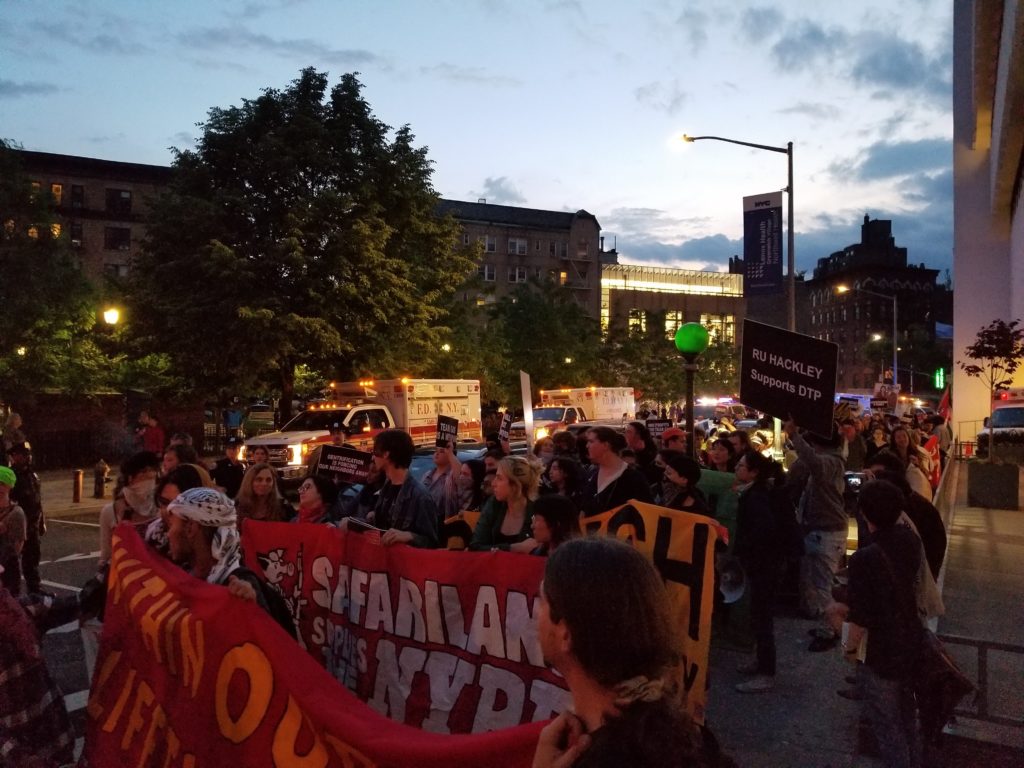
Protesters marching from the Whitney
Museum to the home of Warren Kanders. Courtesy of Decolonize This
Place.
Others, like collector and
philanthropist Martin
Margulies, expressed much more blunt criticism of
the recent Kanders controversy, which involved protests
both at the museum and in front of Kanders’s West Village house.
“I believe this went beyond freedom
of speech, walking in front of a man’s home and drawing attention
away from the mission of the great Whitney Museum,” said Margulies,
who has donated both to the Whitney and the Museum of Contemporary
Art North Miami.
“Knowing this will harm the
museum and museums beyond, I question the motivation of many of
these protesters,” Margulies continued. “Mr. Kanders has no control over how the
products he has the right to sell are used, such as the tear gas
used by police in Charlottesville and riots throughout the country.
Those decisions are made by leaders in our government. Do the
artists inspect the background of every collector who buys their
artwork? As a founder of the Lotus Village in Miami, a 521-bed
facility for homeless women and children, I would welcome Mr.
Kanders’s philanthropy to a life saving
institution.”
Opinions are sure to diverge still more in the future if
protests sharpen again. Following Kanders’s resignation, the
activist group Decolonize This Place, which organized many of the
initial protests, wrote in a post on
Hyperallergic: “We celebrate this win, and we
acknowledge the work of everyone who contributed to this outcome
over the course of eight months of organizing and action.”
When asked what’s next for the group, they responded: “We see
the removal of Kanders as one step in an ongoing project of
decolonization. This project includes the Whitney and the broader
art system itself, but necessarily exceeds both.”
The post ‘What Is Considered Evil?’: How US Museum Leaders
Are Grappling With the Fallout of Warren Kanders’s Controversial
Resignation From the Whitney appeared first on artnet
News.
Read more https://news.artnet.com/art-world/museum-funding-post-kanders-1620715
Further reading


Leave a comment