
Contemporary Art From Africa Is Seizing Global Attention. Here’s Your Guide to Six Emergent Art Markets Making It Happen
A version of this story
originally appeared in the fall 2019 artnet Intelligence Report.
Ask a question about the African art market, and many experts
will be quick to tell you that there is no such thing. How could
one market possibly encompass 54 countries, 1.2 billion people, and
countless aesthetic traditions?
It can’t. But that won’t stop the global art market from trying.
The commercial sector has a way of co-opting talent into the
international art slipstream (sometimes flattening history and
context in the process). It has done so with artists—and entire
movements—from Asia and Latin America in the past. Africa may be
next in line.
The seeds are there: strong art schools, a growing number of
high-net-worth individuals, and rapid urbanization. Researchers
project that the continent will be home to at least nine cities of
more than 10 million people by 2050. Meanwhile, museums in Europe
and North America have hosted an unprecedented number of shows of
African art in recent years, while art fairs dedicated to the field
have sprung up worldwide, including 1-54 in New York, Marrakech,
and London, where its seventh edition opens this week, and the
newer Art X Lagos, which kicks off its fourth edition in Nigeria in
November.
Activity in cities such as Marrakech and Lagos is “opening the
eyes of collectors,” says Kavita Chellaram, founder of the
Lagos-based auction house Arthouse Contemporary. “African
collectors from different regions are now interested in buying
African art from different regions. There will be an African art
market. It’s just the beginning.”
What’s Ahead
Today, Africa’s art market has plenty of room to grow. Fewer
than 1,000 works were sold at auction on the continent in the first
six months of 2019, according to the artnet Price Database. Unlike
Asia, where Hong Kong has emerged as a hub for the trade, Africa
lacks a preeminent art-market capital.
And while the continent’s local collector base is growing
steadily—Sotheby’s fourth dedicated auction of Modern and
contemporary African art in April was dominated by African
buyers and generated a total of $3 million, above its presale
high estimate of $2.7 million—it is still nascent compared with the
US, China, and Europe.
What is missing? “You need an infrastructure,” says Hannah
O’Leary, head of Modern and contemporary African art at Sotheby’s.
“On the whole, there is a real lack of public support. We are
seeing lots of raw talent, but we need more of a market structure
in order to support their careers.”
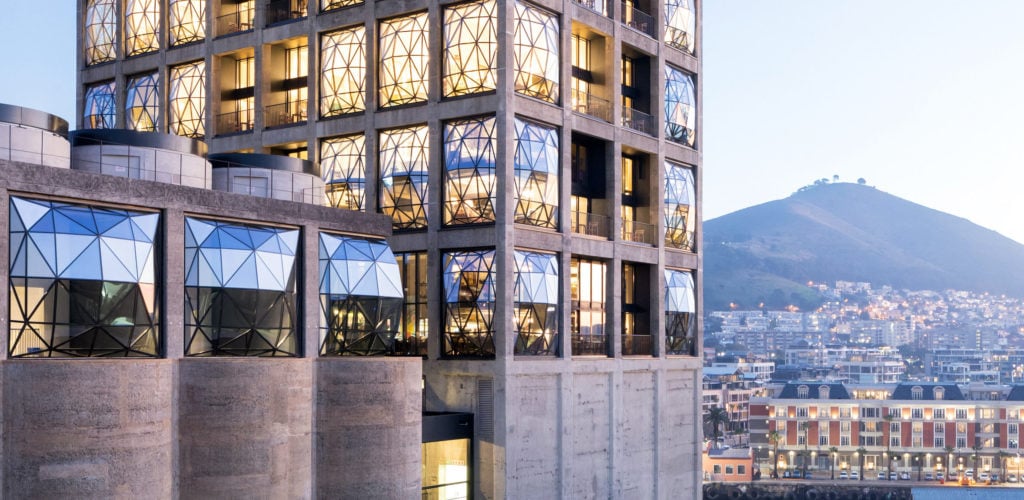
The Facade of Zeitz MOCAA. © Heatherwick
Studio, photo: Iwan Baan.
Some ambitious institutions are already rising. Over the past
two years, museums like Zeitz MOCAA in Cape Town, the Museum of
African Contemporary Art Al Maaden in Marrakech, and the Museum of
Black Civilizations in Dakar have launched with a mission to write
their own contemporary art histories. Meanwhile, artists who have
already found commercial success, such as Hassan Hajjaj and Ibrahim
Mahama, have set up institutions of their own to nurture young
talent at home.
A Closer Look
A single hub for such a massive and heterogenous continent may
never materialize. Instead, Rakeb Sile, cofounder of the gallery
Addis Fine Art, predicts that “there will be and should be
different hubs in several regions of Africa.”
We have assembled a guide to six of these dynamic emerging art
capitals: Accra, Addis Ababa, Cape Town, Dakar, Lagos, and
Marrakech. Each city has its own heritage, culture, and distinctive
history with colonialism—resulting in unique artistic
production.
Painting remains most popular in East Africa, which is home to
the two oldest art schools on the continent, while West Africa has
fostered more experimentation with large-scale installations and
performance-based work. Both sides of the continent also have a
rich tradition of photography.
“There shouldn’t be any question about quality and talent in
Africa,” O’Leary says. And where talent goes, the art world
follows. The presence of an increasingly wealthy clientele to cater
to certainly helps. “When we talk about buyer potential in Africa,”
she adds, “there shouldn’t be any doubt.”
Accra, Ghana
Ghana was home to a number of tight-knit artist communities,
like the one known as the Akwapim Six, before it gained
independence from Great Britain in 1957. But after Ghana’s first
president, Kwame Nkrumah, was overthrown in 1966, government
support for the arts diminished. At least, until now. The country’s
first-ever Venice Biennale pavilion drew rave reviews this year.
And back in Accra, the celebrated Ghanaian-British architect David
Adjaye is transforming a 17th-century castle into a major new
museum.
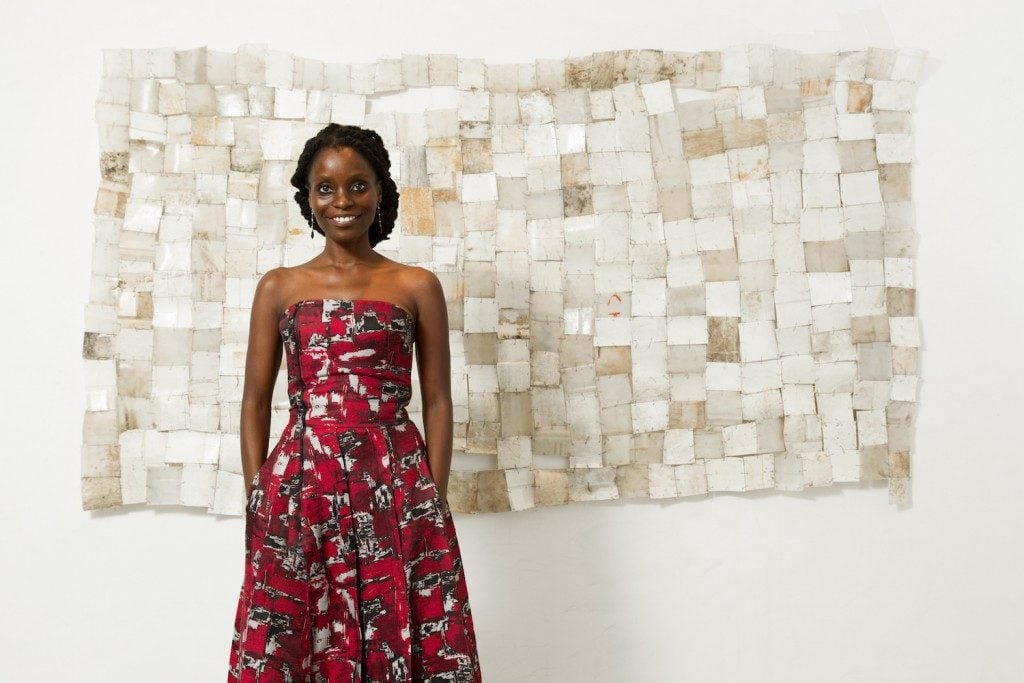
Nana Oforiatta Ayim, photo: Nii
Odzenma.
Ghana’s fortunes have been rising since the discovery of
offshore oil in 1992. The World Bank projects the country’s economy
will grow 7.6 percent in 2019—but experts say that it must
diversify for long-term sustainability. That’s part of why the
budget for Ghana’s ministry of tourism, culture, and creative arts
rose 120 percent between 2014 and 2018 and is expected to triple
again by 2022.
The country’s profile has also been boosted by the success of
such international art stars as El Anatsui, Ibrahim Mahama, and
Lynette Yiadom-Boakye (who, although born in London, is of Ghanaian
origin). Mahama recently founded an artist-run project space, the
Savannah Center for Contemporary Art, in the city of Tamale, less
than an hour’s flight from Accra.
“Ghana’s collector base is on
the rise,” says the art consultant Adora Mba. “There needs to be
continuous support and cultivation of this growing art market and
more platforms—both state and private—to showcase the range and
capabilities of Ghanaian artists.”
Galleries and Institutions
to Know
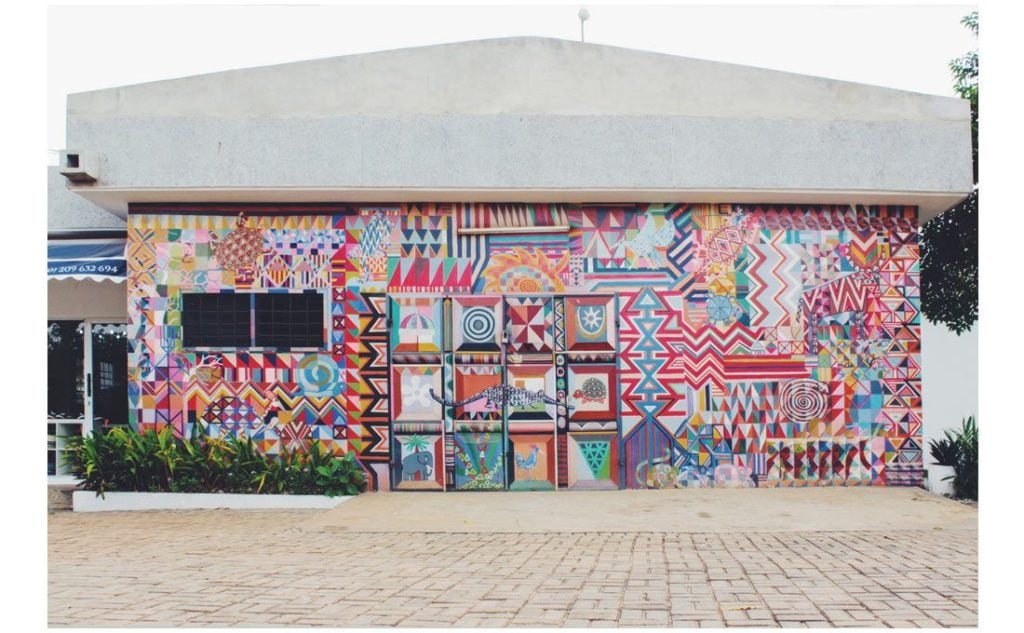
The facade of the Nubuke Foundation,
mural by artist Bernard Akoi-Jackson.
Gallery 1957: A contemporary art gallery
founded by engineer turned collector turned dealer Marwan Zakhem,
it has two spaces in Accra’s Kempinski Hotel.
ANO Ghana: This art space was established
by Ghanaian art historian Nana Oforiatta Ayim, who also organized
the country’s celebrated pavilion at this year’s Venice
Biennale.
Nubuke Foundation: Currently undergoing an
expansion, the prominent institution gave early shows to major
artists like El Anatsui.
Artists Alliance Gallery: A three-story
space on Labadi Beach, it was originally set up to house the works
of its owner, Ablade Glover, and now presents a mix of work by
Ghanaian artists as well as Kente cloths, African masks, and
furniture.
Kwame Nkrumah University of Science and
Technology: Look out for artists who attended this
institution, the the country’s top school for art, which
boasts El Anatsui and Ibrahim Mahama as alumni.
Artists to
Watch
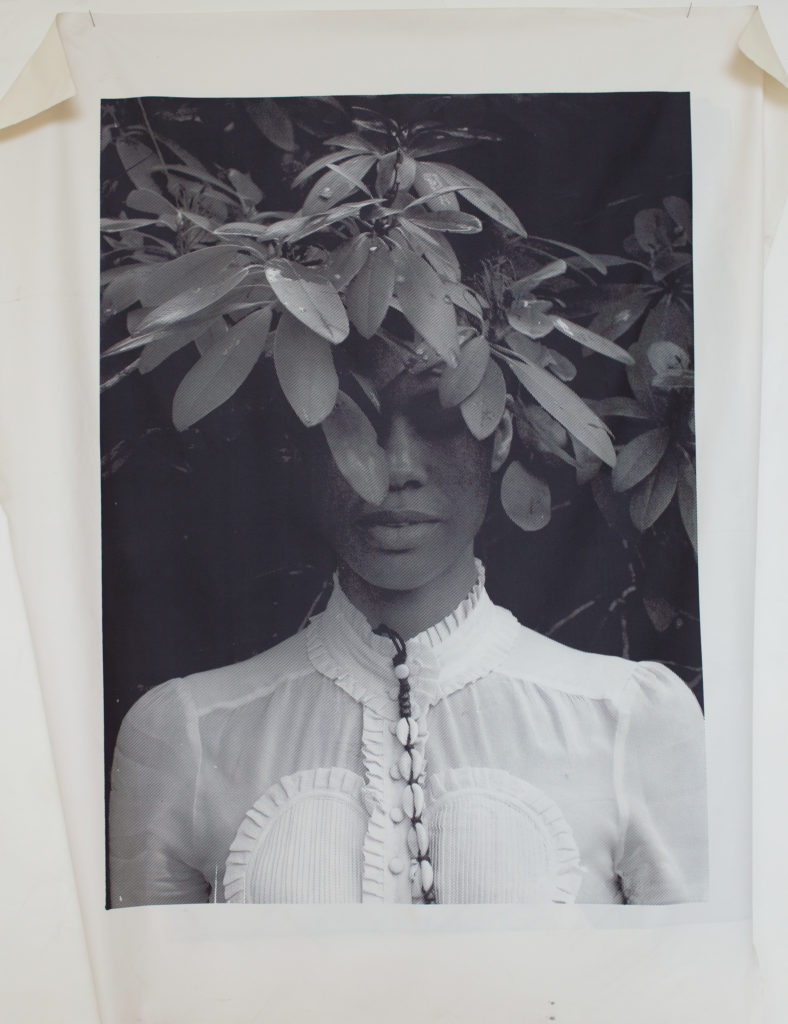
Zohra Opoku, Rhododendron (2016).
Courtesy the artist and Gallery 1957, Accra.
Zohra Opoku (b. 1976)
What to Know: The German-Ghanaian artist,
who won the Armory Show’s inaugural Presents prize for her solo
booth in 2017, makes hybrid textiles and photographs that often
depict contemporary Ghanaian women in traditional dress, exploring
what it means to be a woman in the African Muslim world.
Most Wanted: Screen prints on textiles and
fabric
Gallery Affiliation: Gallery 1957 (Accra);
Mariane Ibrahim gallery (Chicago)
Price Range: $15,000 to $35,000
Up Next: Opoku will have a solo show at
Gallery 1957 in Accra this December, and she was invited to be one
of the inaugural artists at Black Rock, Kehinde Wiley’s new
residency program in Dakar.
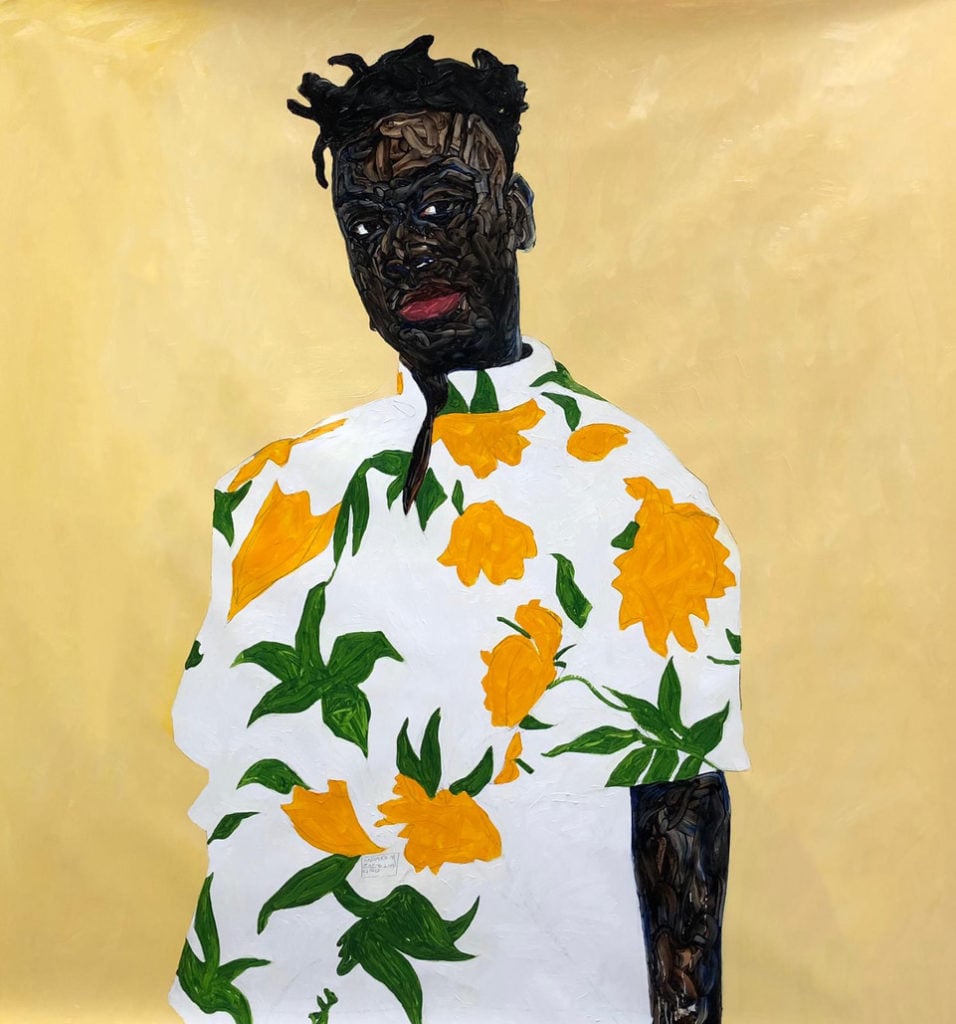
Amoako Boafo, Sunflower Shirt
(2019). Courtesy of Marian Ibrahim Gallery.
Amoako Boafo (b. 1984)
What to Know: Boafo creates vivid portraits of black
people living in his adopted hometown of Vienna. He was brought to
the attention of Roberts Projects gallery by his friend Kehinde
Wiley.
Most Wanted: Works from his “Black Diaspora”
portrait series
Gallery Affiliation: Mariane Ibrahim gallery
(Chicago); Roberts Projects (Los Angeles)
Price Range: $10,000 to $25,000
Up Next: He was included in Mariane Ibrahim’s Expo
Chicago presentation and will have a solo show at her gallery
in spring 2020.
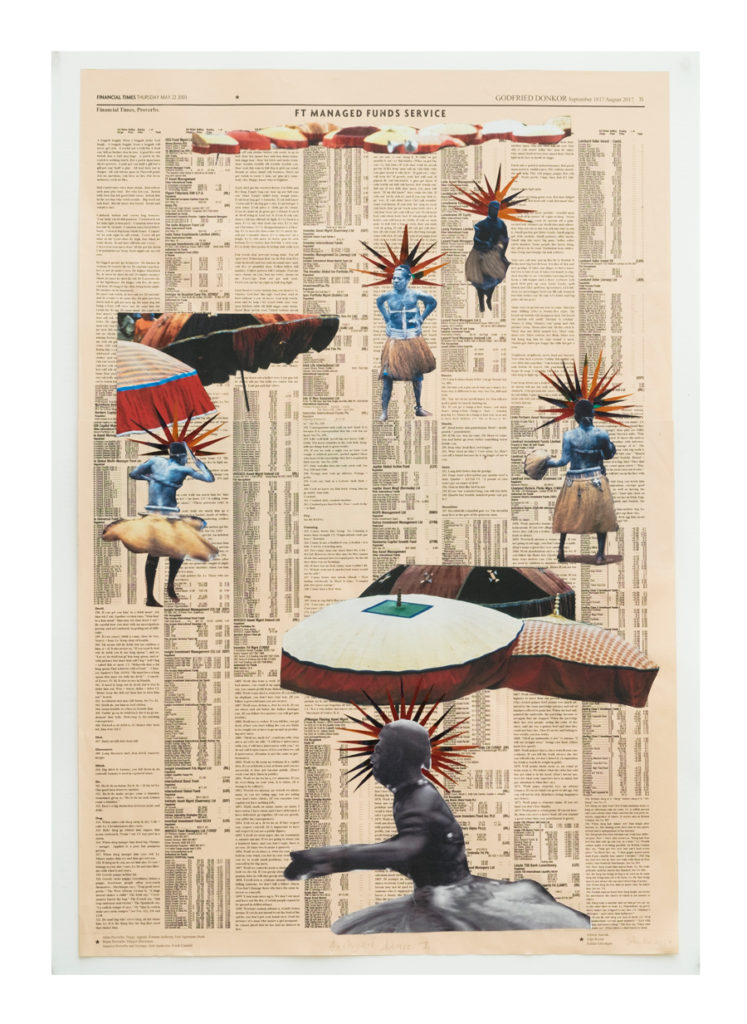
Godfried Donkor, Anokye’s Dance I
(2017). Courtesy of the artist and Gallery 1957.
Godfried Donkor (b. 1964)
What to Know: Donkor, who splits his time
between London and Accra, is best known for his paintings and
collages drawn from research into the history of slavery and
intercontinental trade.
Most Wanted: Paintings from his “From Slave to
Champ” series from the early 1990s and his recent “Battle Royale:
Last Man Standing” series, both of which explore the phenomenon of
slaves being forced to box
Price Range: $18,700 to $37,000 for paintings;
$10,000 to $12,400 for collages
Gallery Affiliation: Gallery 1957 (Accra)
Up Next: He currently has a solo show at
Gallery 1957
Addis Ababa,
Ethiopia
Coptic art, shaped by the 1,500-year history of the Ethiopian
Orthodox Tewahedo Church, is one of the country’s major artistic
influences and continues to be practiced by numerous artisans. But
the 20th century also witnessed three distinct artistic movements
that remained popular until the Ethiopian Revolution of 1974: a
realistic, or “naïve,” style used to depict glamorous Ethiopian
society; abstraction, which incorporated influences from Western
Expressionism and Surrealism; and social realism, which was
political in subject matter and focused largely on urban scenes and
the struggling masses.
Home to more than 112 million people, Ethiopia is the
second-most populous country on the continent. According to the
International Monetary Fund, Ethiopia’s economy is expected to grow
8.5 percent this fiscal year, making it the fastest-growing economy
in Sub-Saharan Africa.
Despite the difficulty in obtaining art materials, which must be
either imported from abroad or made at home, today’s artists work
largely in paint, together with photography and sculpture using
found objects. “A lot of people use art for commercial or
propaganda purposes, and I hope that our government understands the
power of supporting our artists and preserving our culture,”
says Melaku Belay, founder of the Fendika Cultural Center. “We
need to think of the past if we want to go to the future.”
Galleries and Institutions
to Know
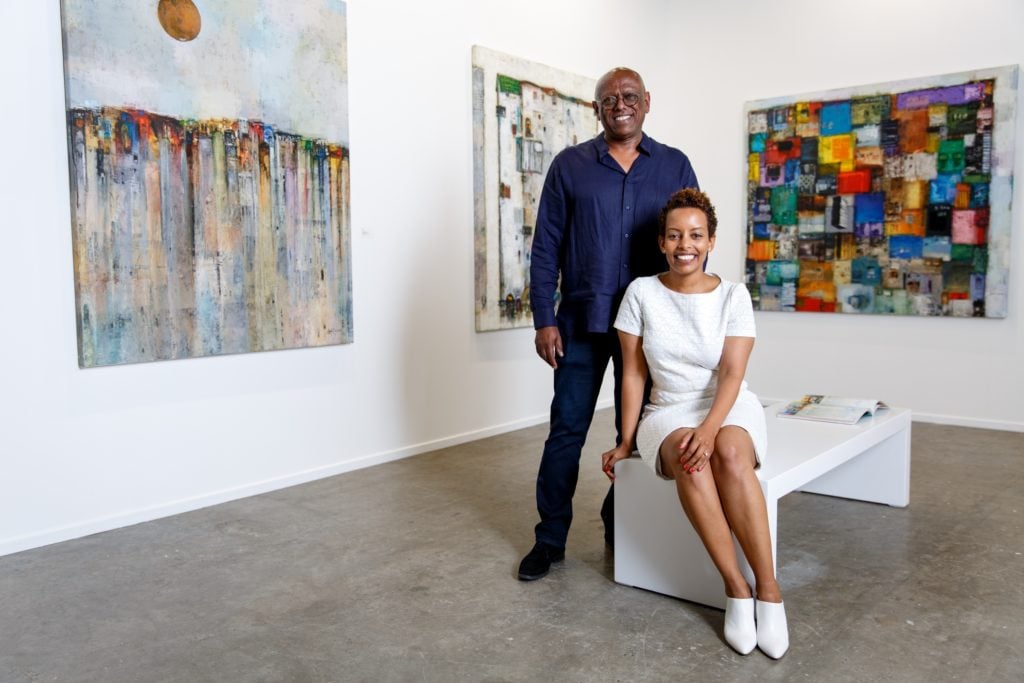
Addis Fine Art founders Mesai Haileleul
and Rakeb Sile. Courtesy of Addis Fine Art.
Alle School of Fine Art & Design: Ethiopia’s
most important art school, it was founded in 1958, during the reign
of Emperor Haile Selassie, and has educated the country’s
preeminent painters, sculptors, printmakers, and designers.
Addis Fine Art: The most notable commercial
gallery in the capital and its first white-cube art space, Addis
regularly showcases graduates from the Alle School. It will open a
new location in London’s Cromwell Place gallery hub in 2020.
Guramane Art Center: A gallery dedicated to
emerging Ethiopian artists, it represents the vanguard of the
country’s art scene.
Zoma: This sprawling museum, founded by artist
Elias Sime and curator Meskerem Assegued, opened in April 2019 and
shows contemporary art from East Africa and abroad.
Artists to
Watch
![Elias Sime, <i>NOISELESS</i> [detail] (2019). Courtesy James Cohan Gallery.](https://news.artnet.com/app/news-upload/2019/09/detail_EliasSime-1024x683.jpeg)
Elias Sime, NOISELESS [detail] (2019). Courtesy James Cohan Gallery.
Elias Sime (b. 1968)
What to know: Sime creates monumental works
from discarded technological components, including salvaged
motherboards and electrical wires. This month, he will receive the
African Art Award from the Smithsonian’s National Museum of African
Art.
Gallery Affiliation: James Cohan Gallery (New York);
Grimm Gallery (Amsterdam, New York)
Most Wanted: Works from his “Tightrope” series,
which features electrical waste meticulously woven into abstract
compositions reminiscent of aerial landscapes or textiles
Price Range: $65,000 to $300,000
Up Next: Sime’s mid-career retrospective
will be traveling through 2021, appearing at the Wellin Museum of
Art, the Akron Art Museum, the Kemper Museum, and the Royal Ontario
Museum. He will also have a solo exhibition at the Saint Louis Art
Museum in 2020. He was recently commissioned
to create a large public garden for the Grand National Palace
in Addis Ababa, the former home of Emperor Haile Selassie.
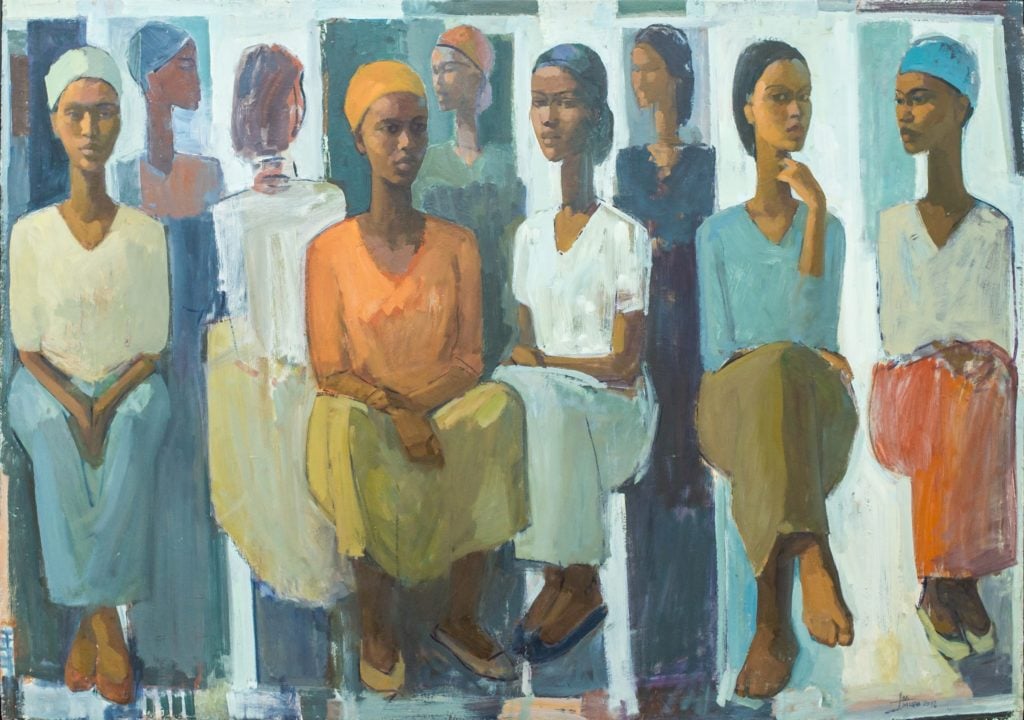
Tadesse Mesfin, Pillars of Life:
Market Day (2018). Courtesy Addis Fine Art.
Tadesse Mesfin (b. 1953)
What to Know: Mesfin has spent the past 35 years
teaching at the Alle School of Fine Art, where he has influenced a
generation of painters.
Gallery Affiliation: Addis Fine Art (Addis
Ababa)
Most Wanted: His recent series, “Pillars
of Life,” which celebrates the women who work as vendors in
Ethiopian markets. It sold out at this year’s Art Dubai
Price Range: $24,000 to $35,000
Up Next: Mesfin will participate in the
1-54 art fair in London and will have a solo exhibition at Addis
Fine Art’s new Cromwell Place location in May 2020.
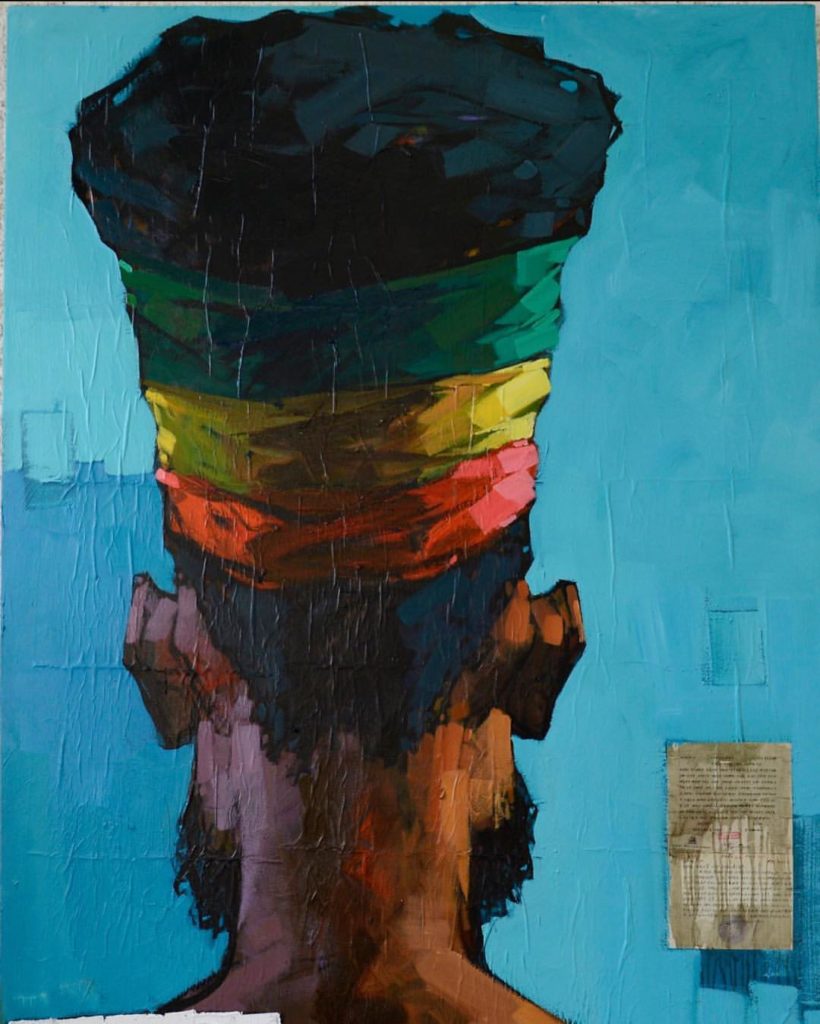
Dawit Abebe, No. 2 Background 35
(2016). Courtesy Kristin Hjellegjerde.
Dawit Abebe (b. 1978)
What to Know: Abebe’s large paintings contain
figures rendered in thick impasto, typically with their backs
turned to the viewer. His work explores such themes as privacy,
alienation, and materiality.
Gallery Affiliation: Kristin Hjellegjerde
(London, Berlin)
Most Wanted: The “Mutual Identity” drawing
series (2018) and his “Background Painting” series (2015), which
examines the relationship between history and technology
Price Range: $8,000 to $30,000
Up Next: Abebe will participate in the 1-54 art fair
in London and this year’s Karachi Biennale; he will also have a
solo show at Kristin Hjellegjerde Gallery in November.
Cape Town, South
Africa
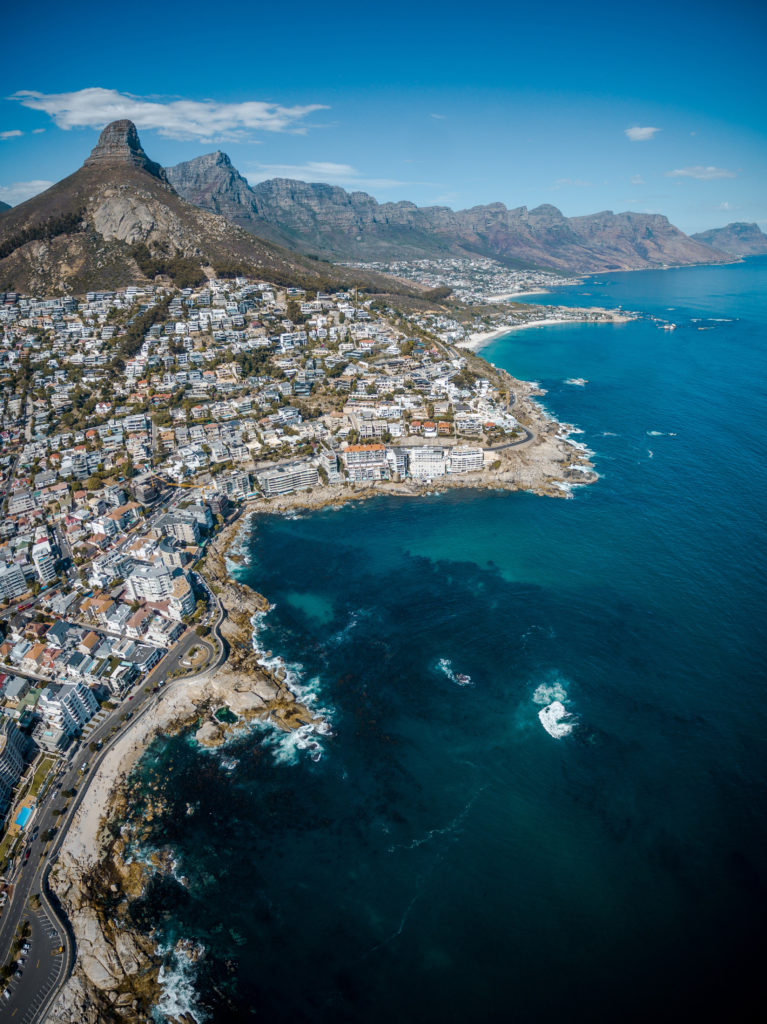
Cape Town’s Atlantic Seaboard, South
Africa.
In the early 20th century, much of the art coming out of South
Africa was European influenced landscape painting and
Impressionism. Interestingly, the country’s art history was also
shaped by two female artists who emerged during the 1930s—Maggie
Laubser and Irma Stern—who are credited with incorporating
Expressionism into South African art.
The apartheid years (1948–94) coincided with a period of
experimentation, with artists William Kentridge and Marlene Dumas
serving as forerunners of the country’s now-fertile contemporary
art scene. But black artists suffered mightily from segregation and
political turbulence.
Today, Cape Town is South Africa’s second wealthiest city after
Johannesburg, home to 131 ultra-high-net-worth individuals,
according to Knight Frank’s 2019 wealth report. But it also has one
of the highest rates of inequality in the world.
“What we are witnessing in Cape Town is the birth of a new art
capital in Africa,” says Elana Brundyn, CEO of the Norval
Foundation. Still, Joost Bosland, a director at Stevenson
gallery, sounds a note of caution. “One must not underestimate the
persistent provincialism we encounter at institutions in Europe and
the United States,” he says.
Galleries and Institutions
to Know
Goodman Gallery: One of the few art businesses
established during the apartheid era, the 53-year-old
Johannesburg-based gallery with a commitment to politically engaged
art is expanding to London this
fall.
Stevenson: A regular at international art
fairs, the contemporary art gallery has spaces in Cape Town and
Johannesburg as well as an office in Amsterdam.
Zeitz Museum of Contemporary Art: The first
major museum in Africa dedicated to contemporary African art
displays the collection of German philanthropist and ex-Puma CEO
Jochen Zeitz alongside rotating international art exhibitions.
A4 Arts Foundation: Located in a three-story
warehouse, this nonprofit center is dedicated to supporting
contemporary South African art.
Norval Foundation: Founded by the South African real
estate investor Louis Norval in April 2018, South Africa’s
second-oldest major private museum boasts a large collection of
Modern South African art, a sculpture garden, and nature
preserve.
Artists to
Watch
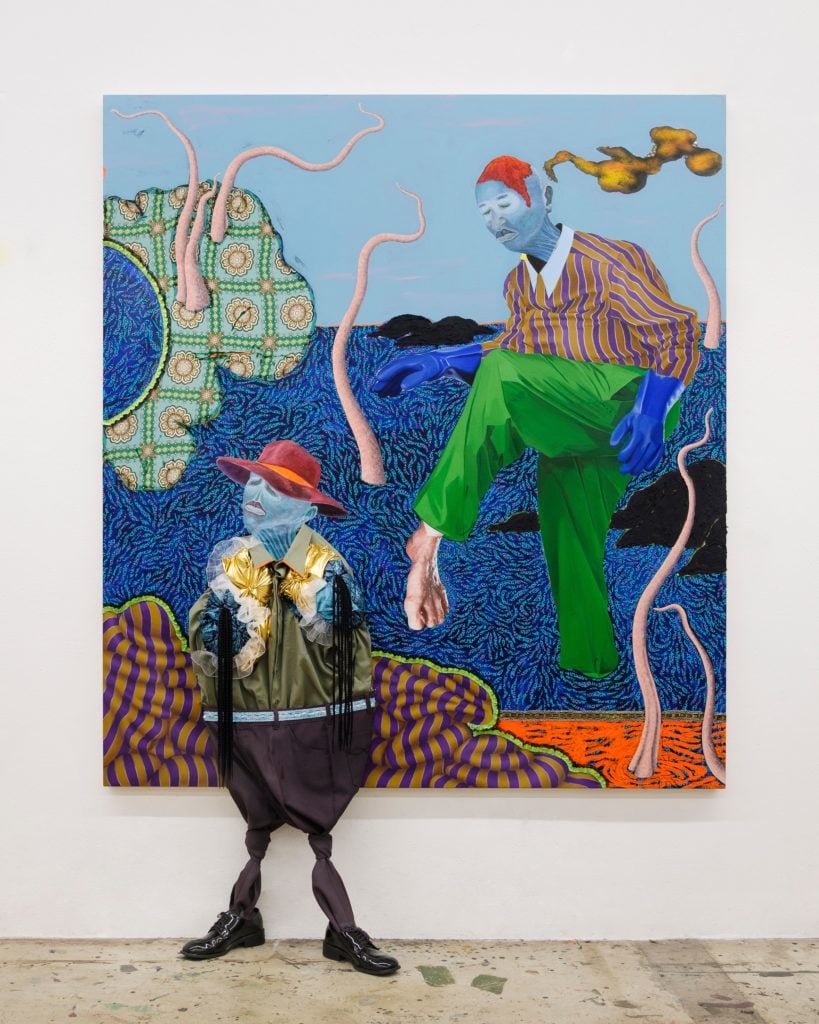
Simphiwe Ndzube, Invitation to my
Voyage #2 (2019). Courtesy Nicodim Gallery.
Simphiwe Ndzube (b. 1990)
What to Know: The Los Angeles-based, Cape
Town-born painter and sculptor creates Surrealist depictions of
life in post-apartheid South Africa.
Gallery Affiliation: Stevenson (Cape Town,
Johannesburg); Nicodim Gallery (Los Angeles, Bucharest); Ever Gold
Projects (San Francisco)
Most Wanted: His otherworldly works on linen, which
combine such mediums as acrylic, spray paint, collage, and found
objects
Price Range: $6,000 to $35,000
Up Next: His work is included in the Lyon
Biennale (on view through January 5).
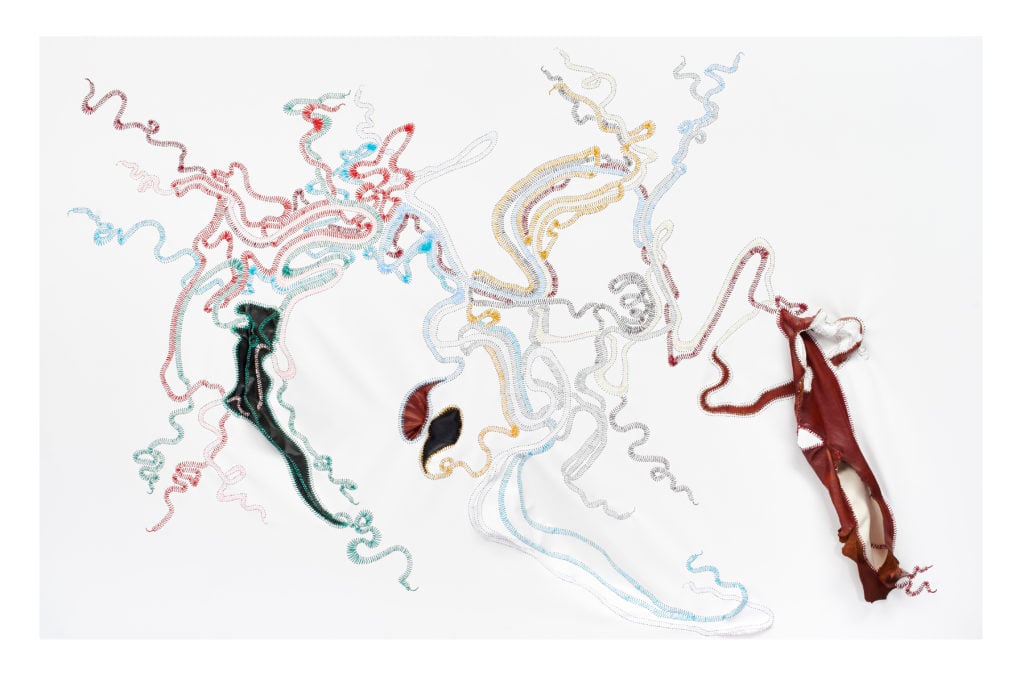
Nicholas Hlobo, Ulwabelwano
(2015). Courtesy Lehmann Maupin.
Nicholas Hlobo (b. 1975)
What to Know: The artist makes large-scale
installations, primarily out of ribbon, leather, wood, and rubber
detritus, that tackle themes of sexuality and gender identity as
well as the history of South Africa and his own Xhosa culture.
Gallery Affiliation: Stevenson (Cape Town,
Johannesburg); Lehmann Maupin (New York, Hong Kong, Seoul)
Most Wanted: Mixed-media works on linen
incorporating ribbon, leather, and domestic objects
Price Range: $20,000 to $120,000
Up Next: He was recently featured in the
group show “Material Insanity” at the Museum of African
Contemporary Art Al Maaden in Marrakech, and is included in the
10th edition of Lustwarande, an international sculpture exhibition
in the Netherlands running through October 20.
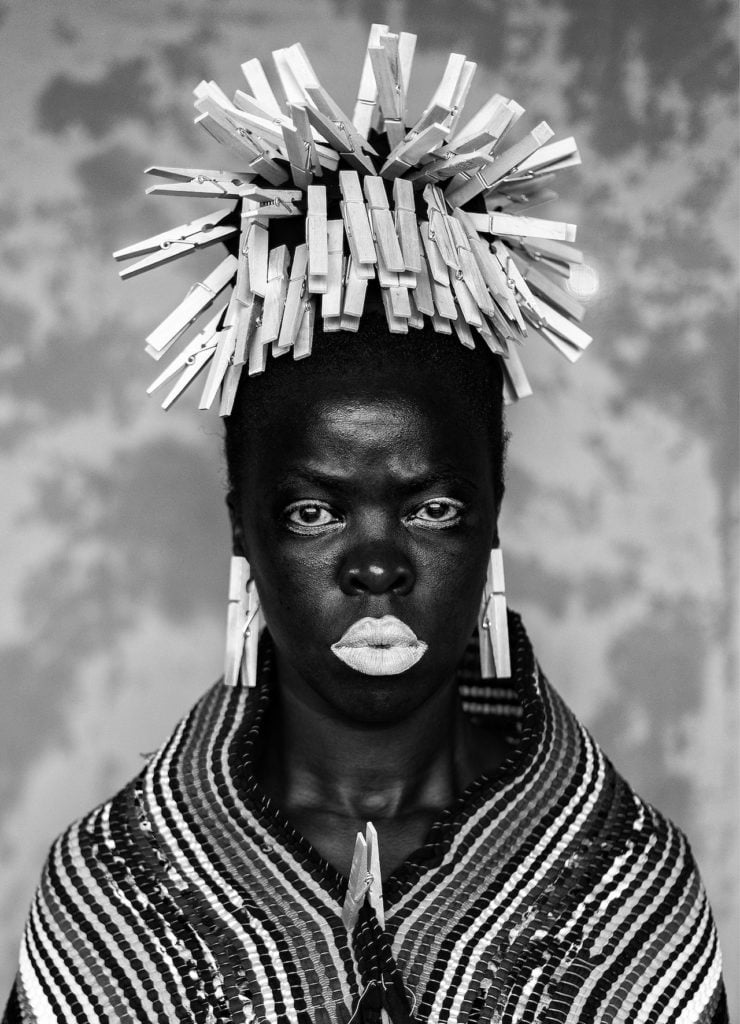
Zanele Muholi, Bester I, Mayotte
(2015). Courtesy Yancey Richardson Gallery.
Zanele Muholi (b. 1972)
What to Know: A photographer and filmmaker who
self-identifies as a “visual activist,” Muholi creates
black-and-white images depicting black LGBTQ+ communities. They
recently won this year’s Lucie Award for Outstanding Achievement
for Humanitarian Photography.
Gallery Affiliation: Stevenson (Cape Town,
Johannesburg); Yancey Richardson (New York); Wentrup Gallery
(Berlin)
Most Wanted: Black-and-white self-portraits in
editions of eight
Price Range: $5,000 to $30,000
Up Next: Muholi’s work prominently marked the
doorways in the Arsenale at this
year’s Venice Biennale. Their first large-scale retrospective will
open at Tate Modern in London on April 29.
Dakar,
Senegal
Art is in Senegal’s DNA. Léopold Sédar Senghor, the country’s
first president after achieving independence in 1960, invested as
much as 25 percent of the state’s budget in its culture
ministry.
Creativity flourished under his presidency during a period
between 1960 and 1980 known as l’École de Dakar, which was
characterized by state patronage. Dakar’s art scene is also known
for Laboratoire Agit’Art, a satirical and avant-garde art
collective founded in Dakar in 1973 by writer and performer
Youssouf John.
Today, Senegal is among Africa’s most stable countries, having
experienced three peaceful political transitions since 1960. Since
2014, discoveries of large oil and gas deposits in Senegal have
opened the country to energetic international speculation. The
World Bank predicts Senegal’s economy will grow more than 6 percent
annually over the coming years.
Galleries and Institutions
to Know
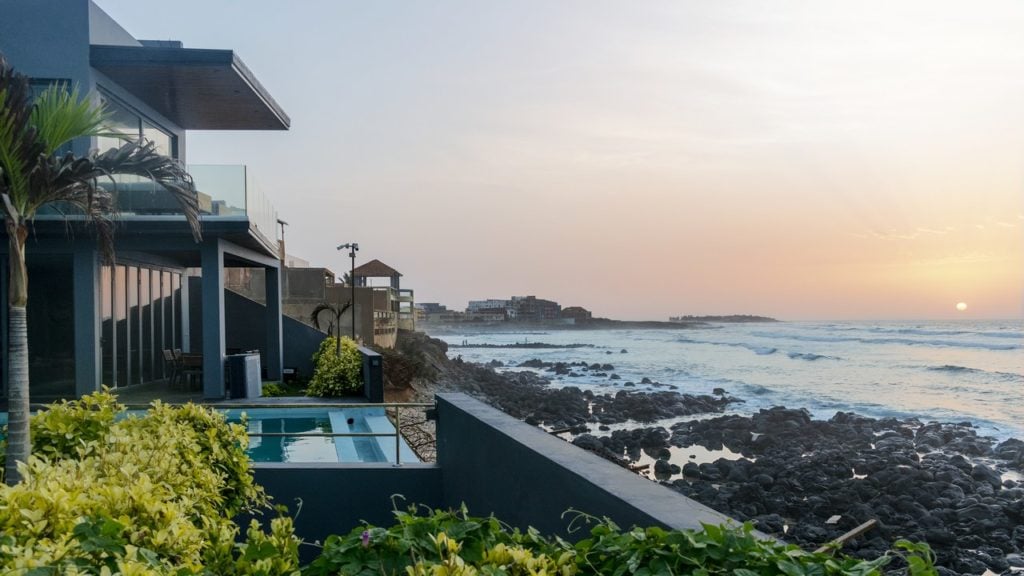
A view of Kehinde Wiley’s Artist
Residency, Black Rock. © Kehinde Wiley, photo: Mamadou Gomis.
Galerie Cécile Fakhoury: A sleek space
dedicated to contemporary African art, the gallery opened in Côte
d’Ivoire in 2012 and expanded to Dakar in 2018.
Galerie Atiss: A six-floor space situated in a
villa, the gallery—established in 1996 by Aissa Dione—promotes
Modern and contemporary African art as well as traditional
textiles.
Black Rock: Kehinde Wiley’s luxurious artist
residency in Dakar launched in April.
Raw Material Company: This center for art and
education was founded by curator Koyo Kouoh, who was recently named
the executive director and chief curator of the Zeitz Museum of
Contemporary Art Africa in Cape Town.
The Museum of Black Civilizations: The museum,
which opened in December in a 150,000-square-foot structure,
celebrates black civilizations from across the globe.
Dak’Art: Also known as the Dakar Biennale, the
30-year-old event is Africa’s most venerable art biennial.
Artists to
Watch
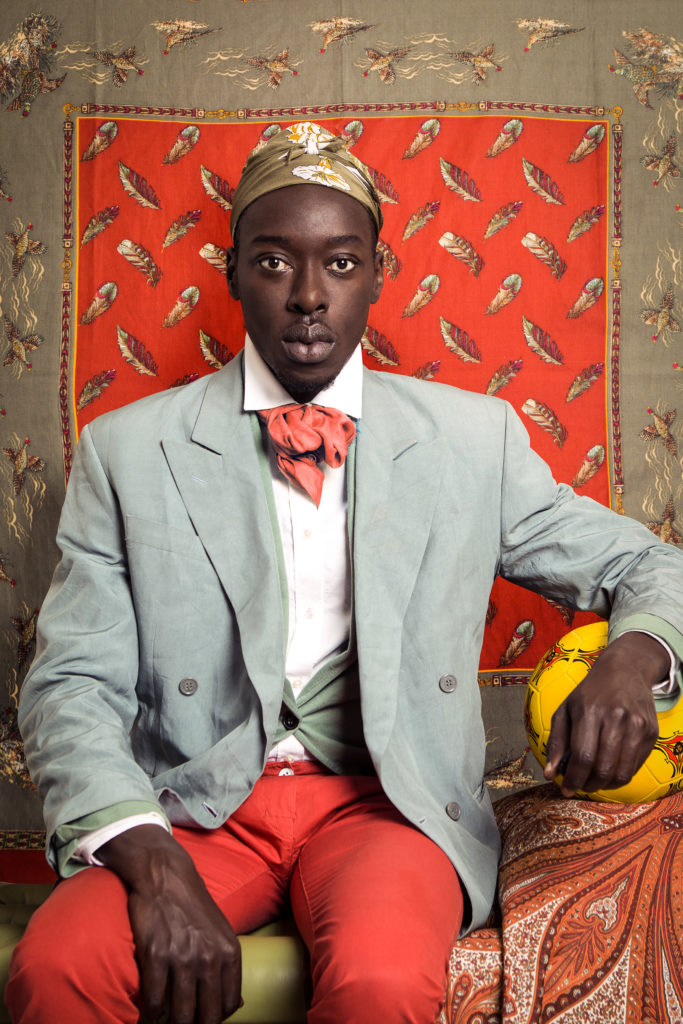
Omar Victor Diop, Omar Ibn Saïd
1770-1864 (2014). Courtesy MAGNIN-A.
Omar Victor Diop (b. 1980)
What to Know: Diop’s photographs of prominent
figures from Senegal’s cultural scene honor the long tradition of
African studio photography.
Gallery Affiliation: MAGNIN-A (Paris), Jenkins
Johnson Gallery (San Francisco)
Most Wanted: The “Diaspora” series (2014),
which pays tribute to significant Africans from the 16th to the
19th centuries, and the “Liberty” series (2016), which reflects the
history of Black protest movements.
Price Range: $5,600 to $13,500
Up Next: His work will be included in the Fotofest
Biennial in Houston next spring.
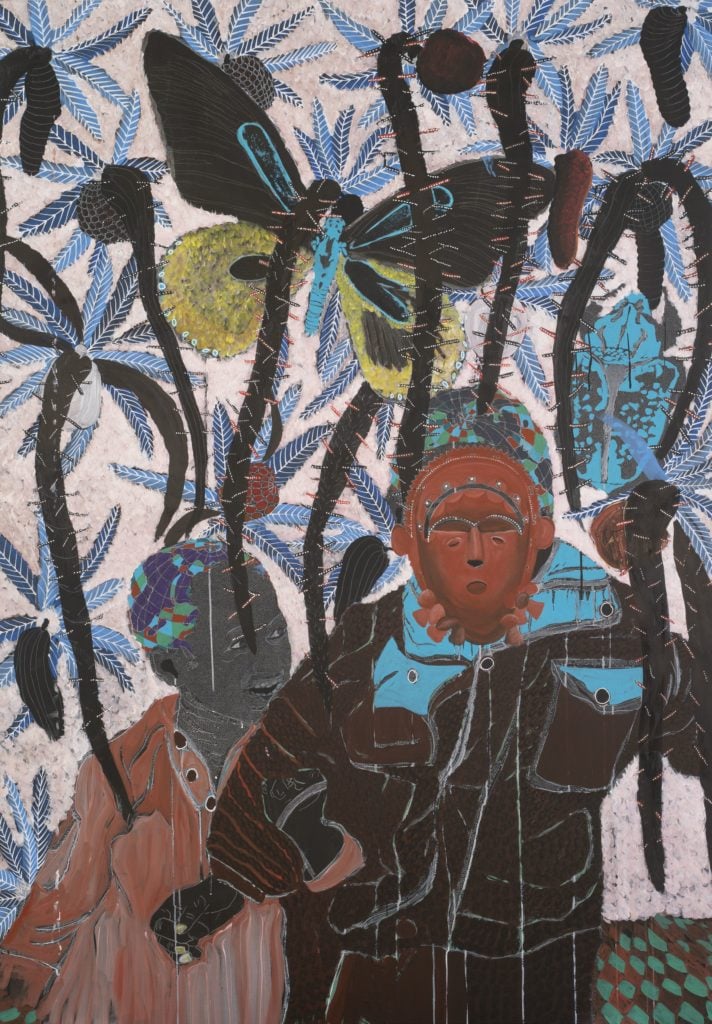
Omar Ba, Fruits, Masques,
Insectes (2018). Courtesy Galerie Templon.
Omar Ba (b. 1977)
What to Know: The artist, who splits his
time between Dakar and Geneva, creates intricate mixed-media
paintings that blur the line between figuration and abstraction
while drawing on the legacy of colonialism. Two of his works have
come to auction this year, both of them outperforming their high
estimates.
Gallery Affiliation: Galerie Templon
(Paris, Brussels); Hales Gallery (London, New York)
Most Wanted: Paintings on cardboard
Price Range: $22,500 to $67,000 for
paintings; $4,500 to $11,000 for drawings
Up Next: Ba has a solo show at the
Montreal Museum of Fine Arts, running through November 10.
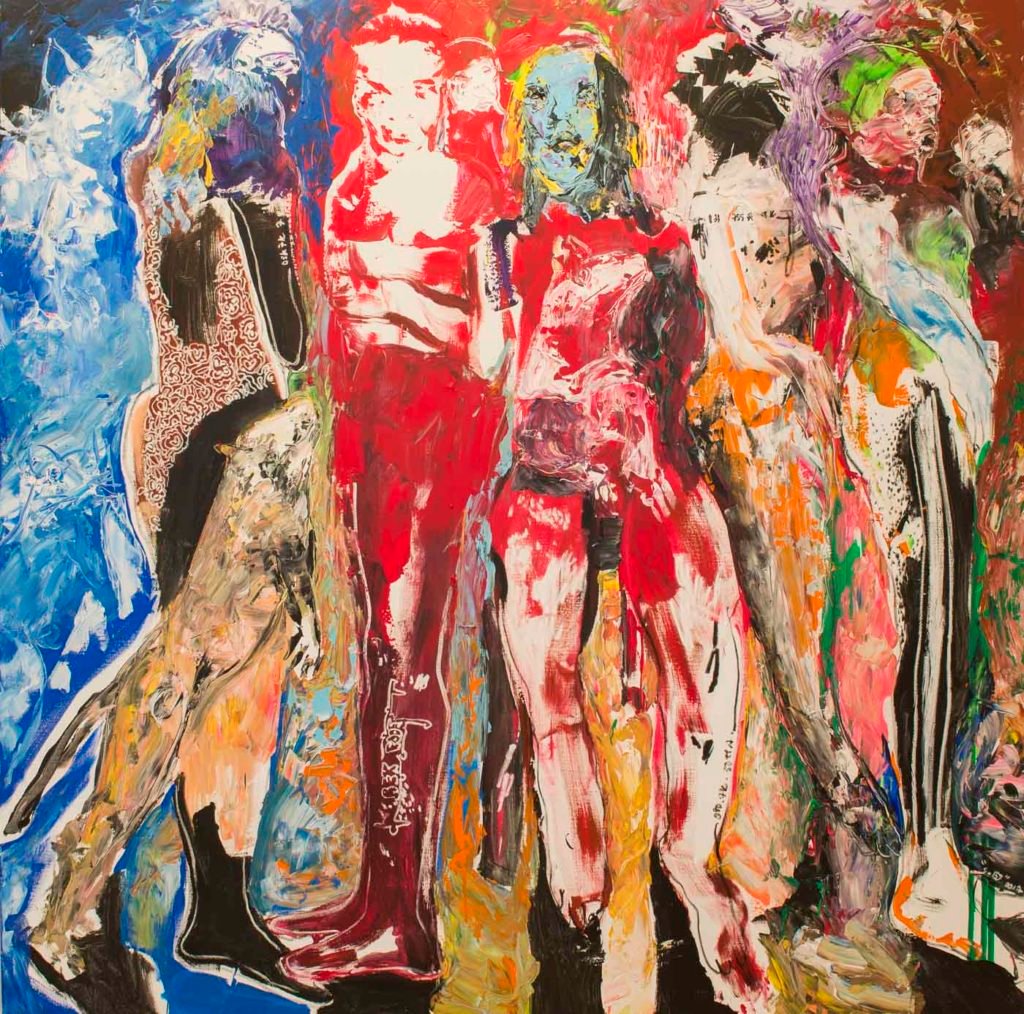
Soly Cissé, Men and Lives V
(2018). Courtesy the artist.
Soly Cissé (b. 1969)
What to Know: A painter, sculptor, and
draftsman, Cissé is best known for abstract paintings in which
heroic figures emerge from scenes of chaos and destruction.
Gallery Affiliation: Sulger-Buel Gallery (London);
Ethan Cohen Fine Arts (New York)
Most Wanted: Paintings from the series “Men and
Lives” (2018)
Price Range: Approximately $20,000 for
paintings
Up Next: The artist’s work will be at Sulger-Buel
Gallery’s stand at the 1-54 fair in London.
Lagos,
Nigeria
In the early 20th century, Lagos’s art scene was dominated by
Ben Enwonwu, who developed a distinctly African response to
European Modernism. During the 1950s, different schools of art
sprang up: The Zaria Rebels fused Modernism with Nigerian forms,
while the more conventional Osogbo School carried on Yoruba
traditions. Two decades later, students at the University of
Nigeria, including El Anatsui and Olu Oguibe, founded the Nsukka
group, which aimed to reinvent the traditional Igbo style.
Even after Nigeria emerged from military rule in 1999, it
suffered from the perception that it was dangerous and
inhospitable. The tide began to turn in the mid-2000s, when a new
crop of collectors and art spaces emerged. The country’s scene has
been further boosted by the success of Nigerian-born Njideka
Akunyili Crosby, whose lush paintings are among the most
sought-after works of contemporary art today.
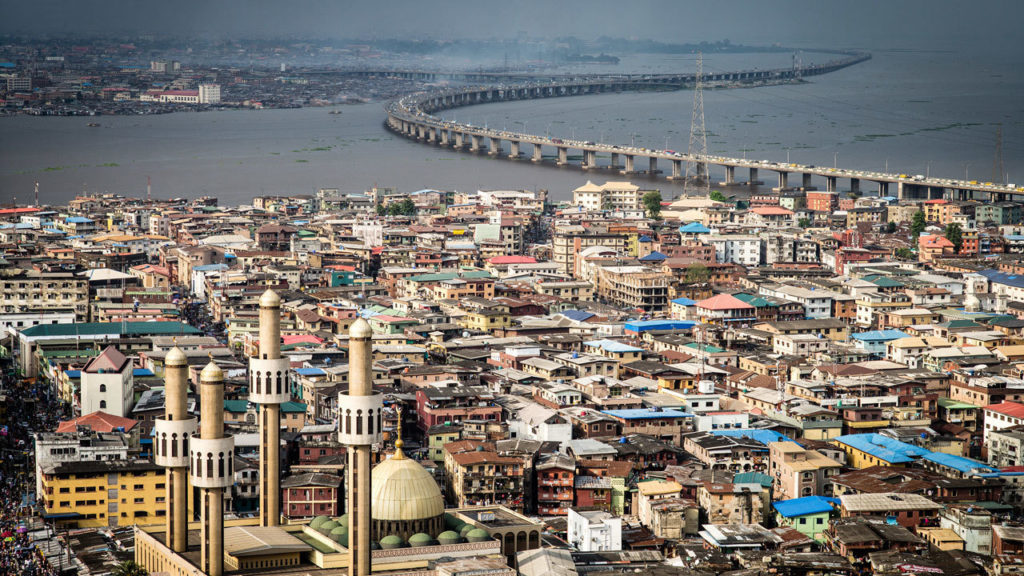
An aerial view of Lagos, Nigeria. Photo:
Michael Kraus/Getty Images.
“We have had an art scene for a very long time,” says Tokini
Peterside, founder and director of Art X Lagos, West Africa’s first
contemporary art fair. “The question is whether the scene was
structured in a way that the Western art world could align
with.”
Nigeria—which accounts for about 47 percent of West Africa’s
population—is home to more black billionaires than any other
country, though its economy is expected to grow more slowly than
other African nations because its oil industry is likely to
stagnate in the face of regulatory uncertainty. It will presumably
remain a hub regardless: It has one of the largest populations
of young people in the world.
Galleries and Institutions
to Know
Omenka Gallery: This contemporary art gallery
is housed in the former home of Ben Enwonwu, one of Africa’s most
influential artists, and run by his son.
Lagos Center for Contemporary Art: This
nonprofit hub for experimental art was founded in 2007 by curator
Bisi Silva, who died earlier this year. El Anatsui has called the
organization and its educational initiatives “the biggest thing to
happen to the scene.”
Arthouse Contemporary: An auction house
specializing in Modern and contemporary art from West Africa, it
was founded by Indian-born Kavita Chellaram.
SMO Contemporary: This contemporary art
gallery also offers art advisory services.
African Artists Foundation: A nonprofit dedicated to
the promotion of Nigerian art, it organizes the annual National Art
Competition.
Artists to
Watch
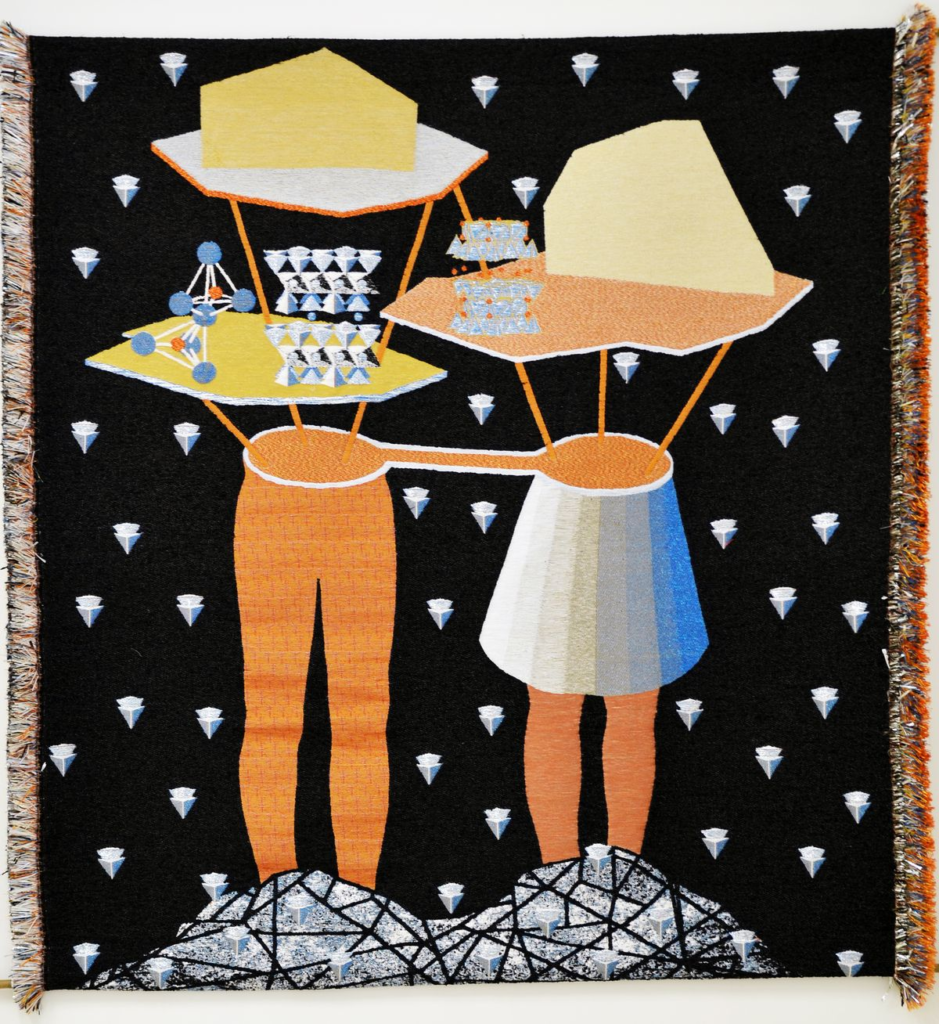
Otobong Kkanga, Transformation
(2014). Courtesy Mendes Wood DM.
Otobong Nkanga (b. 1974)
What to Know: The Kano-born, Antwerp-based
artist creates works inspired by Nigeria’s history, land, and
politics in a wide variety of forms and materials. She won a special mention at
the Venice Biennale for her winding Murano glass sculpture and
works on paper in the central exhibition and is also the inaugural
recipient of the $100,000 Lise Wilhelmsen Art Award, given to
an artist whose work inspires social change.
Most Wanted: Her vivid, almost futuristic
tapestries, which come in editions of five
Price Range: $8,000 to $200,000
Gallery Affiliation: Mendes Wood DM (São Paulo,
Brussels, New York); In Situ-Fabienne Leclerc (Paris); Lumen Travo
(Amsterdam)
Up Next: Nkanga has a solo show at Tate
St. Ives through January 2020, a solo exhibition at Zeitz MOCAA in
Cape Town opening on November 19, and a residency at the
Martin-Gropius-Bau in Berlin.
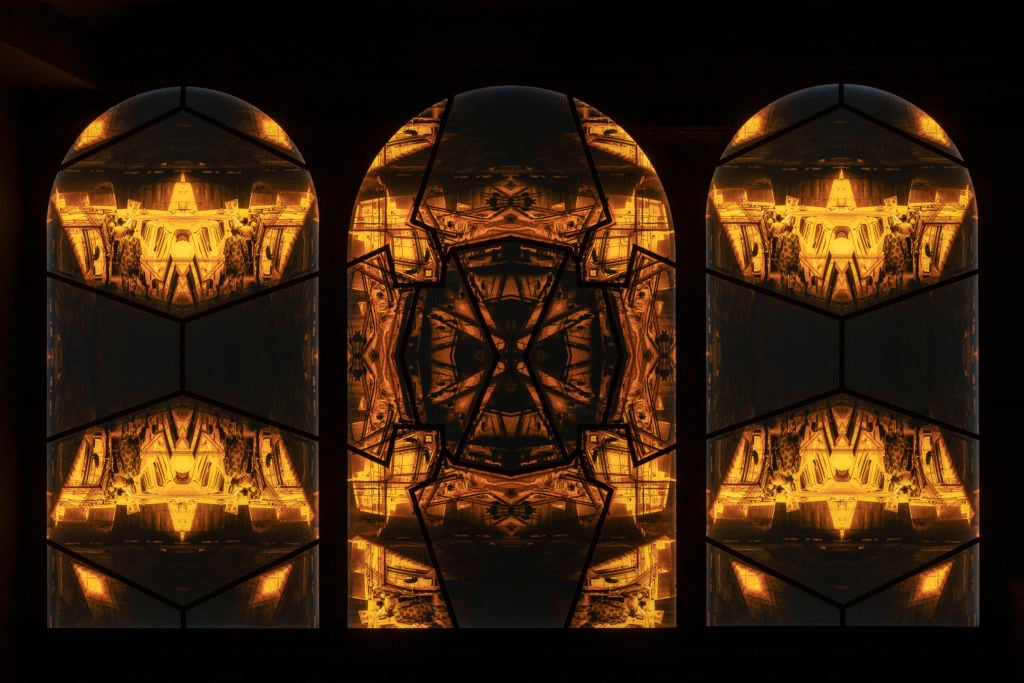
Emeka Ogboh, Spirit and Matter
(2018). Courtesy Galerie Imane Farès
Emeka Ogboh (b. 1977)
What to Know: The Enugu-born, Berlin-based sound
artist participated in both documenta 14 and Skulptur Projekte
Münster in 2017 without a gallery backing him—the only artist to do
so. He was also shortlisted for the 2018 Hugo Boss Prize for
his performances, sound installations, and food-based works that
explore migration, the diaspora, and post-colonialism.
Gallery Affiliation: Imane Farès (Paris)
Most Wanted: His “Sound Portraits,” which
comprise speakers housed in painted, striped boxes that hang on the
wall like paintings and emit sonic portraits of Lagos
Price Range: $22,500 to $100,000
Up Next: An installation inspired by an Igbo village
square is on view at the Cleveland Museum of Art through December
1. His work is also included in a group show about borders,
“Walking Through Walls,” at the Martin-Gropius-Bau in Berlin
through January 19.
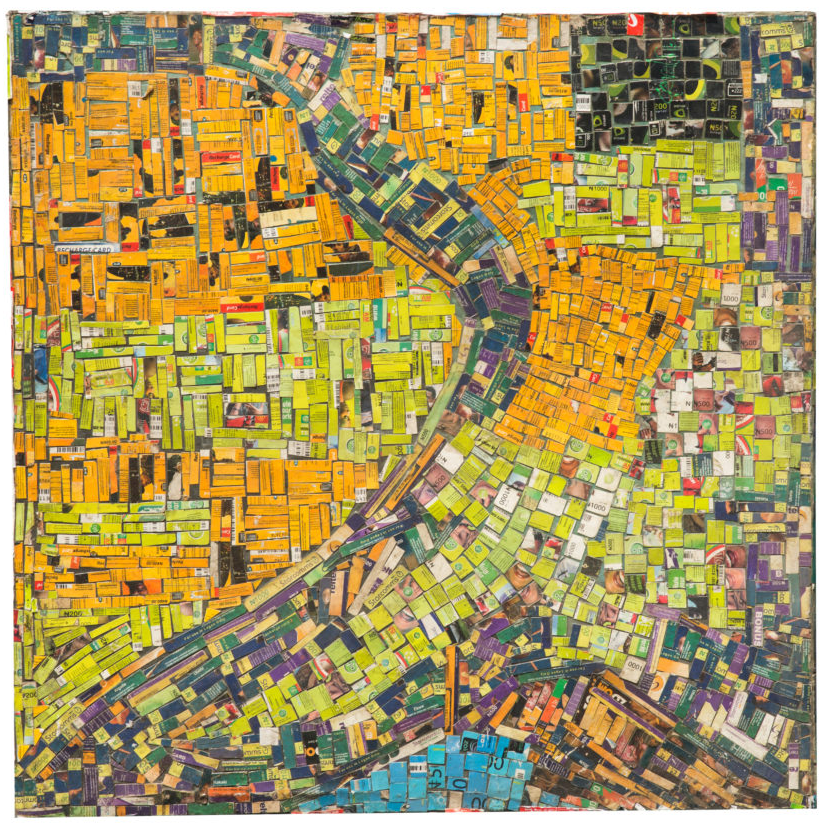
Gerald Chukwuma, Google Map I
(2017). Courtesy Gallery 1957.
Gerald Chukwuma (b. 1973)
What to Know: Chukwuma creates intricate sculptures
by painting, burning, and chiseling wood and slate. His work
examines themes of politics and migration in Africa.
Gallery Affiliation: Gallery 1957 (Accra); Kristin
Hjellegjerde Gallery (London, Berlin)
Most Wanted: His “Wrinkles” series (2017–19),
which pays tribute to the historic Igbo Landing site on St. Simons
Island in Georgia, where one of the largest mass suicides of slaves
took place in 1803
Price Range: $9,300 to $25,000 for wood-slate
sculptural works
Up Next: The artist will have a solo show at Gallery
1957 in Accra next August and participate in 1-54’s London edition
via Kristin Hjellegjerde Gallery.
Marrakech,
Morocco
During the mid-20th century, amid France’s decolonization, two
aesthetic trends emerged in Morocco. The first, promoted by the
Tetouan School of Fine Arts, was influenced by the aesthetic of
southern Spain. The second, represented by the Casablanca School of
Fine Arts, revolved around the young painters Farid Belkahia,
Mohamed Melehi, and Mohammed Chebaa, who incorporated Moroccan
visual culture and architecture into their geometric and abstract
works.
Today, the scene is home to a variety of genres, from street art
to performance and film, of which photography may be the most
prominent. The city also boasts a more developed gallery and museum
infrastructure than many other cities on the continent, as well as
its own art fair, 1-54, founded by Moroccan entrepreneur Touria El
Glaoui.
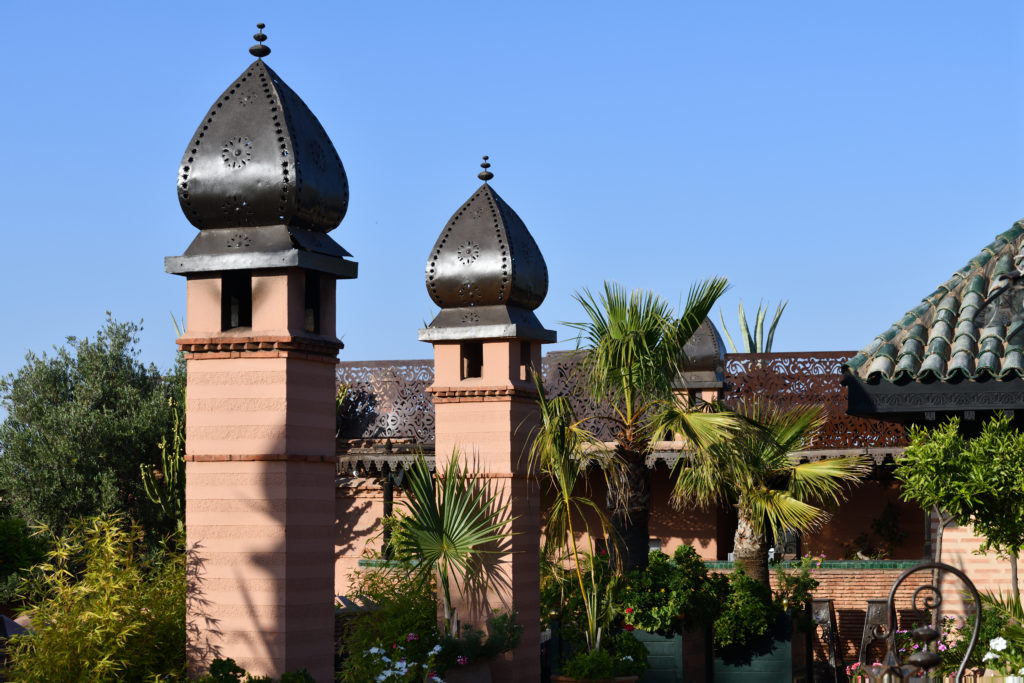
The gardens in Marrakech, Morocco. Photo
by Frédéric Soltan/Corbis via Getty Images.
The International Monetary Fund’s latest report projects that
Morocco’s economic growth rate will reach 4.5 percent by 2024, up
from 3.1 percent in 2018. “Marrakech firmly represents the gateway
of Morocco to Africa and to Europe,” says curator Meriem
Berrada.
Galleries and Institutions
to Know
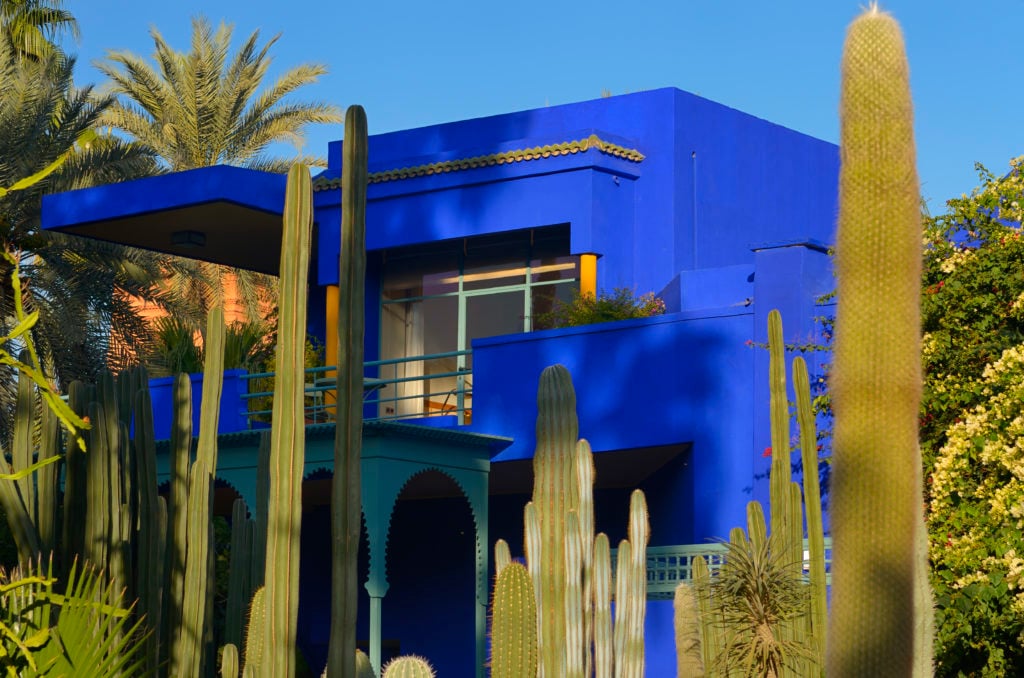
Islamic Art Museum of Marrakech at
Majorelle Garden. Photo: Education/Universal Images
Group/Getty.
Museum of African Contemporary Art Al
Maaden: Marrakech’s first museum of African art, it
was established in 2016.
Yves Saint Laurent Museum: This museum
dedicated to the late fashion designer Yves Saint Laurent and his
love of Morocco opened in 2017.
David Bloch Gallery: A gallery of
international art, it is designed to resemble a minimalist New York
loft.
Galerie 127: This gallery specializes in work by
Moroccan and international photographers.
Riad Yima: The gallery, shop, and tearoom
was established by the photographer Hassan Hajjaj, whose
hip-hop-inspired, color-saturated portraits have earned him the
moniker “the Andy Warhol of Marrakech.”
Montresso Art Foundation: Since its
inception in 2009, this foundation has been best known for its
prestigious and competitive Jardin Rouge residency program.
Keep an eye out for artists who have gone through it.
Artists to
Watch
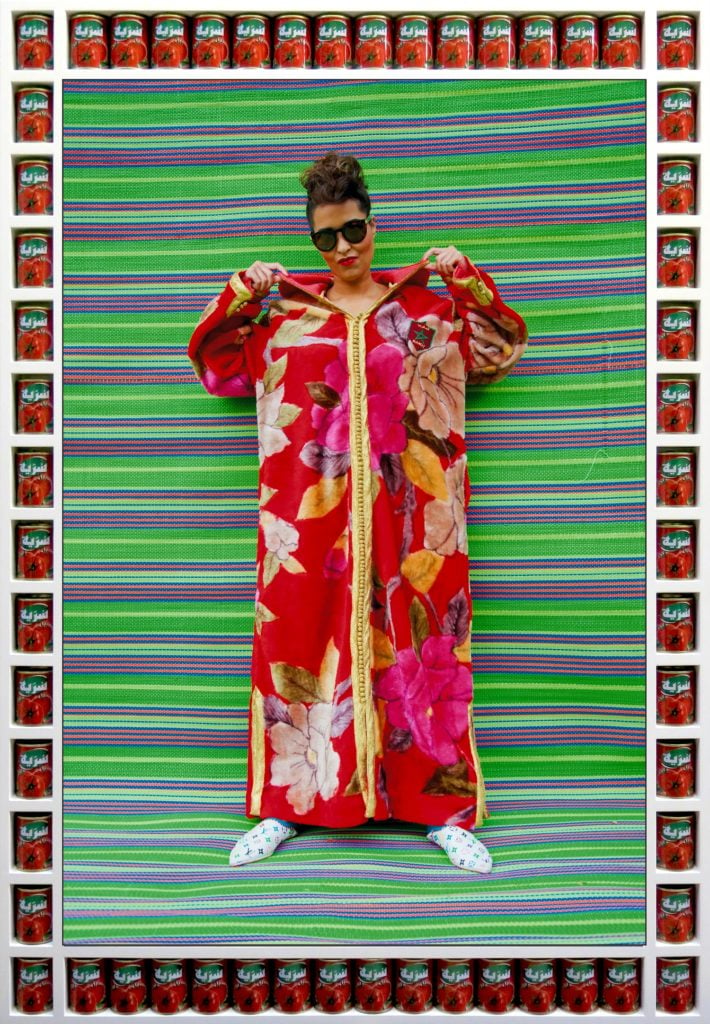
Hassan Hajjaj, Mimz from “My
Rockstars” (2013). Courtesy of the artist and The Third Line.
Hassan Hajjaj (b. 1961)
What to Know: Hajjaj is perhaps the city’s
best-known artist, famous for his vivid photographs of impossibly
hip subjects ranging from stylish locals to stars like Madonna and
Cardi B.
Gallery Affiliation: The Third Line (Dubai)
Most Wanted: “Kesh Angels” (2010–ongoing),
a series dedicated to the city’s young veiled women bikers, and the
“My Rockstars” series (1999–ongoing)
Price Range: $7,000 to $40,000
Up Next: A large-scale retrospective is on view at
the Maison Européenne de la Photographie in Paris through November
17.
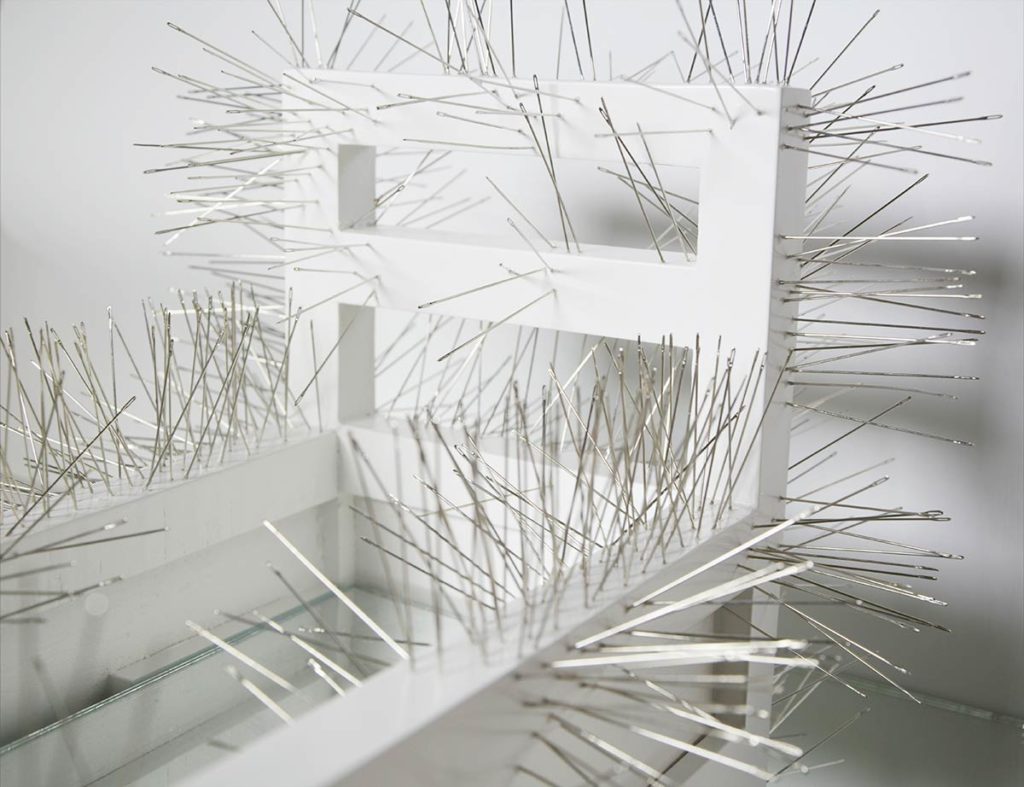
Safaa Erruas, Inaccessible
(2014). Courtesy L’Atelier 21.
Safaa Erruas (b. 1976)
What to Know: The Tetouan-based artist
creates intricate sculptures based on domestic furniture and almost
exclusively uses the color white.
Most Wanted: Her delicate mixed-media
installations incorporating domestic materials, such as Double
Voie (2019), a work made in metal wire and paper to present a
snapshot of life under the 20-year reign of King Mohammed VI
Price Range: $800 to $18,000
Gallery Affiliation: L’Atelier 21 (Casablanca,
Morocco); Officine dell’Immagine (Milan); 50 Golborne (London)
Up Next: She is participating in the Biennale Rabat,
through December 18, and will be represented at 1-54 in London
through 50 Golborne.
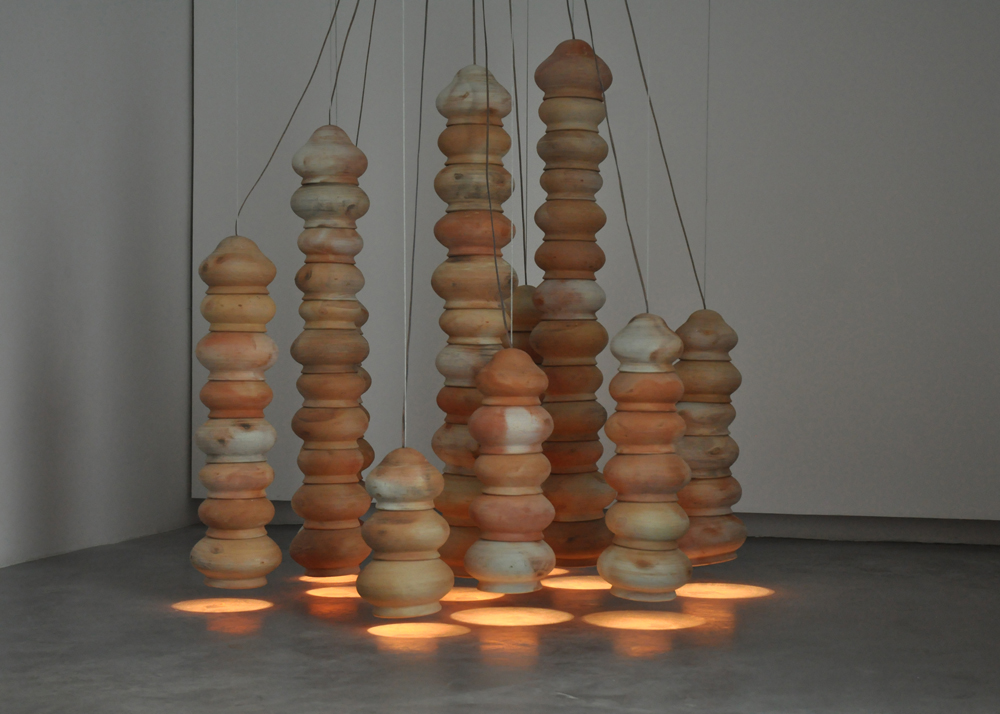
Younès Rahmoun, Jamor (2015).
Courtesy Galerie Imane Farès.
Younès Rahmoun (b. 1975)
What to Know: Based in Tetouan, Rahmoun
creates meditative, ethereal videos, drawings, sculptures, and
photographs that draw on his Islamic faith.
Most Wanted: Meditative multimedia
installations like Markib-Manzil-Mawja (2015)
Gallery Affiliation: Galerie Imane Farès (Paris)
Price Range: $6,000 to $100,000
Up Next: The artist presented a
performance at the Smith College Museum of Art on September 19
ahead of a larger solo show there in 2022. This month, he debuts a
new installation in the Tuileries Gardens in Paris as part of
FIAC’s public art program.
A version of this story originally appeared in the fall
2019 artnet Intelligence
Report. To download the full report, which has juicy details on
the most bankable artists, a look at how the art market has changed
over the past 30 years, and a deep dive into the shrinking business
of auction guarantees, click here.
The post Contemporary Art From Africa Is Seizing Global
Attention. Here’s Your Guide to Six Emergent Art Markets Making It
Happen appeared first on artnet News.
Read more https://news.artnet.com/exhibitions/intelligence-report-african-art-market-1665166
Further reading


Leave a comment