
In a Major Shift, a Leading Museum Association Is Relaxing Its Rules on How Institutions Can Use Their Money Amid the Economic Crisis
To aid art
institutions flailing in the face of an ever-deepening
financial crisis, the Association of Art Museum Directors (AAMD) has
loosened its guidelines on how its members can
operate.
In a significant policy shift,
the AAMD, which represents 240 North American museums, passed a
series of resolutions this week allowing institutions to
use restricted
funds—such as those from specialized donations or proceeds from
deaccessioned artworks—to pay for operating expenses over the
course of the next two years.
“This is a crisis without
precedent in our lifetime, with global implications and with a
timeline that unfolds as we live it,” said Brent Benjamin,
president of the association, in a statement.
Benjamin, who also leads the
Saint Louis Art Museum, noted that the inability to foresee an end
to the coronavirus pandemic and its financial
impact has put art
institutions in a particularly tough spot.
“Since planning for the future
with any accuracy is impossible, while earned revenue has stopped
and the future of charitable giving is unknown, it was important
for AAMD to take a step that could provide some additional
financial support to art museums.”
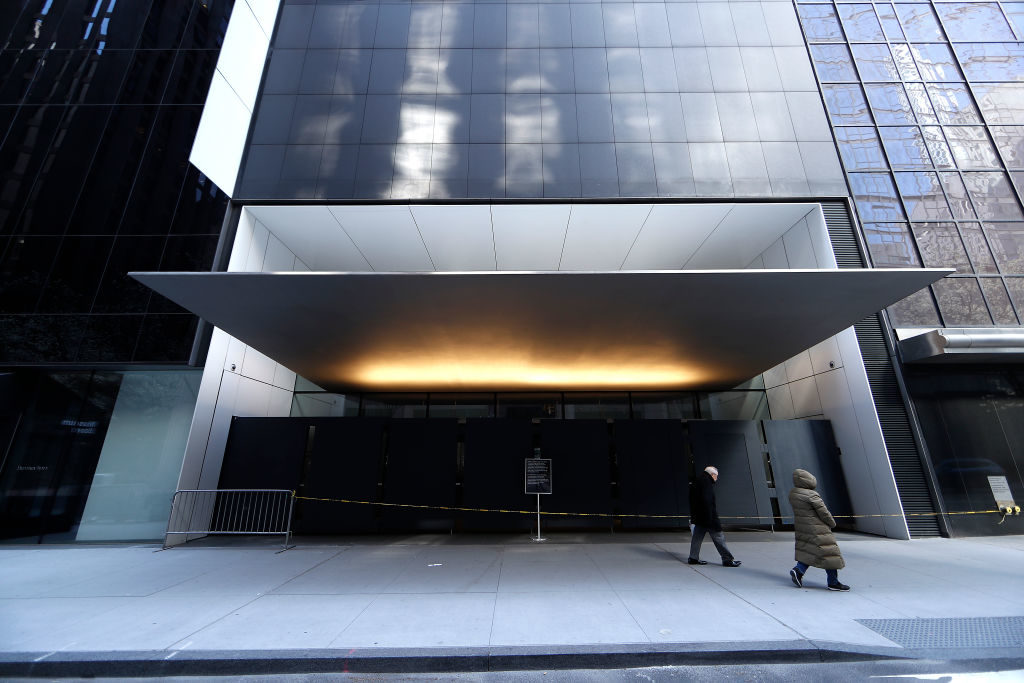
MoMA in New York is closed indefinitely
as the city attempts to slow down the coronavirus. Photo: John
Lamparski/Getty Images.
As part of the temporary
resolutions, which are valid through April 10,
2022, the AAMD is
suspending restrictions on the use of trusts, donations, and gains
from endowment investments. (The amended policy only applies to
earnings from the endowment, not its principal amount.)
Previously, the AAMD cwould
censure institutions for using such funds, or suspend or expel them
from the organization. In 2018, for example, it imposed sanctions
on the Berkshire Museum
and La Salle University Art Museum for
deaccessioning artworks against AAMD guidelines.
Still, there are limits to what
directors are able to do. The AAMD has no legal authority to
approve the redirection of any museum’s restricted funds, so the
use of such money must still meet jurisdictional requirements in
any institution’s state.
The AAMD is also encouraging its
members to speak with their donors before redirecting funds
intended for specific purposes towards operating
expenses.
“We recognize the severity of
the current crisis and the immediate financial needs of many
institutions,” Christine Anagnos, executive director of AAMD,
added. “At the same time, whether it is the principal of an
endowment or the art that comprises a museum’s collection, we need
to protect important assets for future use. These resolutions
strike a balance between addressing near-term needs and our
long-held values, and we expect that any institution that exercises
these options will do so in good faith.”
The post In a Major Shift, a Leading Museum Association Is
Relaxing Its Rules on How Institutions Can Use Their Money Amid the
Economic Crisis appeared first on artnet News.
Read more https://news.artnet.com/art-world/aamd-coronavirs-guidelines-1836363
Further reading


Leave a comment