
Letter From Vienna: Kunsthistorisches Director Sabine Haag on How to Reopen Museums With Safety Rules That Are Smart, Not Draconian
Austria was one of the first countries in Europe to announce
that it would reopen its museums after seeing a sharp decline in
the number of coronavirus infections. As of May 15, some
institutions have begun to restore access to the public. The
process has not been without turbulence: Despite the country’s
overall rapid response to the crisis, the culture minister Ulrike
Lunacek resigned amid criticism of her limited support for artists
and unclear guidance to institutions. For the past few months, most
of the staff at the Kunsthistorisches Museum in Vienna have been on
“short-term” work, a special program from the Austrian government
that has allowed the museum to retain its staff at 80 to 90 percent
of their normal wages. The museum’s director Sabine Haag tells us
about the challenges of implementing public-health measures and
staying financially afloat while preparing to reopen
the museum—home to masterpieces by Raphael, Titian, Jan van
Eyck, and more—in a responsible way.
*
Austria reacted almost
immediately to the pandemic with very rigid measures. We shut down
the Kunsthistorisches Museum on March 11, the day after the
government warned us that the country would be locked down on March
16. It has been quite a
challenging time, and also quite a sad time to see the museum
empty. But at home, we are all healthy, and that is the most
important thing.
Now, Austria is in the fortunate
position that, for the time being, we think the pandemic is under
control. And so, step by step, the country is opening
again. The first
museums were allowed to open on May 15. We had been originally
scheduled to reopen on July 1, but when our state secretary for
culture said that museums could open earlier, there was a strong
urge from the public to do so. People are longing to go back to the
museum, and so we have decided to reopen on Saturday, May
30.
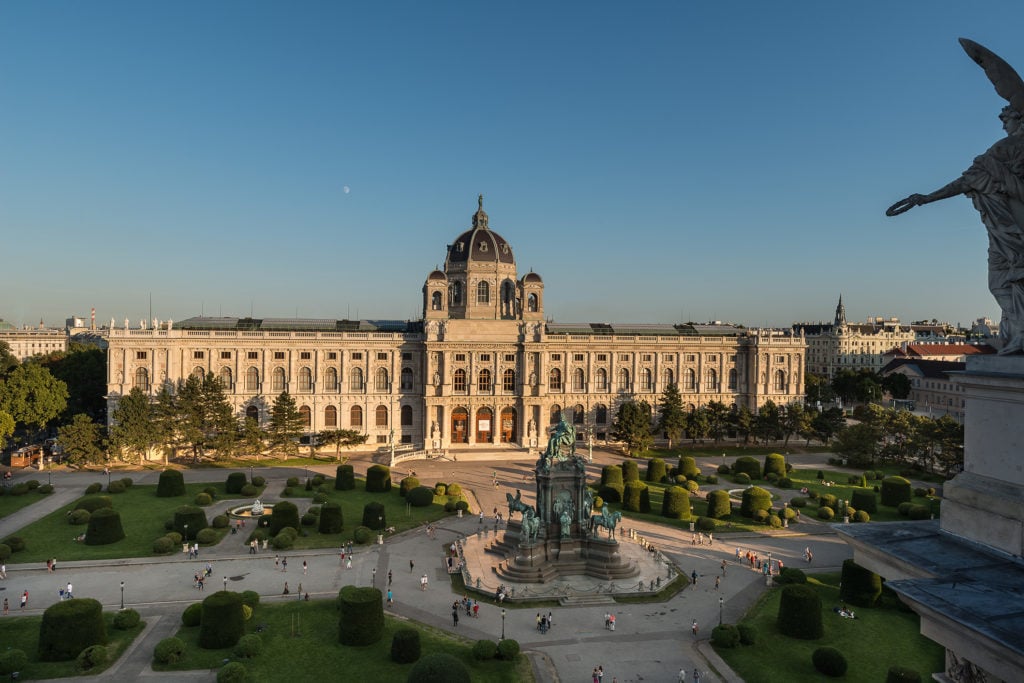
The Kunsthistorisches Museum in Vienna.
©KHM-Museumsverband.
Obviously, we are not doing this
for economic reasons, because it will result in a financial loss.
Normally in May and June, Vienna would be packed with international
tourists. But the borders are closed, and the costs are always the
same whether you have a blockbuster exhibition with 4,000 people
coming each day or 200.
We know that the ministries are
discussing very seriously the possibility of reopening some of the
borders to Germany, Slovakia, Croatia, or the Czech Republic,
especially ahead of the summer. But of course, nobody really knows
what this will mean for the so-called “second wave.”
Nevertheless, we have heard the
call from the public. Reopening is really a gesture for the people
living in Austria, and we want to invite people to respond to this
gesture now that they can finally come back and see their beloved
Bruegel, Rubens, Caravaggio, Vermeer, Rembrandt, Raphael,
Velázquez, and many more. We are introducing a pay-as-you-wish
model from May 30 through June 30, where people are free to pay as
much as they think the visit to the museum is worth to
them.
What will it be like? So far,
what we understand is that each visitor must have at least 10
square meters to themselves. Given the size of our museum, this
means that we can have around 900 people inside at once, although
this could change in accordance with government guidance. Both
staff and visitors will have to wear masks, and there has to be a
one-meter distance between individuals.
It will not be mandatory to book
a time slot online, but we do offer it for those who want a truly
contactless experience. We have tried to think of every way to
reduce physical contact, including making it possible to use the
cloakroom without touching people and providing plastic-coated
menus in the café that can be wiped down. We will still offer
guided tours for up to 10 people, but we also encourage visitors to
use their own smartphones to connect with audioguides through our
beautiful interactive KHM-App.
As for crowd control, the layout
of the gallery space in our museums naturally suggests a one-way
route, but of course, if someone wants to turn around, we would not
stop them. Our guards will be more attentive than ever to ensure
that the visitor flow is smooth.
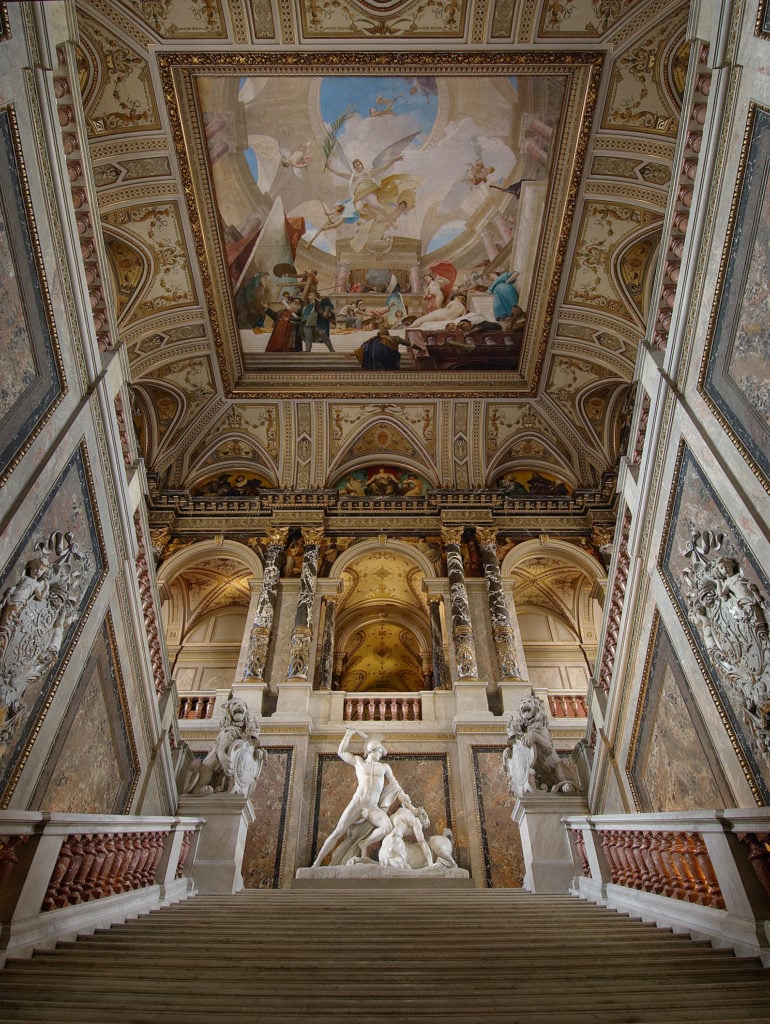
©KHM-Museumsverband
I assume things will be quite
quiet at first. You will really have a chance to look
at The
Tower of Babel
by Pieter Bruegel, and not from 10
meters away because there are so many other people in front of it.
You will have time to listen to what the educators tell you, and
there will be a much more intimate dialogue between the work of art
and our visitors.
Aside from the financial
difficulty, the main concern about reopening is that people might
feel that visiting a museum is dangerous, which of course it is
not. I strongly believe that visiting museums not only digitally
but also in person will solve a lot of problems that people might
suffer from at the moment. It helps you get out of isolation, it
teaches you, it inspires you, it gives you joy, and brings you
together with other people in a safe way.
During the lockdown, museums
were being very inventive with their digital tools and social
media, but I think people will be hungry for a personal dialogue
and emotion created by something that is in front of you, whether
it is a painting or a drawing or a guard they are talking to. There
will be no school groups permitted, but I’m sure we will have
elderly people visit. They will be cautious of course, but I know
they want to break out of isolation, too.
It will be a new situation for
us, catering mostly to people from Austria who might not have
visited under other circumstances. In Austria, there is a saying:
you go to a museum twice. Once by the hand of your grandfather, and
then holding the hand of your grandson or granddaughter. But I
think that this situation will bring the cultural institutions and
all the works of art that are preserved there much closer to
everyday life.
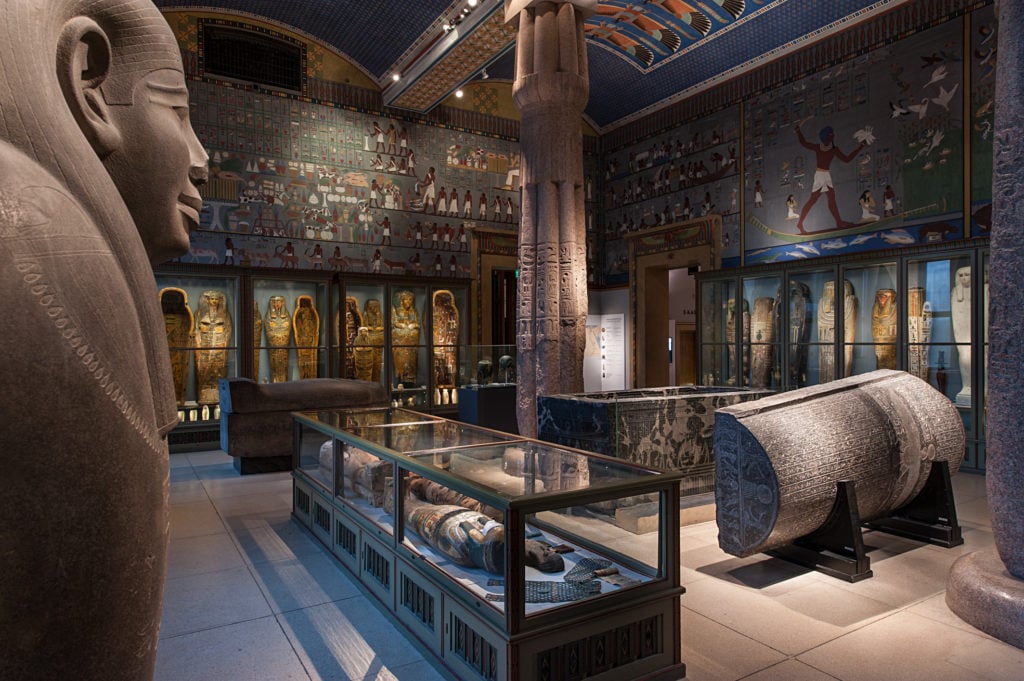
©KHM-Museumsverband
I’m pretty sure that there will
be adaptations to the exhibition program, maybe even into 2021.
Exhibitions are expensive to put on, and with travel interrupted,
the lending process has also slowed down, so it might be a while
before special exhibitions return. We had a very interesting video
conference last Friday with more than a dozen museum directors from
all over the world where we discussed how the virus has affected
our business plans and programs, and what we think the future will
bring.
Collaboration is more important
now than ever. All museums around the globe have the same mission:
to serve humanity. We are all facing the same situation, and it is
really this mission, the relevance that we have for society, for
the country, for the economy, that makes us more important than
ever. I think it should be our goal to reopen as soon as possible,
health measures permitting, as a sign of optimism. And if everyone
is working for this mission of the museum—being open,
collaborating, exchanging ideas—at the end of the day, we will all
succeed.
As told to Naomi Rea
The post Letter From Vienna: Kunsthistorisches Director
Sabine Haag on How to Reopen Museums With Safety Rules That Are
Smart, Not Draconian appeared first on artnet News.
Further reading


Leave a comment