
‘Plexiglass Has Become a Symbol of Care’: How a Berlin Museum Reimagined a Participatory Art Show in the Era of Social Distancing
Lee Mingwei was lucky. At the urging of the Gropius Bau’s
curators, the New York-based artist caught one of the last
flights out of Berlin before travel restrictions were put in place
this March. It was not without compromise: As his plane took off,
Lee was leaving behind a major retrospective just as he would
otherwise have been completing its finishing touches. His largest
museum exhibition in Germany to date was just a week away from its
public unveiling.
“There was no way I could plan or see this coming at all,” he
tells me on a Zoom call last week from his New York home in the
Financial District, where he is self-isolating with his husband
between sparing trips to the store and for jogs. “But the
curatorial team knew this project like the back of their hands. It
became truly a collaboration between them, myself, and my
studio.”
His show “禮 Li, Gifts and Rituals” at the Gropius Bau has become
something of a blueprint for how museums around the world can
expect to operate after their respective lockdowns subside.
But this one was arguably more complicated than most: Nearly every
major work in the decades-spanning exhibition is viewer-activated,
incorporates a durational performance, or requires tactile elements
of exchange among people. There are shared spaces that include
beds. In one piece, clothes are exchanged.
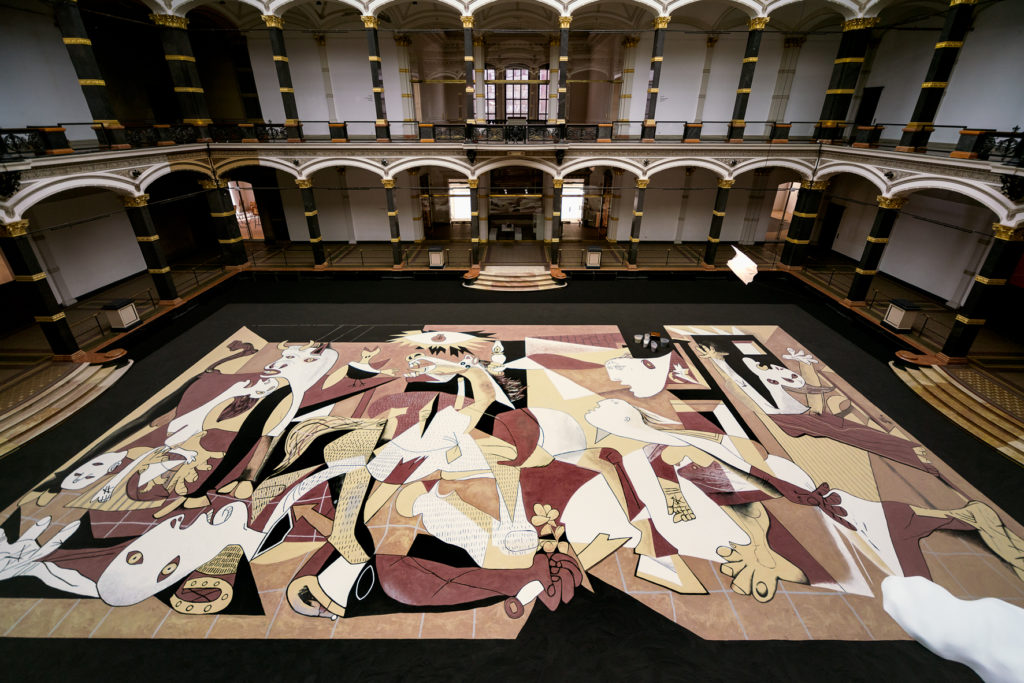
Lee Mingwei Guernica in Sand
(2006–present). Installation view Lee Mingwei: 禮 Li, Gifts and
Rituals, Gropius Bau, Berlin. Photo: Laura Fiorio.
While this might sound like an impossible hurdle in this new age
of social distancing, Gropius Bau director Stephanie Rosenthal says
the show was actually a rather ideal project to reimagine with new
hygiene precautions. “Lee’s work is all about conversation,
listening, and care, so putting new measures in place felt
applicable to the thematics of his work,” she tells me. She
also points out that the question of safety is two-fold: “We asked
ourselves what we needed to do so that everyone is safe and then,
secondly, what is needed so that everyone feels
safe.”
Within a week of museums and galleries reopening in Germany, we
have very quickly all learned what safety looks like.
Enforced mask-wearing, extra-watchful guards, QR-code contactless
ticketing, timed entries, and a singular direction flow for
visitors are rapidly becoming the new normal. But the puzzle of how
to integrate hygiene measures into art installations was,
of course, more delicate and perplexing. And Lee is an artist for
whom hosting, comfort, intimacy—sitting on couches, leaving behind
personal items, giving and receiving—is essential.
The Era of Mellow Museums
I stepped through the Gropius Bau’s ornate doorway for the first
time in a long while last week to find the galleries peppered with
a handful of locals. I caught the attention of one Berliner as she
took in the view of Lee’s monumental piece Guernica in
Sand from the second-floor balcony. “It’s so calm,” she
says with a sigh. “There is the possibility to really watch and
look at works at my leisure. We always come to the Gropius Bau. And
museums were the only thing we really missed, so we came at the
first opportunity.”
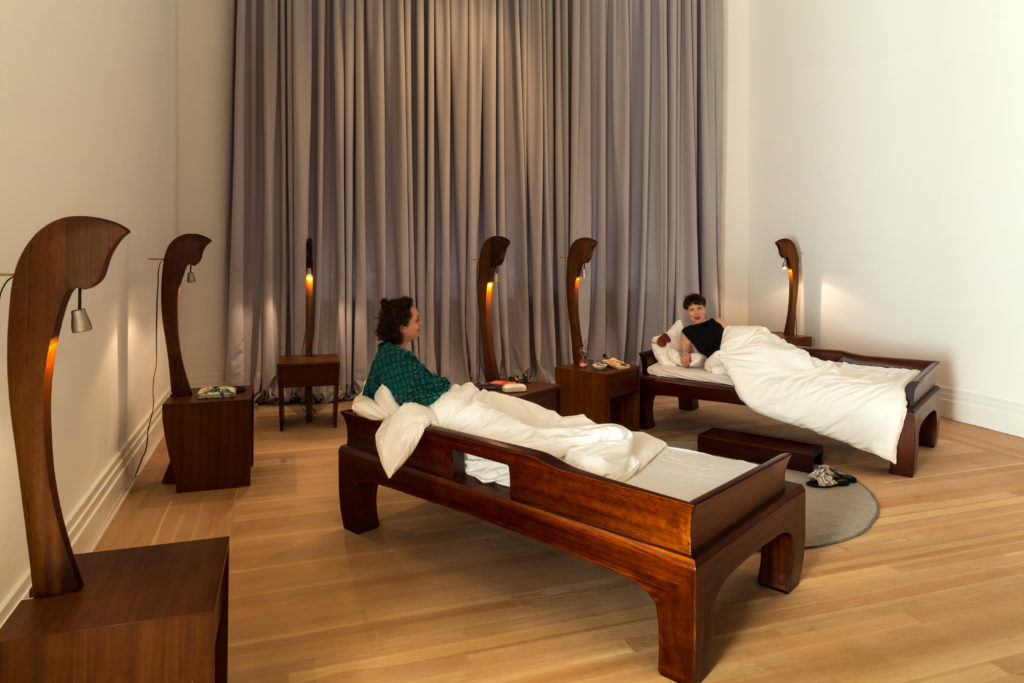
Lee Mingwei The Sleeping Project
(2000/2020). Installation view Lee Mingwei: 禮 Li, Gifts and
Rituals, Gropius Bau, Berlin, 2020. Photo: Laura Fiorio
Lee’s varied installations are certainly a balm for these times
of isolation and bodily insecurity. Vulnerability is gently
provoked, though not demanded, from viewers. In The Living
Room (2000/2020), visitors may sit down with a host, selected
by Lee, who has laid out a personal collection of objects (in this
case, the host, Karen, was presenting her Christmas ornaments). In
the revised version, only one person can sit down on the couch at a
time.
“I did already hear from the
living-room host, Karen, who was there the first day,” Lee says.
“She was very happy and she said there was a lot of long
conversations that helped her understand her own
collection.”
Most poignant of all was Our Labyrinth, a
performance that sees a dancer sweep a mound of rice through the
gallery space along a labyrinthine path of their choosing. The
studious care-taking from the performer, not to mention the
experience of intimacy in watching a stranger, transfixed both me
and the guard in the gallery. For a show about gifts, it was
unexpected to receive the privilege of space in what are usually
packed halls.
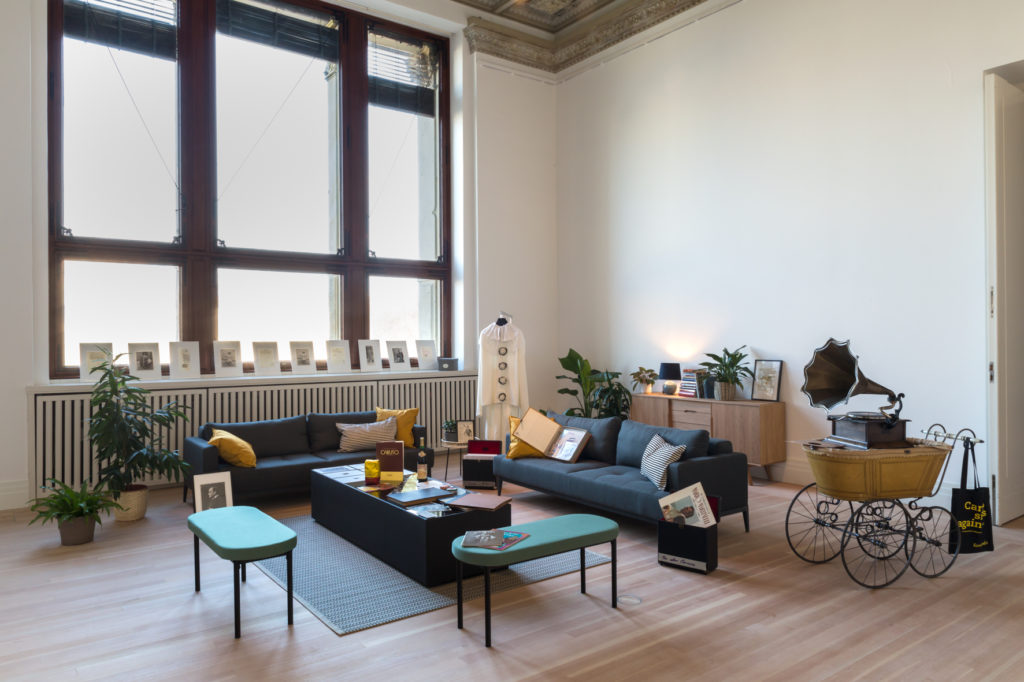
Lee Mingwei The Living Room
(2000/2020). Installation view Lee Mingwei: 禮 Li, Gifts and
Rituals, Gropius Bau, Berlin, 2020. Photo: Laura Fiorio
Other projects required more extensive re-thinking. The
Sleeping Project, one of the oldest works in the show, invites
two strangers selected by lottery to spend a night in the museum
together and then asks them to leave items from their night tables
at home behind. “That is a project that will be permanently
sleeping for now,” laughs Lee. He and Rosenthal arrived at a
thoughtful compromise: Staff from the museum have contributed
personal items of their own to activate the project.
Returning to a Different Normal
Rosenthal says the museum has been pleasantly surprised by the
number of visitors. On Monday, 210 people attended—a fraction of
the around a thousand who would normally pass through, but still,
she felt, a success. Yet the loss of ticketing revenue is going to
pose a serious problem in the long term. “Ticketing makes up a
critical part of our budget,” she says. “In a month, we will better
be able to evaluate how the lower visitor numbers is actually
impacting us and make a better prediction for future
programming.”
And Lee, though deeply wishing he could be in Berlin, has been
busy speaking with his performers and participants on Zoom. He has
also been in dialogue with museums that are eager to learn how the
project is functioning post-lockdown. “Quite a few of my curator
friends are eager to find out how the Gropius Bau is managing this
show,” he says. “Part of my work is about communication, so this
fits in nicely that I have now become a conduit of this particular
knowledge.”
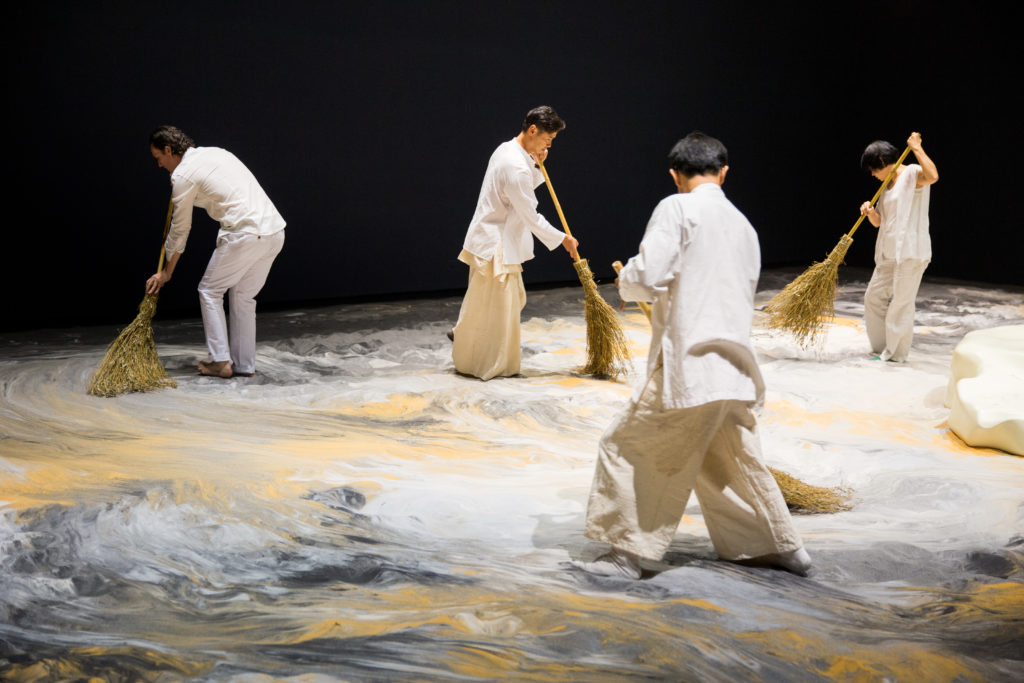
Lee Mingwei, Our Labyrinth
(2006–present). Installation view Lee Mingwei and His Relations,
Taipei Fine Arts Museum, (2015) Courtesy: Taipei Fine Arts
Museum
But—again, luckily—Lee had been seeding his thinking process
with the institution for two years already. Going into the show,
Rosenthal and her curatorial team had a very clear understanding of
the artist’s vision and working process. So did the security guards
and the museum administration; he had conducted workshops with them
as he sought to absorb the fabric of the historic museum and its
team, and share his own working process. Because these
conversations were already well underway when the lockdown was
imposed, they were relatively easy to move online.
While the museum was closed, delaying the show’s opening, some
works were also transposed onto the internet. The artist created a
new version of his work Sonic Blossom, originally designed
as a one-on-one serenade by an opera singer, for a virtual guest on
Instagram. The real Sonic Blossom is on view now
at the Gropius Bau, but a large sheet of plexiglass on wheels
stands between the seated viewer and the performer.
“I can imagine there are exhibitions where it could work against
it,” Rosenthal says, adding that it was pure luck that so much of
Lee’s performances pieces are about one-to-one interactions. “So
far, the participants and the performers have said that it doesn’t
make a difference because the critical parts of the piece are still
achieved. These changes due to safety precautions are a matter of
re-coding—it is interesting how quickly we re-program
ourselves.”
The show seems to offer some comfort to curators and
institutions who may feel that anything more experimental than a
painting show could be stymied by the new normal. “Performance
art will likely suffer the most,” Rosenthal says. “It is very
difficult to plan right now and every kind of work requiring
several people in a room creates a danger. On the other hand, you
do not need transport, so it is more flexible. Aesthetically, it
can be difficult but from a conceptual approach it works.
Disinfection becomes another ritual. Plexiglass is a symbol of
care.”
The post ‘Plexiglass Has Become a Symbol of Care’: How a
Berlin Museum Reimagined a Participatory Art Show in the Era of
Social Distancing appeared first on artnet News.
Read more https://news.artnet.com/exhibitions/lee-mingwei-gropius-bau-1862328
Further reading


Leave a comment