
Christie’s Postwar and Contemporary London Sale Brings in a Lackluster $72.7 Million, Its Lowest Total Since 2010
Christie’s was managing expectations
from the start for its postwar and contemporary art auction on
Wednesday night, which carried the lowest pre-sale estimate for a
London winter evening sale in the sector since 2011.
In the end, the sale (which carried a
presale estimate of £41.6 million to £61.3 million, or $53.9
million to $79.4 million) generated the lowest total in a decade,
when the equivalent sale made £39.1 million in 2010. This year’s
total—£56.2 million ($72.7 million)—was down 14.6 percent from
2018. (As always, final prices include the buyer’s premium; presale
estimates do not.)
Blame can be attributed to Brexit
indecision and General Election unease during the peak
business-getting period. But Christie’s has also struggled to ramp
consignments back up after it canceled its June sales in London in
2017 and 2018, and then restored a slimmed-down version last year.
Making matters more difficult, the house has been left with a
young and relatively inexperienced team in London
since the departure of its
long-term department leader, Francis Outred.
This shakiness may have shown up in
the sale’s guarantees, many of which Christie’s made on its own,
without offsetting the risk to a third party. All three works that
were guaranteed in-house—by Jean Dubuffet (sold for £2.2
million/$2.9 million), Rudolf Stingel (£731,250/$947,568), and Wade
Guyton (£311,250/$403,324)—sold below estimate, probably at a loss
to the company.
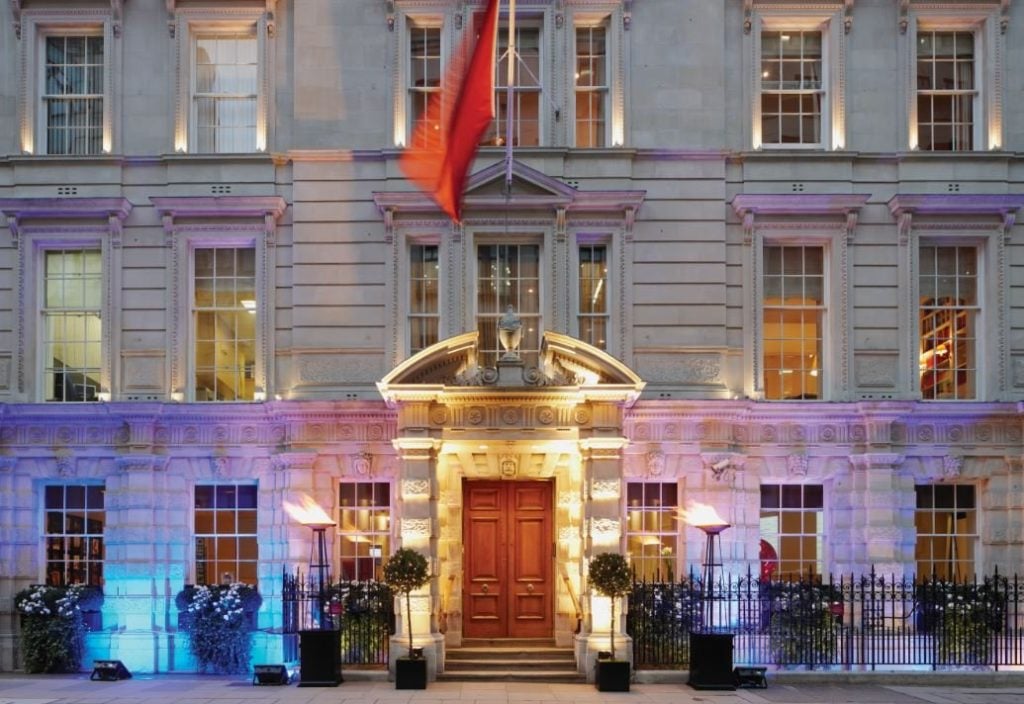
The facade of Christie’s London auction
house. Courtesy of Christie’s.
And while Sotheby’s, even in this
challenging climate, offered six lots worth over
£5 million at its equivalent sale on Tuesday, Christie’s had
none. The highest estimated lot was a Basquiat from the coveted
year of 1982, titled The Mosque, from the collection
of the trader-dealer Mugrabi family. The work, which was estimated
at £4 million to £6 million and carried a third-party guarantee,
contained an inscription that read “going to heaven” and a
twin-towered mosque. The subject may have been sensitive for some
bidders—and indeed, there seemed to be only one (probably the
third-party guarantor), who bid with a US specialist and bought the
work below estimate for £3.9 million ($5.1 million).
American bidders were evidently more
comfortable with Andy Warhol’s array of American sports stars,
known as the “Athletes Series,” from the estate of collector
Richard L. Weisman, who died in 2018. In 1977, Weisman commissioned
ten 40 x 40 inch portraits from Warhol—Muhammad Ali, Jack Nicklaus,
O.J. Simpson, and Pelé among them—sometimes with eight or ten
differently colored versions. According to the Warhol catalogue
raisonné, there are 112 in all, a third of which are now in
institutional collections. In 2007, one complete set was offered by
London dealer Martin Summers for a reported $28 million, but didn’t
sell; another set sold for $5.7 million in 2011.
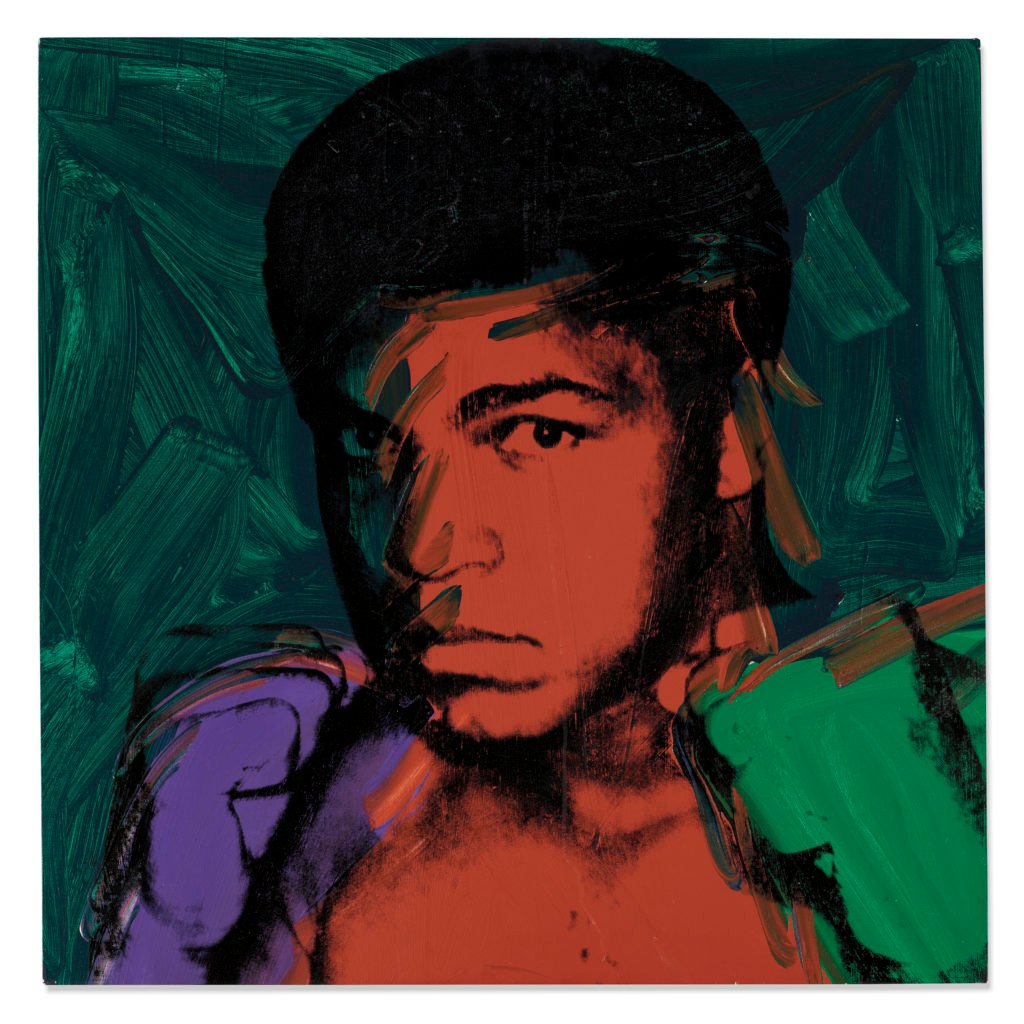
Andy Warhol, Muhammad Ali (1977).
Courtesy of Christie’s.
The series found an eager audience
last November in New York, when Weisman’s estate offered a set at
Christie’s. The works sold individually above estimate for a
combined $15 million, led by a $10 million portrait of Muhammed Ali
bought by Lévy Gorvy Gallery (which advisor Josh Baer
suggested may have been purchased for the art-loving casino owners
Frank and Lorenzo Fertitta).
In London, a separate set carried
similar estimates. The painting of Ali was again the most
sought-after, selling to an American phone bidder against Lévy
Gorvy within estimate for £4.97 million ($6.4 million). (The
gallery had more success with a two-foot flower painting by Warhol,
which they secured above estimate for £2 million/$2.7 million.) Art
advisor Jude Hess successfully picked up the portrait of Brazilian
footballer Pelé within estimate for £575,250 ($744.374). Apart from
the portrait of golfer Jack Nicklaus, none made as much as their
equivalents in New York, when they were fresher to market.
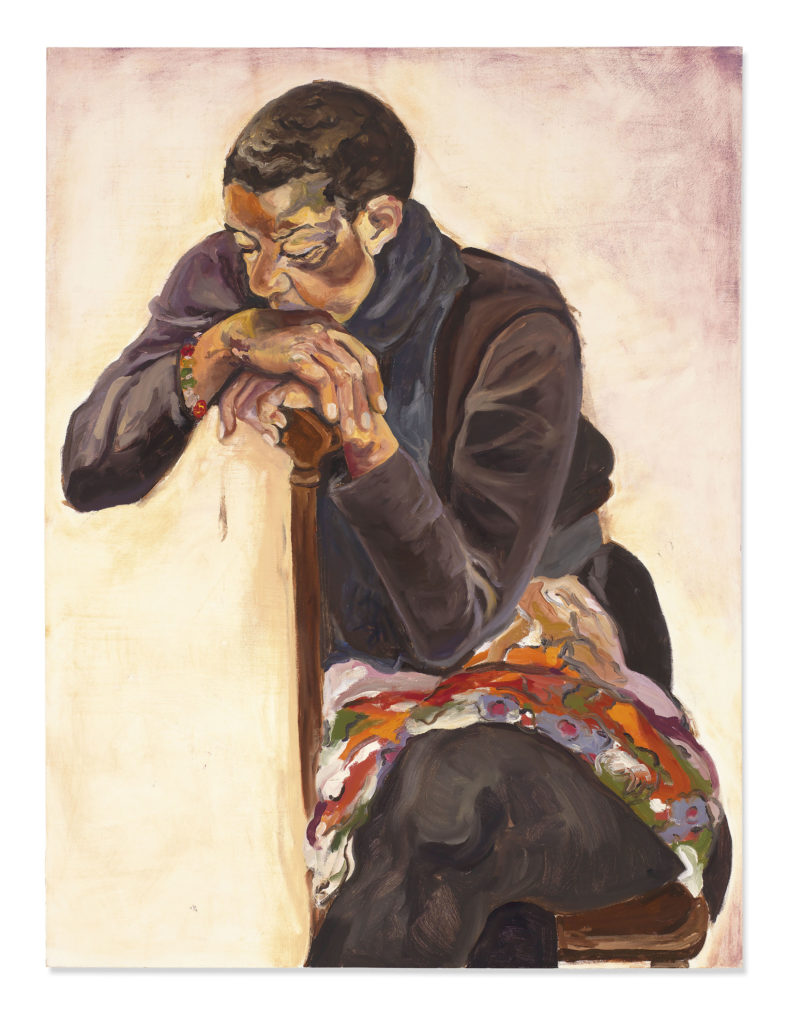
Jordan Casteel, Mom (2013).
Courtesy of Christie’s.
As at Sotheby’s, the sale was
front-loaded with hot young artists. Only the fourth work at
auction by the 30-year-old Jordan Casteel, whose solo show opens
this month at the New Museum in New
York, Mom (2013), a reflective portrait of her
mother, carried the highest estimate yet for her work at
£150,000–250,000.
So far, everything by Casteel has
doubled or tripled its estimate at auction, and
Mom continued the momentum, selling for a record
£515,250 ($666,734) to a phone bidder who beat out numerous
contestants, including art advisor Gabriela Palmieri. A veteran of
Sotheby’s contemporary department, Palmieri was more successful
with a set of 22 small oil panels by Günther Förg, which she bought
for a mid-estimate £1.3 million ($1.7 million), a new record for
the German artist.
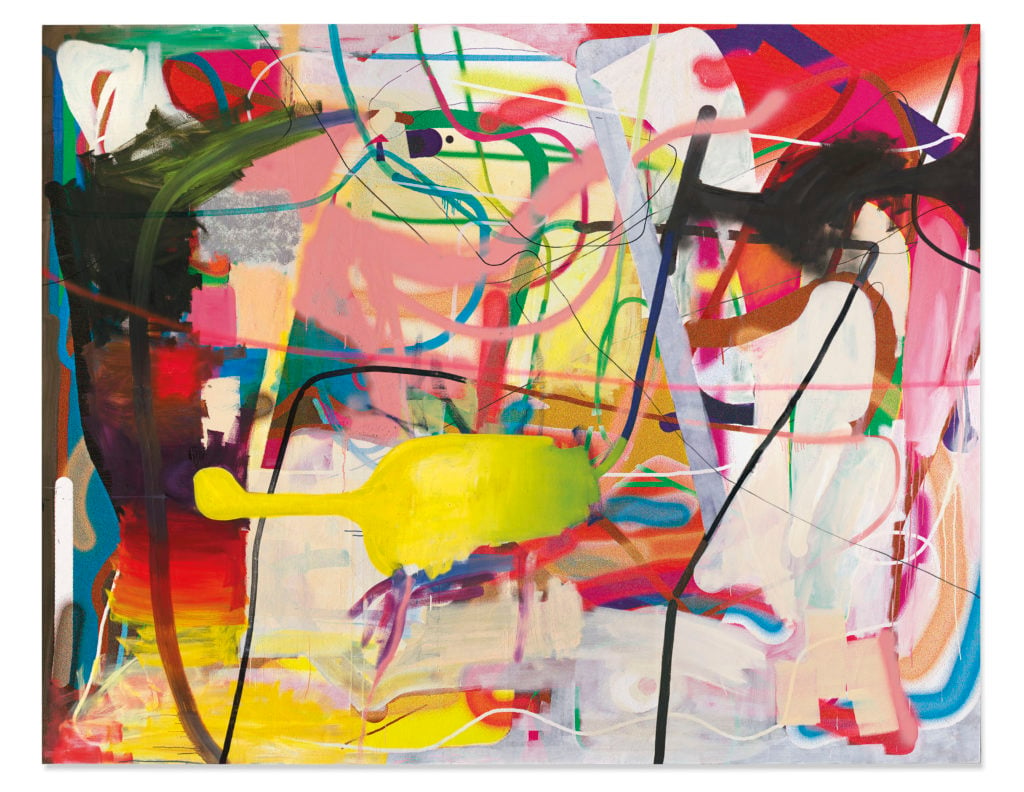
Albert Oehlen, Mission Rohrfrei (Down
Periscope) (1996). Courtesy of Christie’s.
Christie’s scraped around for some
more records to liven up their post-sale press release and found
one for a computer-generated work by Albert Oehlen, which sold to
dealer Daniella Luxembourg above estimate for £3.2 million ($4.1
million). Another record of sorts was set for Bridget Riley’s
colorful Gaillard (1989), which sold within
estimate for £2.3 million ($2.96 million) to London dealer Alan
Wheatley, beating out an underbidder from Asia. (It was a record,
Christie’s said, for a “late” Riley.)
Gaillard represented one of the better returns of the
evening, having previously sold in 2007 for £401,350.
Other prominent works placed early in
the sale were also by women—Tschabalala Self, Dana Schutz, and
Cecily Brown—which all attracted bidding from Asia.
Brown’s Girl Trouble (1999) was the only one to
come in below estimate at £1.5 million ($1.9 million), possibly
because it was flipped from a sale in 2018, when it was bought for
$1.8 million.
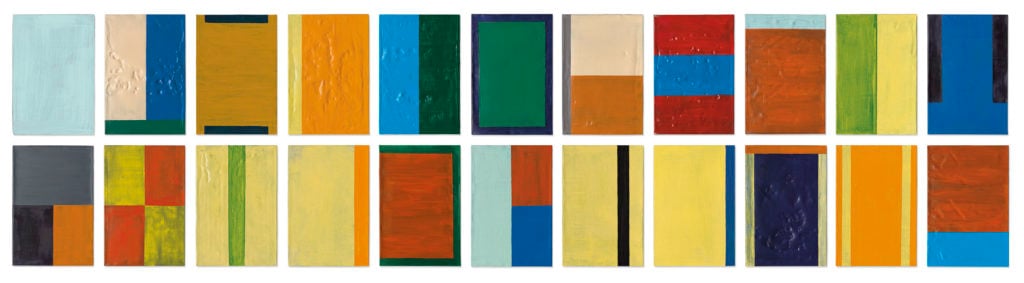
Günther Förg, Untitled (1990).
Courtesy of Christie’s.
Christie’s then reminded us that all
three artists (along with several other young auction favorites)
are included in the current “Radical Figures” exhibition at the
Whitechapel Art Gallery, a show dedicated to contemporary
figuration. Notably, however, Christie’s did not mention
that they are the lead sponsors of the show—which, however
well-intentioned, has the added bonus of boosting the value of the
work in the marketplace.
Some, like myself, think that this
trend is toeing the line of appropriateness. While it is
commendable that auctioneers support the arts, and dealers, their
artists (there is a long list of interested dealers supporting this
show as well), institutions supported by public funding should be
wary of the influence the commercial sector can have on their
decision-making and programming. The market, as we see in each
cutthroat auction, generally acts in its own interest.
The post Christie’s Postwar and Contemporary London Sale
Brings in a Lackluster $72.7 Million, Its Lowest Total Since
2010 appeared first on artnet News.
Read more https://news.artnet.com/market/christies-postwar-contemporary-london-sale-feb-2020-1777002
Further reading


Leave a comment